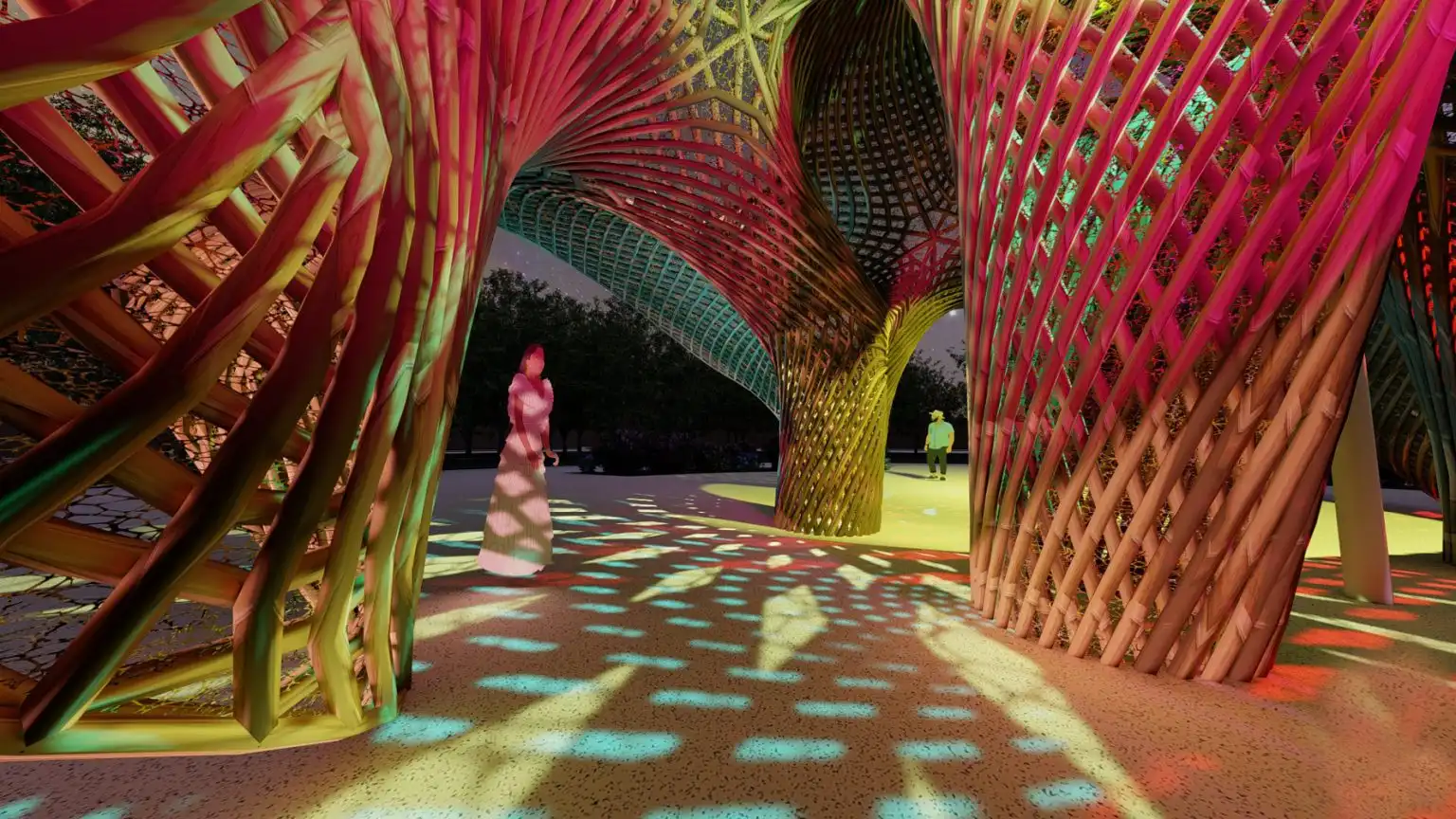
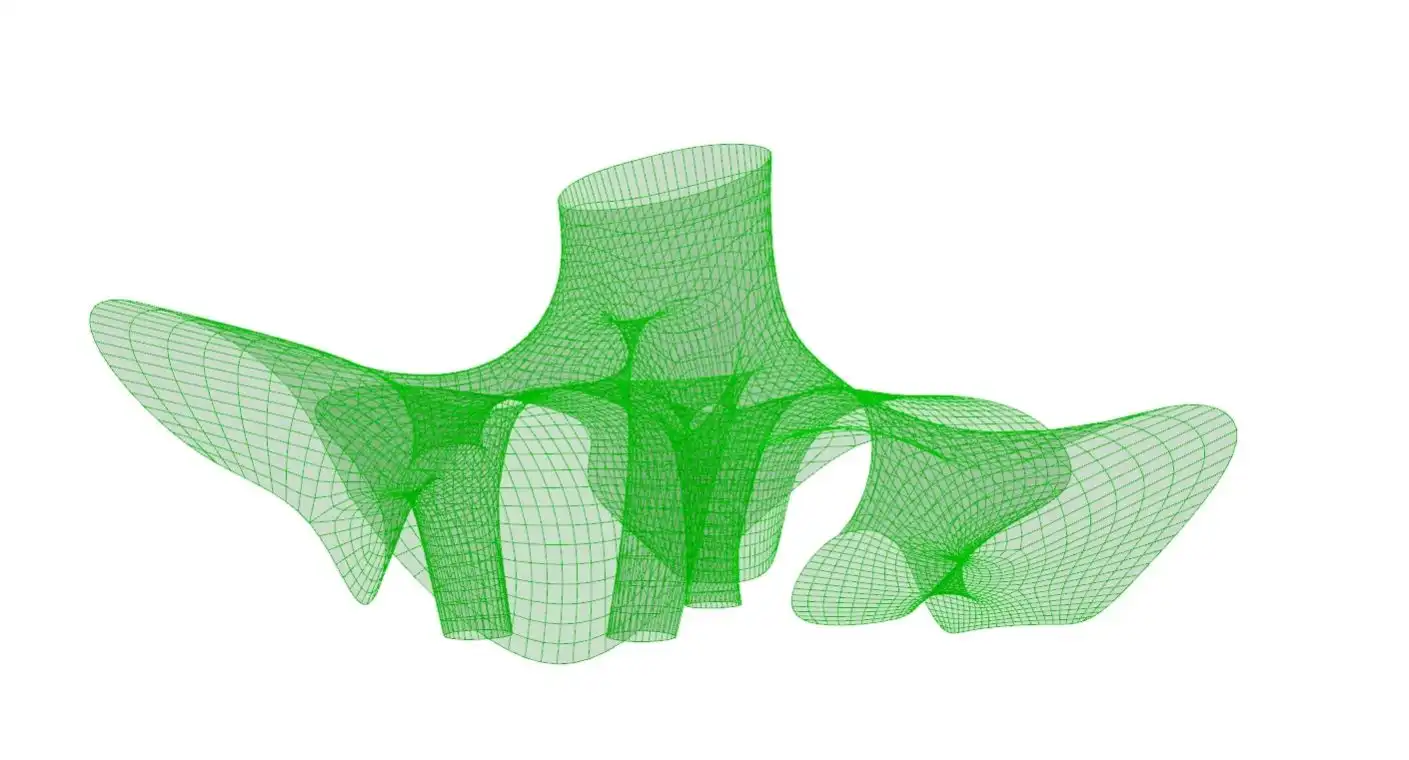
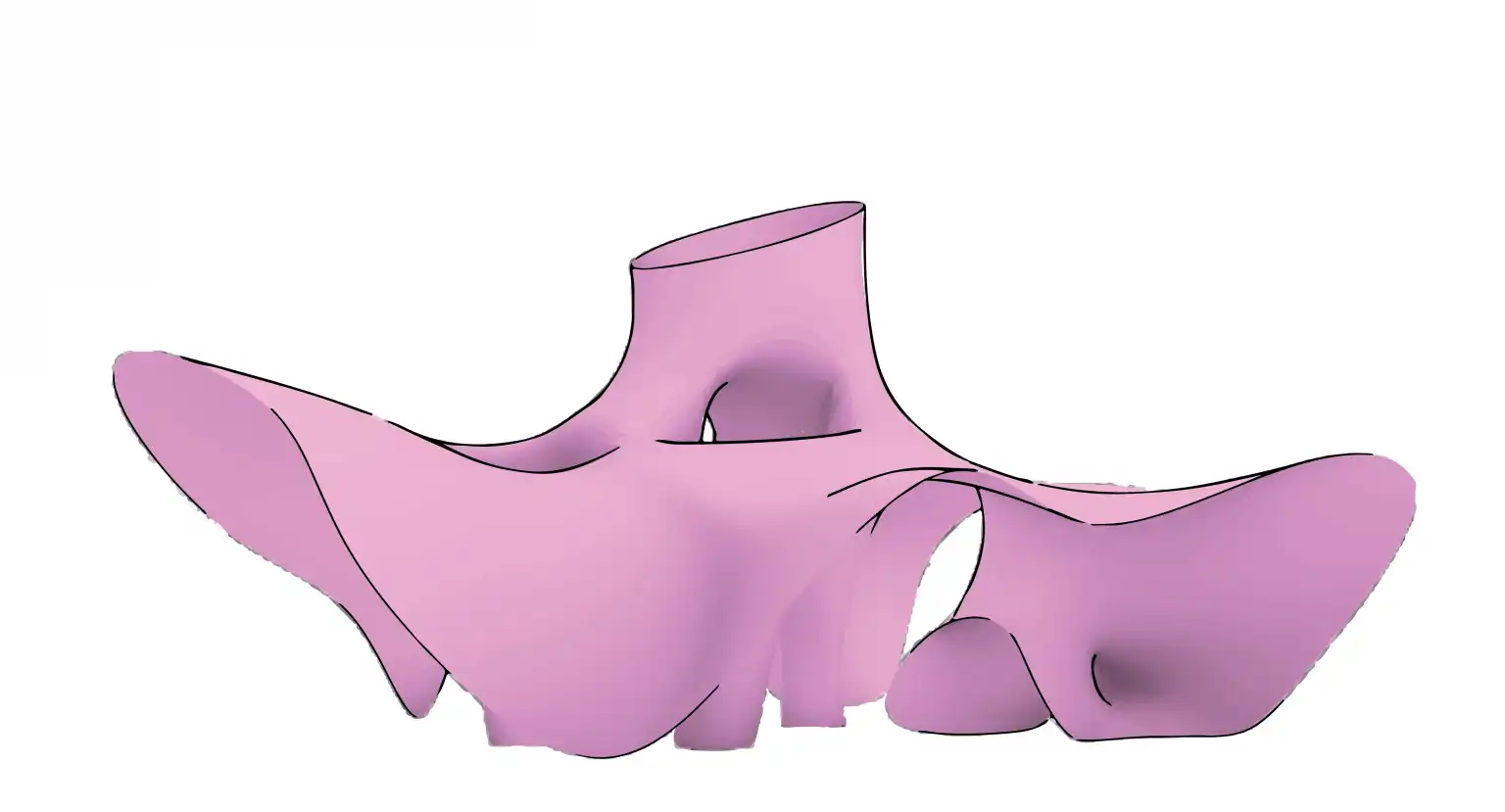
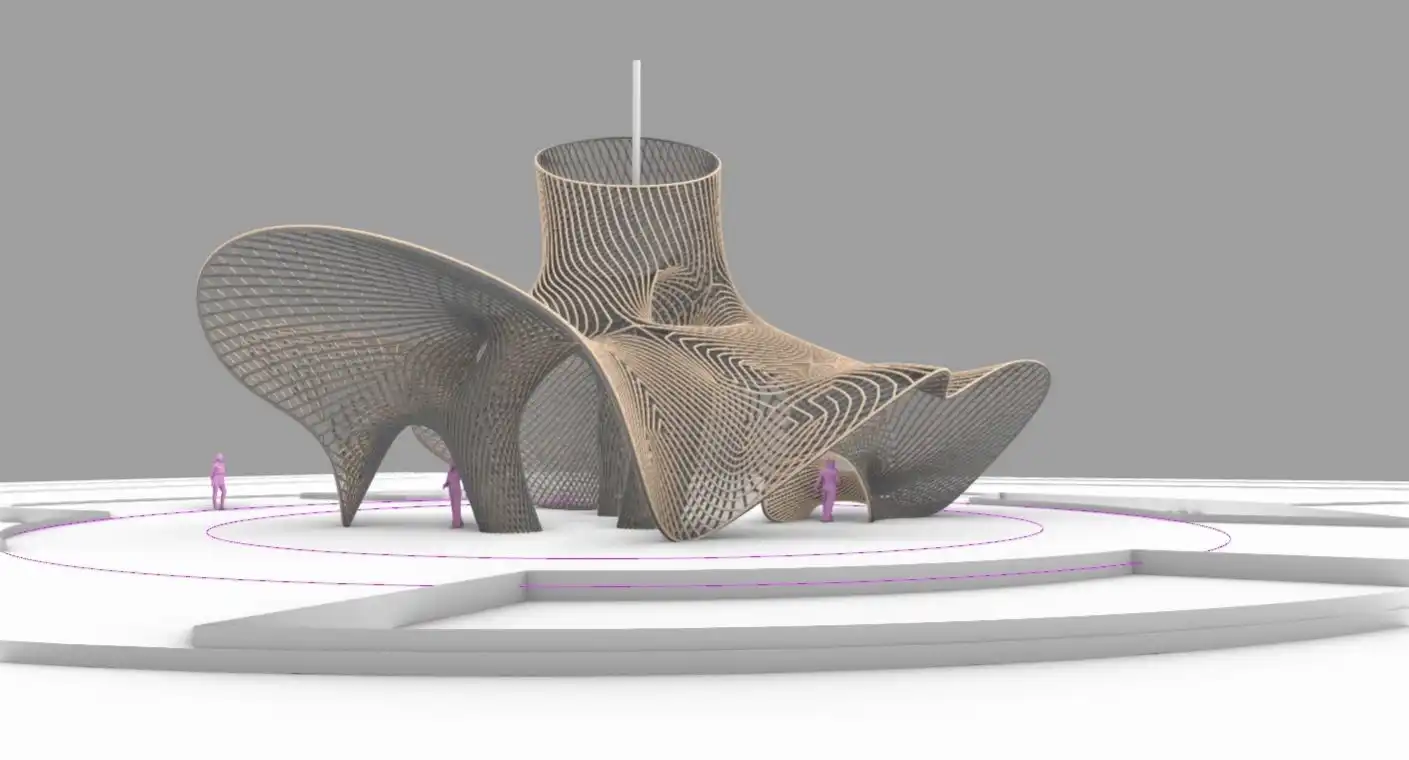
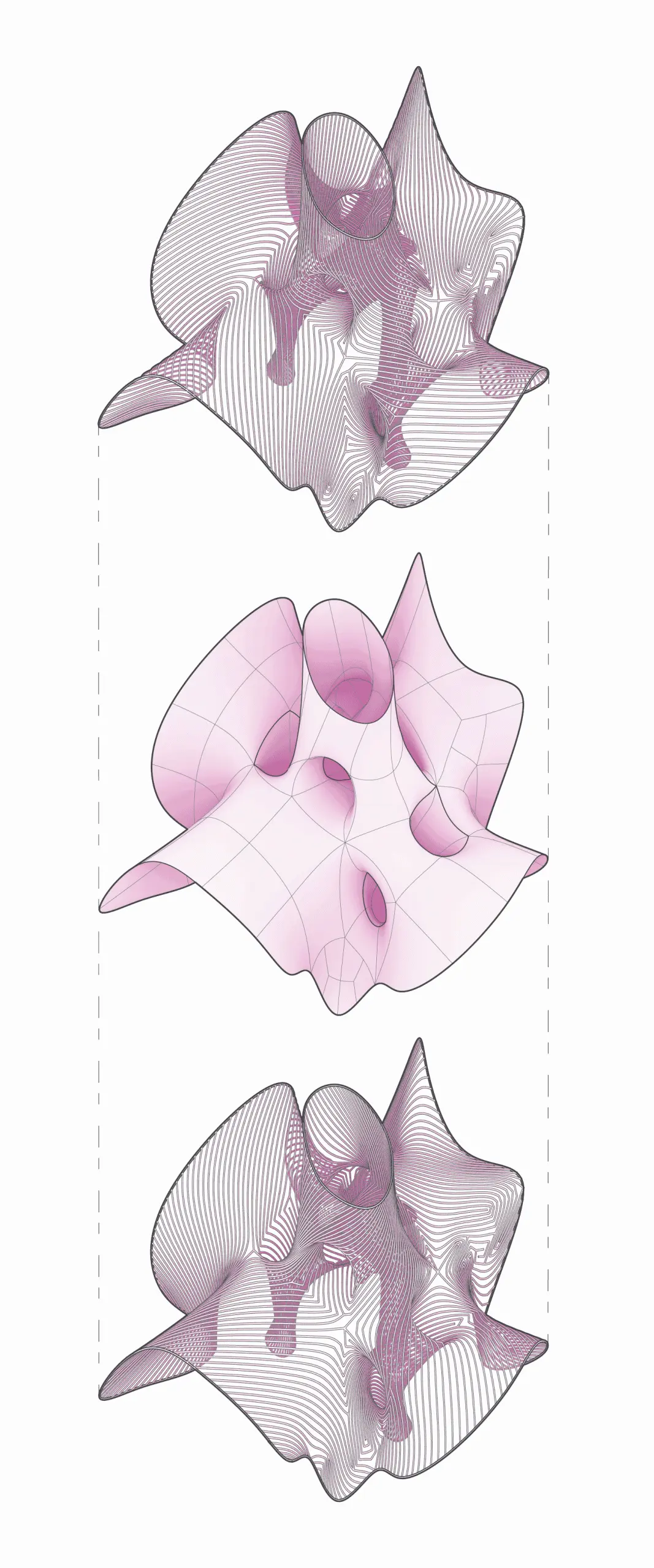
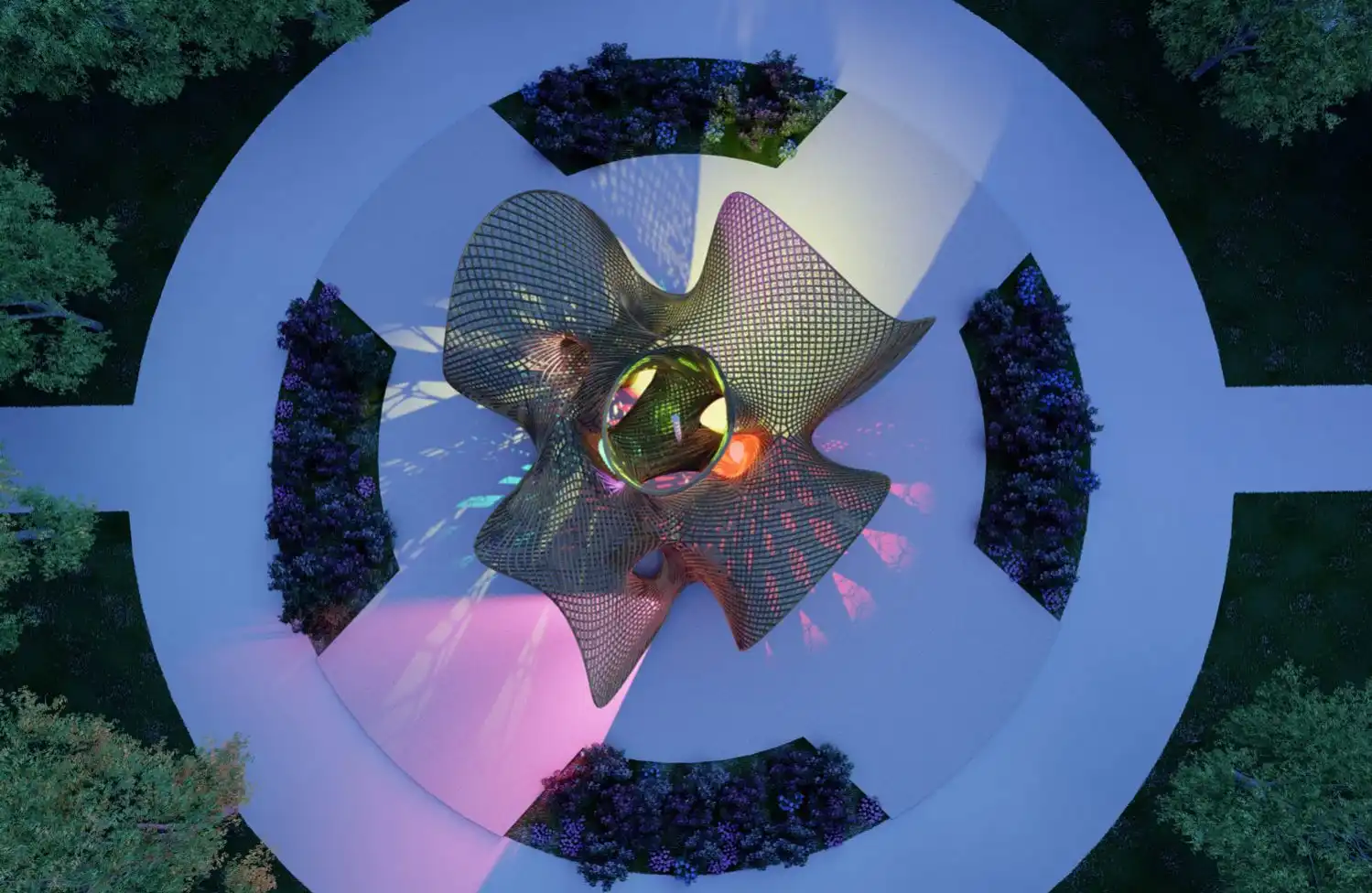
The tunnel web pavilion—formally inspired by the tunnel web spider—brings together computational design and eco-expressionism using Yucatan’s local plant-based materials, henequen & bamboo. Using computational design methodologies and a bamboo-henequen structural system, the group has opened up new possibilities of using these plant-based materials in a modern and elegant way.
The chosen site is known as Plaza Grande located in the center of Merida, Yucatan. Yucatan is a state of Mexico with a population of about 2.3 million. Merida is characterized by colonial architecture, a tropical climate, Caribbean atmosphere, and frequent cultural happenings; Mérida is sometimes called the “White City” because of its buildings made of white
stone and the city’s cleanliness.
The Eco-Parametric Structures workshop organized by PAACADEMY was held from 2nd March to the 13th April 2021 on an online platform. Studio Mamou-Mani is one of the studio workshops at the PAACADEMY with a focus on combining sustainability with parametric design. The studio with the 6 intriguing sessions lead by London-based architect, Arthur Mamou-Mani and his team was articulated on the topic of wooden construction through computational design methods. The session focused on developing a parametric, modular, and environmentally conscious system in an online studio through interactive workshops and discussions.
Credits:
Studio workshop by PAACADEMY
Studio title: Eco-Parametric Structures
Lead by: Arthur Mamou-Mani and his team
Project name: Tunnel Web Pavillion
Students: Zahid Pasha, Miguel Ruiz, Arantxa Nava, Rafael Ramos
Date: 2nd March until 13th April 2021