We use strictly-necessary cookies to keep you signed in and the service operational, and analytics cookies to understand how the site is used. With your consent, we also use preference and marketing cookies. You can change your choice anytime; see our Cookie Policy or Privacy Policy.
Step into the future of architecture and design with Design-Tech Talk 13, a two-day online event exploring the ideas, technologies, and innovations shaping the next generation of creative practice.
Bringing together leading architects, designers, and innovators from around the world, the event highlights a diverse range of perspectives at the intersection of design and technology. Through engaging presentations and discussions, attendees will discover emerging tools, evolving workflows, and forward-thinking approaches that are transforming architecture and the broader design industry.
Whether you are an architect, designer, student, researcher, or technology enthusiast, Design-Tech Talk 13 offers an opportunity to gain fresh insights, expand your perspective, and connect with a global community passionate about the future of design.
An active membership is required to watch the recordings after the live event.
Program
Will be announced soon.
Guest Speakers:
Harlen Miller
Harlen Miller is an Associate Design Director | Senior Architect and Digital Innovations Co-Lead at UNS’s Amsterdam office with nearly 20 years of global experience with various firms and sub-consultancies. He relocated from Los Angeles to Europe in 2012, broadening his international reach and client base and has been fortunate to witness many of his design collaborations proceed into reality.
His technical specialty spans project management & delivery, digital innovation & research, as well as HR recruitment and the training of next-generation emerging designers. By utilizing digital tooling to craft compelling narrative concepts, his team has explored visionary and speculative typologies in Architecture, Fashion, Master planning, Transport, and Product Design.
Sara Codarin
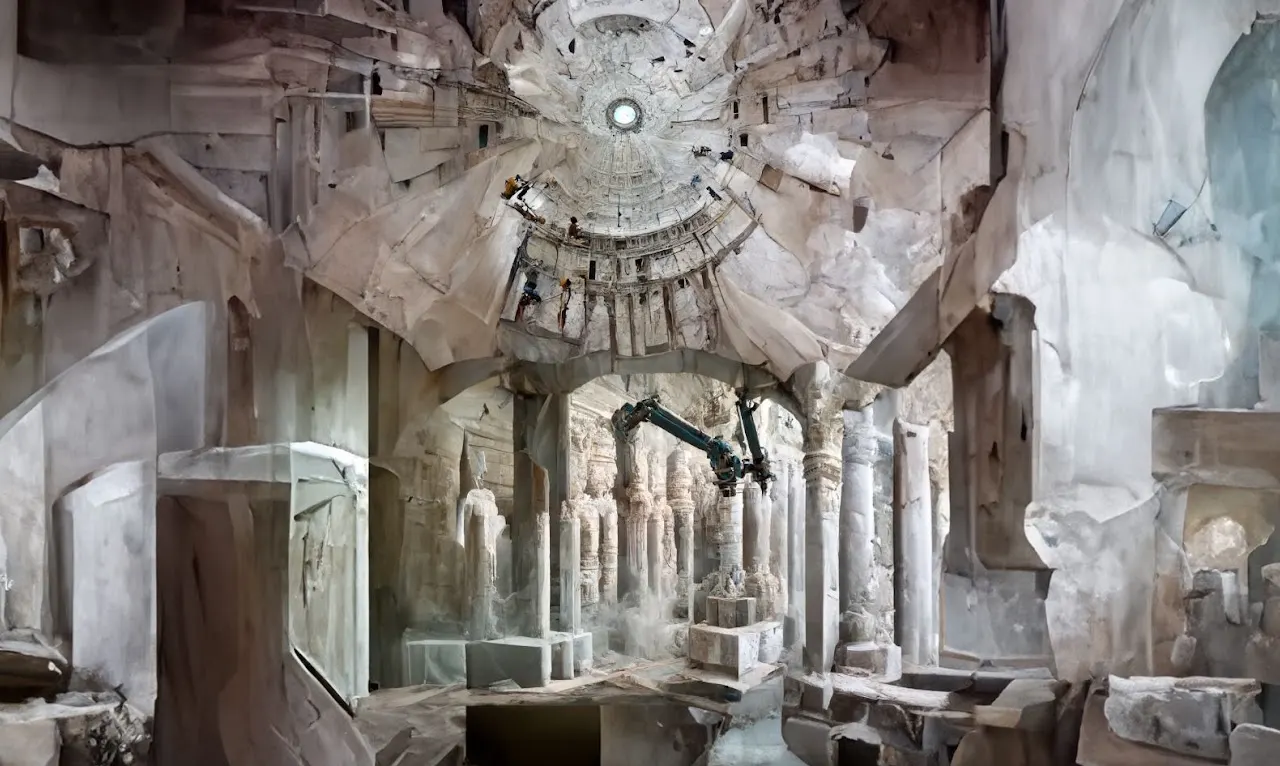
Sara is an Assistant Professor of Architecture at Lawrence Technological University’s College of Architecture and Design. Holding a master’s degree and a Ph.D. from the University of Ferrara, her work thrives at the intersection of technology and humanism. As a techno-optimist with a deep appreciation for robotics, her research bridges digital and physical spaces, exploring large-scale additive manufacturing, robotic fabrication, digital craft, storytelling, and generative AI for world-building.
An accomplished author, Sara recently published Robotics for Architectural Restoration (Routledge, 2026) and Architecture of Domesticity (Anteferma, 2026). Her contributions to the field earned her the 2022 Crain’s Detroit Notable Women in Design and Construction Award and the title of 2024 Italian Design Day Ambassador by the Consulate of Italy in Detroit. Her innovative projects have been widely showcased at prominent venues, including the 2025 Venice Architecture Biennale IntelliGENS, Milan Design Week, the Detroit Month of Design, and various esteemed academic institutions.
Bhavleen Kaur Narula
Bhavleen Kaur is an architect, researcher, and educator exploring computational design, robotics, and other emerging technologies in architectural education. With over a decade of teaching and research across India, Europe, and the United States, her work spans scales and modes of inquiry, from drawing machines and operative mapping to programmable toolpaths and experimental robotic bodies.
She is a Visiting Assistant Professor and Research Lead at the Robotics and Digital Fabrication (RDF) Lab at Florida International University (FIU), where she co-develops technologies, curriculum, and learning frameworks for NSF-funded projects in immersive robotic training for the future AEC workforce. She also serves as Academic Coordinator of the Doctor of Design program at FIU and as a steering member of DigitalFUTURES International, helping build educational materials reaching learners in 15+ languages across 80+ countries.
Adam Vosburgh
Adam Vosburgh is an Adjunct Assistant Professor and Assistant Director of the M.S. Computational Design Practices program at Columbia GSAPP. He is interested in architecture as a software system, the critical use of geospatial data to describe the built environment, and the representation of architecture in interactive digital media.
His work has been exhibited at the 2021 Venice Architecture Biennale, MoMA, GA Gallery, and is in the permanent collection of the Foundation Cartier.
Previously, Adam worked as a junior architect at SANAA in Tokyo, and Office for Metropolitan Architecture in New York.
Adam received his M. Arch from Columbia GSAPP with the Honor Award for Design and Visualization, and his B.A. in Architecture from UNC Charlotte.
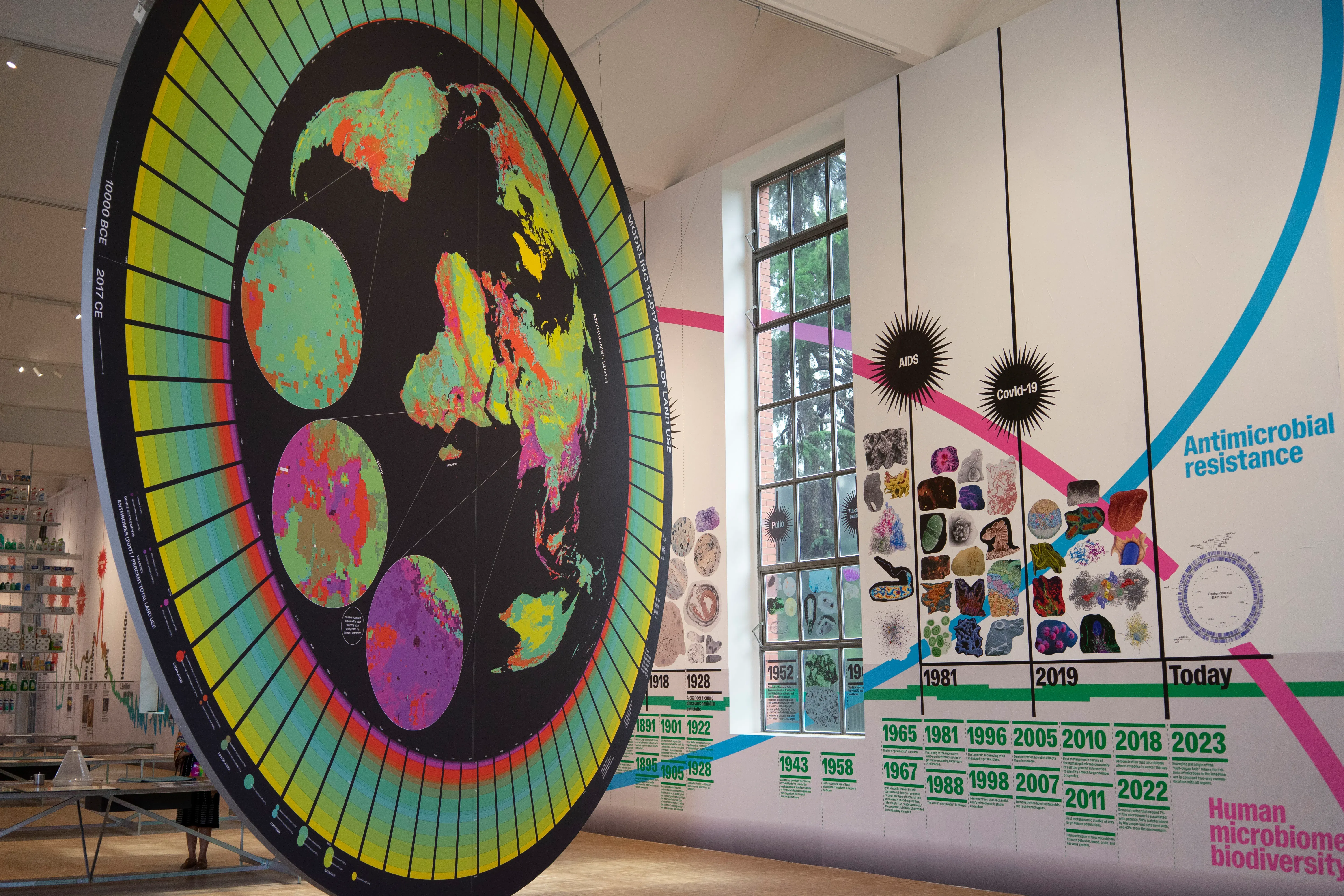
Installation view of "Two Sides of the Same Coin" by Laura Kurgan, Dan Miller and Adam Vosburgh, in "We the Bacteria: Notes Toward Biotic Architecture' at the 2025 Triennale Milano.
Tom Svilans
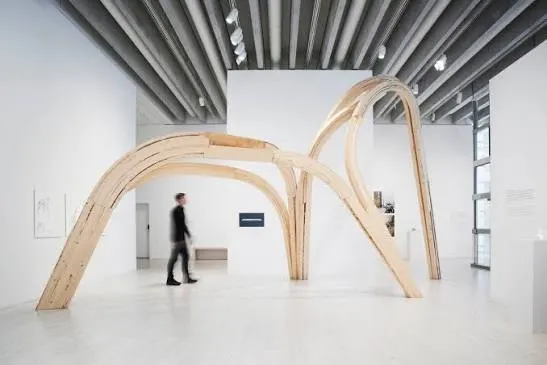
Tom Svilans is the CTO at Omtre AS and a researcher at the Royal Danish Academy in Copenhagen, developing solutions for the digital design, construction, and manufacturing of timber projects. His work spans the entire timber value chain, from forestry to construction and reuse, focusing on how imaging and communication technologies can connect design intelligence with timber fabrication. As a consultant, he specializes in the computational modeling, design development, and fabrication coordination of complex timber structures.
Tom holds a PhD from the Royal Danish Academy through the EU-funded InnoChain research network, where he developed digitally augmented material practices for large-scale, free-form timber structures in collaboration with Blumer Lehmann AG and White Arkitekter. His work has been presented and published internationally, and he has taught at several prestigious academic institutions, including the Bartlett School of Architecture (UCL), the Architectural Association (AA), the Institute for Advanced Architecture of Catalonia (IAAC), and the Royal Danish Academy.
Shin Obinata
Shin Obinata is a designer and the founder of SEKISAI, a Tokyo-based design studio exploring new possibilities in color, texture, and form through 3D printing and computational design. His practice spans products, interiors, architecture, and fashion, with collaborations including Panasonic and ANREALAGE. Guided by a vision of moving from mass production to “Mass Expression,” he designs both objects and the processes that make them. He was named to Forbes 30 Under 30 Asia in 2026 and is an adjunct lecturer at Keio University SFC.
01
Core principles for combining computational design, natural systems, and digital fabrication.
02
Key insights into multi-material architecture, material continuity, and additive fabrication.
03
Frameworks for integrating generative algorithms with flexible textiles to form performative structures.
04
Methods for driving material balance, advanced customization, and responsible material cultures.
A Strong Foundation for AutoTroph Computational Thinking
This course was especially valuable for my AutoTroph research because it develops the kind of computational thinking needed to work with adaptive architectural systems. The progression from mathematical surfaces and data structures to recursive algorithms, meshes, and volumetric modeling shows how design can emerge from rules, relationships, and feedback. Rather than treating Grasshopper as a form-making tool, the workshop encourages participants to design the process itself, which closely aligns with my interest in architectures that can respond, transform, and evolve.
Walter Patrick SmithAdvanced Grasshopper 1.0
I loved it! it was amazing!!
I never thought this course could help me so much! Naomi, you explain everything in such an incredible way: So clearly, patiently, and calmly :) For personal reasons, I wasn’t able to attend the course live, but I was able to watch all the videos at my own pace and practice a lot along the way. You make everything so easy to understand, no matter your level. I’ve achieved incredible results, and I’m so happy with everything I’ve learned. Thank you so, so much!!
HeidyInterior Architect
Excellent Course for Architectural Competitions
A very useful and well-structured course that clearly explains how to use AI throughout the architectural competition process, from understanding and rethinking the brief to concept development, visualization, presentation boards, and final submission. I learned practical methods that can improve creativity, workflow, storytelling, and the overall quality of competition projects.
Ammar AlmusaeedAI for Architectural Competitions: From Brief to Submission
Comprehensive introduction to Maya modeling for architectural design
The course offered a clear, structured deep dive into Autodesk Maya’s essential modeling tools and workflows. I gained a solid grasp of polygon modeling, edge flow control, and core surface techniques tailored for conceptual form-finding and complex architectural geometry.
























 Walter Patrick SmithAdvanced Grasshopper 1.0