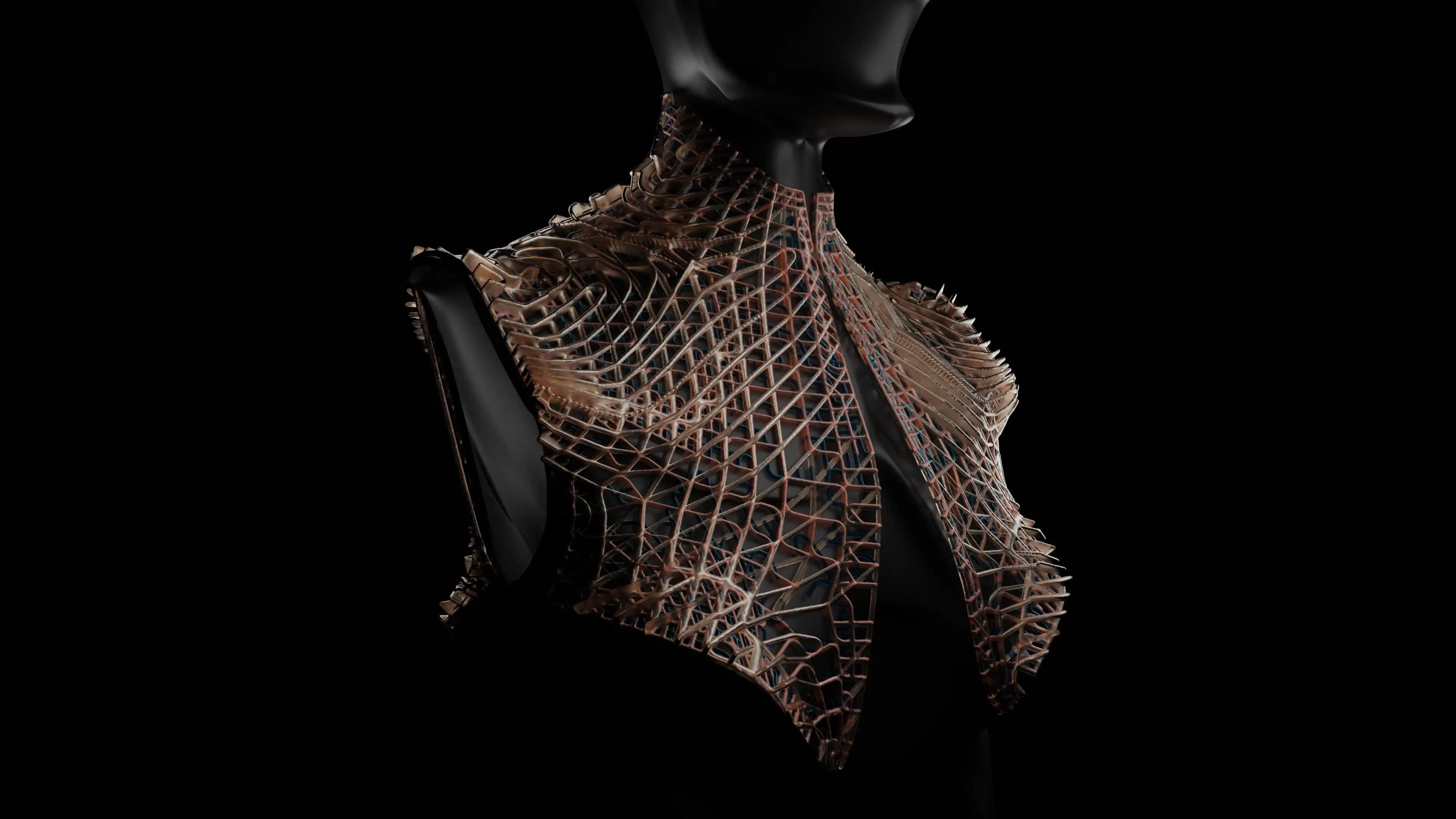
Participants will design a chair specifically optimized for large-scale additive manufacturing. The process examines how computational geometry, structural logic, and ergonomics must be directly integrated with real-world fabrication constraints.
The project progresses systematically through case study analysis, computational modeling, geometric refinement, and fabrication assessment. Crucially, your design strategy will be driven by the physical realities of 3D printing: overhang angles, wall thickness, layer height, print orientation, material behavior, self-supporting geometry, and continuous toolpath logic.
Scope
Throughout the workshop, students will focus on integrating design with production parameters. You will:
- Analyze and rebuild a chair using procedural workflows in Houdini.
- Develop complex geometry that satisfies both ergonomic and structural requirements.
- Integrate strict production constraints, including overhang limits and print orientation.
- Prepare self-supporting geometry for large-scale additive manufacturing and robotic 3D printing.
- Develop and present an individual, fabrication-ready furniture proposal.
Program
Day 1: Case Study & Computational Furniture Design
- Introduction to Large-Scale AM: Review reference projects and explore the transition from design to physical production.
- Houdini Workflows: Showcase and analyze established procedural setups.
- Procedural Rebuilding: Follow a guided rebuild of a chair. Every participant will finish Day 1 with a working procedural setup.
- Design Ideation: Develop individual geometry variations governed by ergonomic constraints and production limits.
Day 2: Fabrication, Design Optimization & Final Proposal
- Geometric Refinement: Enhance your furniture geometry using surface patterns and adaptive transitions.
- Production Optimization: Adjust and optimize designs based on overhangs, wall thickness, and print orientation.
- Robotic Toolpathing: Prepare geometry for continuous robotic toolpath generation (including slicing and G-code output demonstrations, time permitting).
- Final Review: Develop, present, and review your individual fabrication-ready furniture proposal.