Article
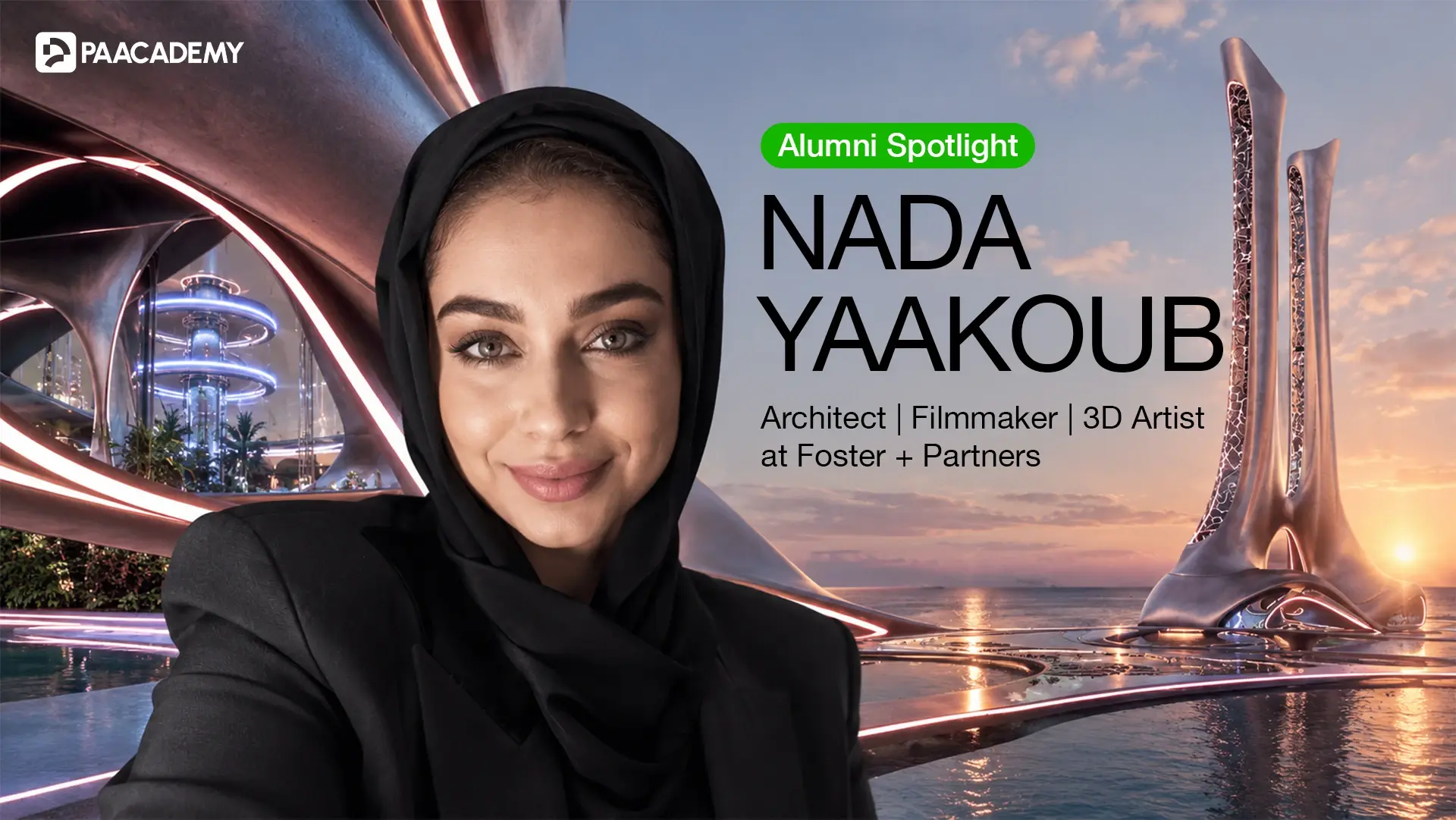
From studying architecture in Cairo to exploring cinematic world-building at PAACADEMY, pursuing a master’s degree at The Bartlett, UCL, and joining Foster + Partners in London, Nada Yaakoub’s journey reveals how curiosity, experimentation, and interdisciplinary learning can shape an unexpected creative career.
Introduction:
Architecture is often understood through the buildings we create, the spaces we inhabit, and the structures that define our cities. But for Egyptian architect and filmmaker Nada Yaakoub, architecture has always been about something more intangible: the emotions a space evokes, the atmosphere it creates, and the stories it can tell. Her fascination with these invisible dimensions of design would eventually take her beyond conventional architectural practice and into the worlds of cinema, animation, and visual storytelling.
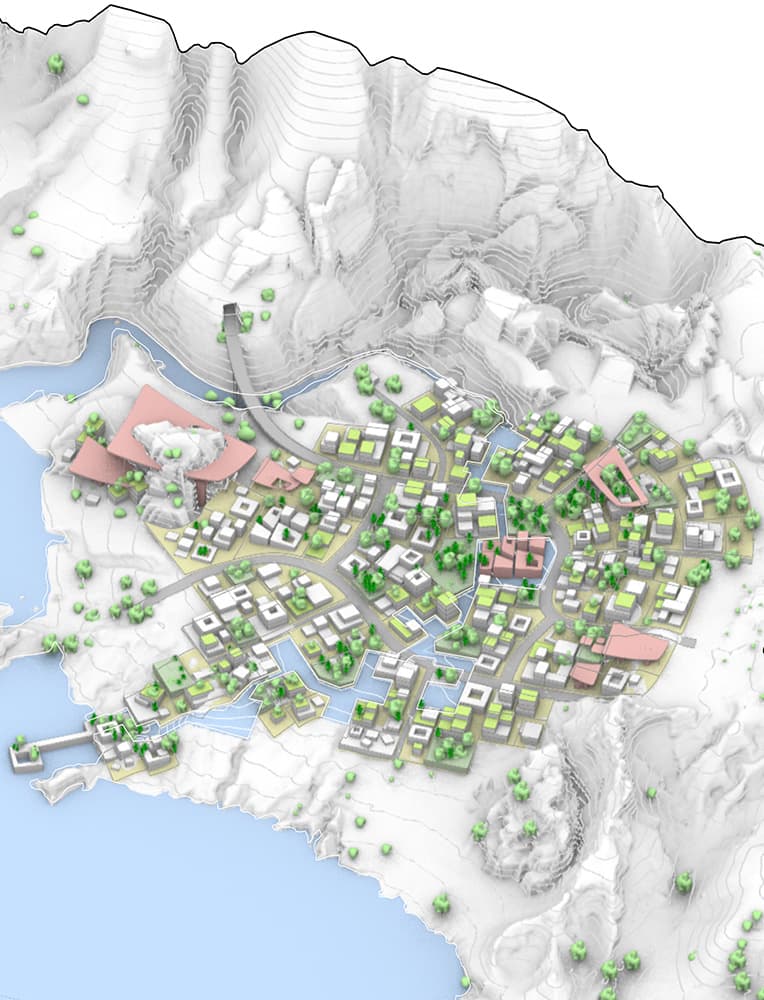
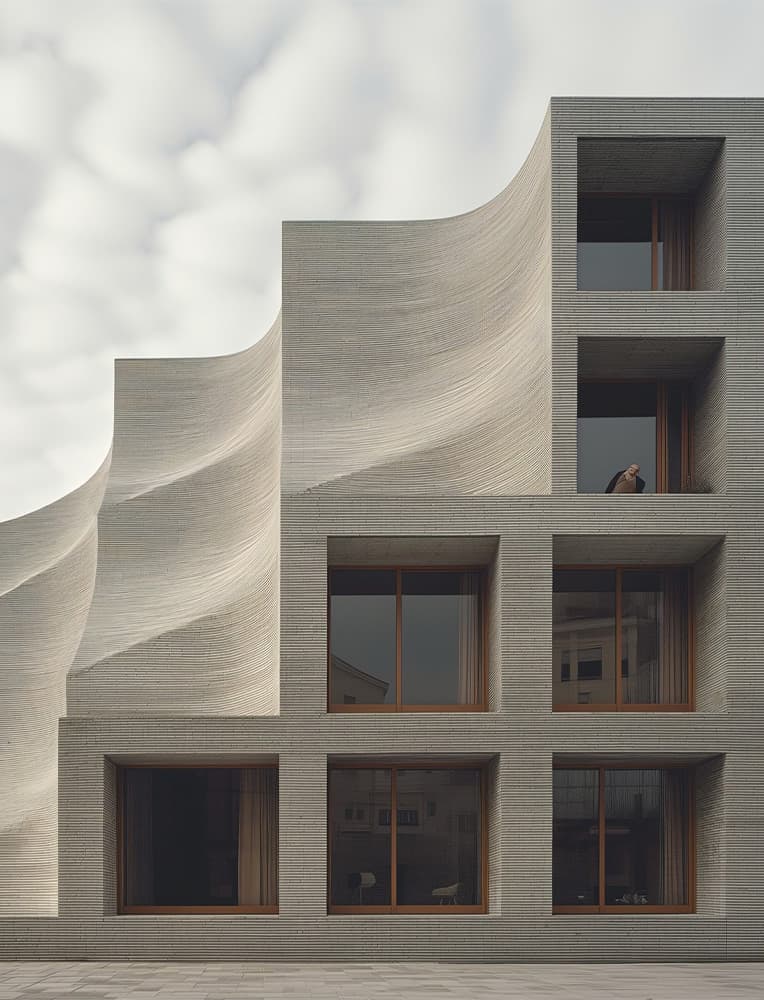
Nada began her architectural journey at the American University in Cairo, where she earned her Bachelor of Science in Architecture in 2022. Her early career was characterized by experimentation across multiple disciplines, from architectural research and robotic fabrication to interactive media, game environments, and digital visualization. Shortly after graduating, she joined PAACADEMY’s Meta-Fluid 2.0 workshop, seeking to expand her technical capabilities and explore cinematic world-building. During the workshop, she collaborated with an international group of designers to develop BLOOM, a project that would later become part of her application portfolio for The Bartlett School of Architecture at University College London.

Building on these experiences, Nada pursued a Master’s in Cinematic Architecture at The Bartlett, UCL, graduating with Distinction in 2025. Her academic achievements also include receiving UCL’s Film Design Award, reflecting her growing interest in the intersection of architecture, filmmaking, and speculative storytelling. Her master’s thesis, Prima Materia, brought together science fiction, environmental narratives, and the historical connections between Egyptian and Greek philosophy to explore humanity’s relationship with Earth.
In February 2026, Nada joined Foster + Partners in London as a 3D Artist, becoming part of the Moving Art team within the practice’s Design Communications department. Today, she contributes to architectural films and animations that communicate design ideas through cinematic storytelling. Her journey from Cairo to London demonstrates how creative curiosity, interdisciplinary exploration, and continuous learning can open unexpected professional opportunities. In this PAACADEMY Alumni Spotlight, Nada reflects on the experiences that shaped her career, the value of collaborative learning, and why finding one’s creative voice matters as much as mastering the tools of design.
A Journey Beyond Architecture
1. Could you introduce yourself? Tell us about your background and what you’re currently doing professionally.
Nada Yaakoub:
I’m an architect from Egypt, currently working as a 3D Artist at Foster + Partners in London. I studied Architecture at the American University in Cairo, where I became increasingly interested in the atmospheric dimension of design and in how architecture can evoke an emotional experience.
I found myself asking what it would feel like to inhabit a space, and how I could make people experience that with me. Explaining my ideas verbally was never quite enough, so I started learning how to communicate them visually instead. Over time, this exploration became the foundation of my creative practice and ultimately led me to pursue a Master’s in Cinematic Architecture at The Bartlett School of Architecture, UCL.
Cinema has always been a significant influence on the way I think about space, so studying Cinematic Architecture allowed me to bring together my architectural education and my longstanding interest in film.
During the programme, I explored cinematography, worked extensively with physical cameras, and directed conceptual short films. Looking at architecture through the language of cinema transformed the way I observe and communicate space. I used to experience cinema primarily as a passive viewer, but through exploring filmmaking myself, I began to engage with films differently, looking beyond what is on screen and becoming more aware of the director’s choices.
I am currently part of the Design Communications team at Foster + Partners, where I work as a 3D Artist within the Moving Art team. Our team creates films, animations, and other forms of moving images to communicate architectural ideas through visual storytelling.
For me, this role is a natural continuation of my interest in the relationship between architecture and cinema. It allows me to refine my cinematic eye every day, constantly thinking about framing, camera movement, composition, and how these elements shape the experience of space.

2. Before joining PAACADEMY, where were you in your academic and professional journey? What motivated you to explore architectural visualization and computational design?
Nada Yaakoub:
I joined PAACADEMY a few months after graduating, at a stage where I was beginning to understand the direction of my design interests. My undergraduate thesis had already revealed certain patterns in the way I approached design, but at the time, I hadn’t yet connected them into a clear direction.
I was interested in form-finding and developing a design language, but I found myself increasingly drawn to everything surrounding the architecture, such as the atmosphere, the landscape, the sequencing of spaces, and even the soundscape that would shape how the project was experienced. At the same time, I enjoyed the process of building a project, and I wanted to create imaginative art and pursue ambitious modelling.
My tutors were very supportive of exploration and experimentation throughout the programme, encouraging me to develop ideas through different approaches to architectural design. This gave me the confidence to investigate spaces and concepts without always knowing exactly where they would lead.
A large part of my process became learning how to transform abstract ideas into tangible architectural experiences: developing spatial concepts, imagining environments, and using modelling as a way to test and communicate ideas. This process helped me understand the importance of developing and appreciating my own personal design voice.
My thesis became an opportunity to put these ideas into practice. I designed an underwater aquatics research centre in Egypt’s Red Sea, where I became interested in translating the experience of being beneath the sea through light, atmosphere, and sound. This naturally led me toward creating a short film as a method of communication by exploring camera placement and composition.

3. What inspired you to join PAACADEMY’s Meta-Fluid 2.0 workshop, and what were you hoping to learn?
Nada Yaakoub:
I joined PAACADEMY’s Meta-Fluid 2.0 workshop because I wanted to learn more about the direction I had begun exploring during my thesis. I had become increasingly interested in cinematic world-building, and I was looking for an environment where I could develop both the technical and creative skills needed to pursue that path further.
At the same time, I was equally interested in the people I would get to meet. I wanted to be surrounded by a global community of designers who shared a similar passion for experimentation and who approached design from different cultural and disciplinary perspectives.
Moreover, I wanted to learn Maya as a design tool for developing complex architectural and urban environments, while also understanding how to move projects seamlessly between different software.
I was equally interested in exploring how camera movement, sound, and real-time environments in Unreal Engine could shape the experience of architecture beyond the static image.

4. What was the most valuable lesson you gained from your PAACADEMY experience? Did anything change the way you approach design?
Nada Yaakoub:
I was fortunate to work with an incredibly diverse team, each member bringing a distinct perspective and skill set.
I still remember the long online discussions that often extended well beyond scheduled sessions. Sometimes we would simply keep a call open while everyone worked, learning about one another’s practices, educational backgrounds, and creative design principles. Those informal conversations became just as valuable as the workshop itself.
That experience reinforced my belief that design is ultimately a collaborative discipline, and that some of the most transformative learning happens through dialogue, shared curiosity, and the willingness to build ideas together.
My team worked particularly well because we genuinely listened to one another’s ideas, and we allowed them to evolve through discussion.
I was able to see the diversity of references that everyone brought into the project. Each person’s visual vocabulary reflected an entirely different cultural context, educational background, and set of personal interests.
I still remember one of my teammates introducing a material reference that I would have instinctively overlooked because it seemed too distant from our project. Yet, through our discussions, it became one of the project’s most influential references, eventually informing one of our digital material explorations.

5. Looking back, how did the PAACADEMY workshop influence your career? Did it help shape your portfolio, confidence, or decision to pursue further studies?
Nada Yaakoub:
I think the workshop gave me direction for my next step as a designer.
The project we developed, BLOOM, became a valuable addition to my portfolio because it embodied the type of work I wanted to pursue.
I later included it in my portfolio when applying for my Master’s in Cinematic Architecture, where I felt that having a project that explored short filmmaking and visual storytelling helped communicate the direction I wanted to continue developing.
At that stage, I was still exploring whether this intersection between architecture and cinematic storytelling could become a serious direction.
Working alongside people who were exploring similar questions reinforced my belief that this was a direction worth investing in. It gave me confidence that the type of work I was drawn to had a place within design practice.

6. From PAACADEMY to The Bartlett and eventually Foster + Partners, how did your career evolve? What were the defining moments along the way?
Nada Yaakoub:
My journey has been a gradual process of understanding how my different interests could come together.
My decision to pursue my Master’s at The Bartlett came from the same instinct that had guided many of my previous choices, which is the importance of how the environments we place ourselves in shape the way we think and grow.
At that stage, I was looking for a place that could challenge my existing way of approaching design, expose me to new methods of exploration, and surround me with people who were pushing the boundaries of the field.
I didn’t define my career path until later, allowing myself more time to explore. I saw it as an opportunity to refine my interests and discover where they could lead.
Over time, I became more intentional about the environments I chose based on the kind of designer I wanted to become.
Eventually, that opened the door to Foster + Partners, where I am currently working as a 3D Artist. This role has given me the opportunity to apply my skills within a large international practice, understand how visual communication functions, and how ideas are developed.
Exploring Prima Materia: Where Architecture Meets Cinema
7. Let’s talk about Prima Materia. What inspired this project, and what story were you trying to communicate?
Nada Yaakoub:
Prima Materia is an allegorical science-fiction film that explores humanity’s relationship with Earth through the mythology of Hermeticism.
Set in a future where humanity has abandoned the planet in pursuit of Mars, it follows the story of Leda, a traveller returning from Mars, as she encounters the Light Bearers, a hidden civilization that has adapted to Earth’s transformation while preserving the knowledge needed to restore it.
Through this journey, the film critiques the obsession with colonizing Mars and questions whether the solution to our future lies in escaping our environment or in rebuilding our relationship with it.
The project began from my goal to create something that felt personal. When I started, I wanted my thesis to be an honest reflection of the ideas, questions, and visual language that genuinely interested me.
I wanted to use that year as an opportunity to explore freely and discover what kind of stories I wanted to tell through world-building and film.
I was drawn to the relationship between humanity and the environment. So, I wanted to explore themes around ecological collapse and how humanity responds when faced with the consequences of its own actions.
I also chose to develop my thesis collaboratively with my teammate, which became an important part of the project’s identity.
Having two different cultural backgrounds, Egyptian and Greek, eventually became one of the foundations of the story we wanted to explore. Through months of research, we found ourselves revisiting family stories, uncovering shared histories, and discovering Hermetic philosophy as a remarkable intellectual bridge between the two civilizations.
The project draws from Hermetic philosophy and the historical connections between Egyptian and Greek cultures, combining speculative design with cinematic storytelling to imagine restoration through the inherited wisdom of our past.
Hermeticism is a philosophical tradition that emerged through the convergence of Egyptian and Greek thought.
At its core, Hermeticism views nature, humanity, and the cosmos as deeply interconnected, proposing that transformation comes through knowledge, balance, and adaptation rather than domination.
We adopted this philosophy as the conceptual foundation of the film, imagining the Light Bearers as custodians of inherited wisdom and Earth’s restoration as a process of transformation.
8. How does Prima Materia reflect your growth as a designer? How has your creative thinking evolved over the years?
Nada Yaakoub:
I think this project taught me so many things about design and the creative field in general, and reflects a shift in how I define design.
As someone who has a passion and interest in different design-related fields, I came to the realization that creative disciplines don’t replace one another, but they accumulate.
Everything I’ve learned through architecture, filmmaking, research, and storytelling continues to shape the way I observe and create.
Rather than trying to define myself with a single direction, I’ve learned to let each one expand the other.
The project also taught me to trust curiosity as a creative compass. I became much more comfortable exploring without needing to know where the exploration would lead.
Earlier, I often felt every experiment needed a clear purpose. That’s how I’ve come to understand my own creative process.
This experience helped me become very intentional about what I read, watch, collect, and pay attention to because I’ve realized those inputs quietly shape the ideas that emerge later.
Inspiration is no longer something I wait for; it’s something I actively cultivate.
I collect inspiration continuously, whether it comes from literature, cinema, conversations, exhibitions, music, art, everyday observations, or even moments that initially seem unrelated.
Whenever something resonates with me, I archive it immediately because sometimes very valuable ideas emerge from unexpected places.
Today, every project for me begins by revisiting that archive, and I often think of it as entering a library of my visual interests.
Perhaps one of the most unexpected parts of this journey has been seeing my own cultural history from a different perspective.
Being exposed to other cultures made me realize the incredible depth of stories, traditions, and ideas that already existed within my own background.
I now have a stronger sense of responsibility to understand it more deeply and to allow it to shape my work.
Looking Ahead: Advice for the Next Generation
9. What advice would you give architecture students and young designers who want to pursue careers in visualization, storytelling, and digital design?
Nada Yaakoub:
I think the most important advice I would give to young designers is not to become attached too early to a specific title or role.
The creative field is constantly evolving, and sometimes the skills you develop in one direction become the foundation for something else you discover later.
For anyone interested in digital design, I would encourage them to look beyond the technical side of the tools and invest as much in the way you think as in the work you produce.
Software changes, workflows evolve, and industries shift, but curiosity, critical thinking, and the ability to connect ideas remain timeless skills.
Additionally, I think it is important to develop a strong visual culture.
Study films, photography, art, architecture, literature, theatre, and anything that expands the way you see. The more references you build, the richer your visual language becomes.
10. What’s next for you? Are there any exciting projects, research interests, or professional goals you’re currently pursuing?
Nada Yaakoub:
At the moment, I feel I am at an important stage of developing my professional career, and I am fully focused on continuing to grow within my role.
Working within a multidisciplinary environment has allowed me to learn from experienced designers while refining my own design voice, while also exploring areas that align with my interests in visual storytelling and art direction.
I have been fortunate to take on opportunities that allow me to push beyond the technical aspects of image-making, focusing on the development of concepts, visual narratives, and the decisions that shape how a story is communicated.
Alongside my professional work, I am also beginning to develop a more personal online presence, using it as a space to share my work, ideas, and creative explorations.
I see this as an opportunity to engage with a wider community of artists, designers, and storytellers, exchanging perspectives, receiving feedback, and learning from people with similar interests and approaches.
For a long time, my focus was on learning and building the skills needed to contribute within the industry.
Now, I feel increasingly motivated to create work and add my own perspective to the wider conversation.
Beyond Architecture: A Journey Shaped by Curiosity and Creativity
Nada Yaakoub’s journey illustrates how an architectural education can become the foundation for a career extending far beyond conventional design practice. From studying architecture in Cairo to experimenting with interactive environments, pursuing cinematic storytelling at The Bartlett, and joining Foster + Partners in London, her professional development reflects a willingness to explore different disciplines while gradually discovering her own creative identity.
An important chapter in this journey was her participation in PAACADEMY’s Meta-Fluid 2.0 workshop, where she collaborated with designers from different backgrounds and explored new approaches to digital environments and visual storytelling. The BLOOM project developed during the workshop later became part of her master’s application portfolio, helping her communicate the creative direction she wanted to pursue. Her experience highlights how collaborative learning, experimentation, and exposure to diverse perspectives can contribute to a designer’s professional development.
Her subsequent achievements, including graduating with Distinction from UCL, receiving the Film Design Award, and developing Prima Materia, demonstrate the evolution of that creative direction. By bringing together architecture, filmmaking, cultural heritage, and environmental storytelling, Nada has developed a multidisciplinary approach that challenges traditional definitions of architectural representation. Her work reflects an understanding that the most compelling design narratives emerge not simply from technical expertise, but from the ability to connect ideas across different fields.
Today, as a 3D Artist at Foster + Partners, Nada continues to refine her approach to visual storytelling while contributing to an internationally recognized architectural practice. For aspiring architects and designers, her story offers an encouraging perspective: professional growth is not always about following a predetermined path, but about remaining curious, embracing opportunities to learn, and having the confidence to develop a creative voice of your own.
About Nada Yaakoub
Nada Yaakoub is an Egyptian architect, designer, and filmmaker based in London, currently working as a 3D Artist at Foster + Partners within the practice’s Moving Art team.
She holds a Bachelor of Science in Architecture from the American University in Cairo and a Master’s in Cinematic Architecture from The Bartlett School of Architecture, University College London, where she graduated with Distinction in 2025. She is also a recipient of UCL’s Film Design Award.
Her multidisciplinary experience spans architectural visualization, cinematic storytelling, interactive media, digital fabrication, and research. Before joining Foster + Partners in February 2026, she worked in academic research and teaching at the American University in Cairo, taught interactive media at Coventry University, and contributed to the development of immersive digital environments.
As a PAACADEMY alumna, Nada participated in the Meta-Fluid 2.0 workshop, where she collaborated on BLOOM, a project that subsequently became part of her master’s application portfolio.
Her creative work includes Prima Materia, an allegorical science-fiction film exploring ecological collapse, cultural heritage, and humanity’s relationship with the natural environment through cinematic world-building.
Connect with Nada Yaakoub on Linkedin.
About PAACADEMY Alumni Spotlight
PAACADEMY Alumni Spotlight is a storytelling initiative celebrating the journeys, achievements, and creative evolution of architects, designers, and innovators who have been part of the PAACADEMY learning community.
Through personal interviews and inspiring career stories, the series explores how emerging technologies, interdisciplinary learning, and creative experimentation contribute to professional growth and open new possibilities in architecture and design.
From students discovering their creative direction to professionals advancing their careers at leading international practices, Alumni Spotlight showcases the diverse paths our community members take and the ideas that drive them forward.
Every designer has a journey. Every journey has the potential to inspire the next.
Discover new possibilities in architecture, computational design, and emerging technologies at PAACADEMY.