Article
From 3XN/GXN to leadership roles at COBE and Henning Larsen, Italian architect Eliana Nigro has built a career at the intersection of computational design, artificial intelligence, and architectural practice. Her journey with PAACADEMY, first as a workshop participant and later as an instructor, reflects a lifelong commitment to learning, experimentation, and sharing knowledge.
For Eliana Nigro, computational design has never been solely about mastering sophisticated software or generating complex architectural forms. It is a way of thinking that begins with understanding problems, identifying relationships, and developing systems capable of responding to changing conditions. This approach has shaped a career spanning architectural practice, digital innovation, and education, leading to her current position as Head of Digital Adoption at Henning Larsen in Copenhagen.
Before joining Henning Larsen, Nigro served as Head of Computational Design at COBE and worked as a computational designer at 3XN/GXN, where she developed digital methodologies for international architectural projects. Alongside these professional responsibilities, she has maintained a longstanding commitment to education, teaching computational design and exploring emerging technologies with architects and designers around the world. Her relationship with PAACADEMY reflects this philosophy: she first participated in the Eco-Parametric Structures workshop led by Studio Mamou-Mani while working at 3XN/GXN, before later returning to the platform as an instructor.
For Nigro, professional expertise has never been a reason to stop learning. Even after years of working with advanced computational methods, she remains interested in discovering how other designers approach familiar challenges, structure their creative processes, and translate complex ideas into architectural solutions.
“I don’t think being good at something means you should stop learning it. Actually, probably the opposite.”
Her journey offers a perspective on what it means to build a career in an industry where technology evolves rapidly and the boundaries between architecture, computation, and artificial intelligence are increasingly interconnected.
The Making of a Computational Designer
Nigro’s interest in computational design developed during her architectural education in Naples, Italy, where she studied Architecture and Engineering. Drawn to the analytical possibilities of digital design, she discovered that computational methods aligned naturally with her approach to problem-solving: breaking complex challenges into smaller components, establishing relationships between them, and developing logical systems that could be tested and refined.
Her curiosity extended beyond applying these methods to her own projects. While still at university, she began teaching Rhino and parametric modeling, developing an early interest in communicating technical knowledge and helping others understand computational processes. This combination of design practice and education would remain a constant throughout her professional career.
She subsequently pursued a Master’s in Advanced Digital Architecture at IUAV University of Venice, further developing her expertise in digital methodologies and fabrication. Her early professional experience included working with digital fabrication in Italy and at Mario Cucinella Architects, before relocating to Copenhagen to join 3XN/GXN. There, she contributed to international architectural projects involving parametric design, building massing, façade systems, and complex digital models, gaining experience in applying computational techniques within the practical demands of architectural production.
Throughout this period, education remained closely connected to her professional work. In 2015, she established ELNI Studio, a platform dedicated to consultancy and education in computational design, artificial intelligence, and digital fabrication. Rather than treating teaching as a separate activity, Nigro considered it an extension of her architectural practice, providing opportunities to exchange ideas, refine methodologies, and investigate emerging technologies.
This parallel engagement with practice and education would become increasingly important as her career progressed, particularly as her responsibilities expanded from developing computational solutions to helping entire architectural teams adopt new digital methods.
Why Learning Never Stops: Discovering PAACADEMY
While working at 3XN/GXN, Nigro enrolled in PAACADEMY’s Eco-Parametric Structures workshop led by Studio Mamou-Mani. Although she was already experienced in computational design, she was interested in exploring the studio’s distinctive approach to architecture, particularly its integration of parametric methodologies with material experimentation, sustainability, and digital fabrication.
What attracted her to Arthur Mamou-Mani’s work was its ability to connect sophisticated computational processes with tangible architectural concerns. Rather than approaching computation primarily as a formal exercise, the studio explored relationships between geometry, fabrication, materials, and environmental considerations. These ideas resonated with Nigro’s own interests and offered an opportunity to examine familiar design challenges from a different perspective.
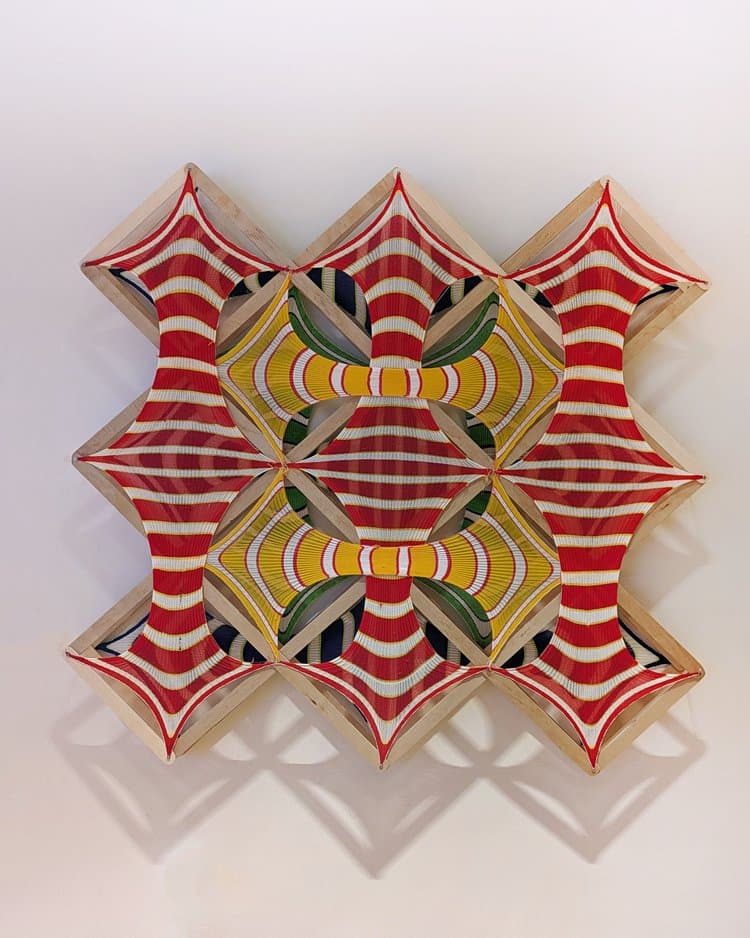
During the workshop, she developed Fungus Among Us, an experimental project exploring organic architectural geometries generated through relatively simple computational rules. The work demonstrated how visually intricate forms could emerge from clearly defined systems, reflecting her interest in the relationship between computational logic and architectural expression. The project was subsequently featured by Parametric Architecture in 2021, while its imagery continued to appear in PAACADEMY’s announcements and campaigns.
[Image: Fungus Among Us — Computational design project by Eliana Nigro, developed during PAACADEMY’s Eco-Parametric Structures workshop]
For Eliana Nigro, however, the value of attending workshops extended beyond the individual projects they produced. Exposure to different designers and teaching methodologies offered an opportunity to reconsider established assumptions and discover alternative approaches to familiar problems. As an experienced computational designer and educator, she was particularly interested in observing how others structured their workflows, communicated complex concepts, and encouraged experimentation among participants.
She also recognized that working within the same professional environment for an extended period could gradually reinforce established ways of thinking. Encountering a different methodology, even when addressing a familiar design challenge, could reveal possibilities that might otherwise remain unexplored.
This perspective influenced her broader approach to professional development. Over the years, Nigro continued exploring technologies and methodologies ranging from environmental analysis and life-cycle assessment to Python, Rhino Compute, and interoperability between architectural software platforms. Yet she increasingly recognized that the lasting value of education was not the accumulation of technical skills alone, but the ability to understand the principles behind them.
In 2025, more than a decade after she first began teaching Rhino at university, she completed McNeel’s Authorized Rhino Trainer programme. For Nigro, pursuing formal training at an advanced stage of her career reflected the same commitment to professional development that had originally brought her to PAACADEMY: the belief that learning remains essential regardless of experience or seniority.
From Computational Design to Digital Leadership
Nigro’s experience at 3XN/GXN provided an important foundation for her transition into leadership. Working on complex architectural projects, she began to recognize that the effectiveness of computational design depended not only on the sophistication of its technical solutions but also on how easily those solutions could be understood and adopted by others.
A highly advanced computational script could have limited practical value if only its creator knew how to operate it. By contrast, a well-structured system that allowed architects to adjust parameters, explore alternatives, and make independent design decisions could benefit an entire team. This distinction gradually shifted her focus from developing individual computational solutions toward creating tools and methodologies that could be shared across architectural practice.
When she joined COBE as Head of Computational Design, Nigro had the opportunity to develop this approach on an organizational level. She established a computational design strategy centered on innovation, knowledge sharing, and integrating digital methodologies into everyday project work. Collaborating with teams across architecture, landscape, and urbanism, she supported the development of complex geometries, computational tools, and sustainability-informed design processes.
Beyond technical implementation, she was particularly interested in creating an environment where computational design could become a natural part of architectural problem-solving. Rather than remaining the responsibility of a small group of specialists, computational methods could be made accessible to designers across different disciplines, allowing teams to explore new possibilities without necessarily possessing advanced programming expertise.
This approach reflected an important change in her professional responsibilities. Her work was increasingly concerned with developing the knowledge, systems, and organizational conditions that allowed other designers to benefit from computational thinking.
Today, as Head of Digital Adoption at Henning Larsen, Nigro’s responsibilities extend beyond computational design into broader digital transformation. Working across architecture, landscape, and urbanism, she focuses on how emerging technologies can be meaningfully integrated into professional practice, with particular attention to artificial intelligence, computational workflows, software interoperability, digital standards, and training.
Her work also involves collaboration with the wider Ramboll technology community, particularly around AI and code-driven design, alongside leadership training for executives and directors. Yet despite the increasing technological complexity of her responsibilities, Nigro believes successful digital transformation must begin with understanding how people work rather than introducing technology for its own sake.
Looking back at her progression from computational designer to digital leader, she describes a gradual expansion in the scale of the problems she seeks to address. Early in her career, the focus was on finding solutions to individual design challenges. At COBE, it became a question of helping teams develop and apply those solutions. At Henning Larsen, her work increasingly involves understanding how knowledge, tools, and successful methodologies can be shared across a global architectural practice.
This evolution illustrates how computational design expertise can develop into broader organizational leadership. As digital technologies become more deeply embedded in architectural practice, the ability to communicate technical knowledge, support collaboration, and establish effective workflows becomes as important as the ability to develop the technologies themselves.
From PAACADEMY Student to Instructor
Nigro’s relationship with PAACADEMY eventually came full circle when she returned to the platform, this time as an instructor. Having previously attended Studio Mamou-Mani’s workshop as a participant, she began sharing her own experience and methodologies with an international community of architects and designers.
The transition was a natural continuation of her longstanding involvement in education. Having taught at universities, through ELNI Studio, and in professional training environments, Nigro saw PAACADEMY as another opportunity to connect architectural practice with education. What particularly appealed to her was the accessibility of online learning, which allowed participants from different countries, professional backgrounds, and levels of experience to engage with the same ideas and methodologies.
For Nigro, this international exchange reflects a broader conviction that computational design should not remain the exclusive domain of technical specialists. Making advanced design methodologies more accessible allows architects to experiment with new approaches, develop greater confidence in digital tools, and incorporate computational thinking into their everyday practice.
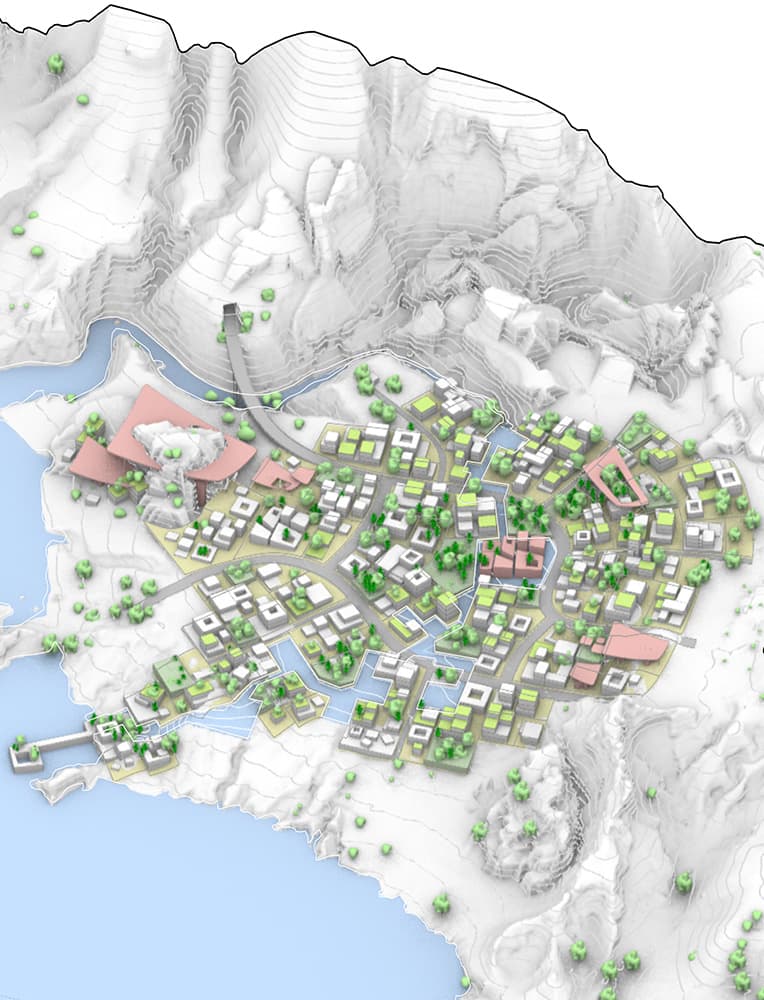
Her contributions to PAACADEMY included two workshops, Computational Dreamscape and Computational Dreamscape 2.0, both exploring the relationship between parametric design, artificial intelligence, and architectural visualization.
The original workshop investigated how computational design workflows could interact with emerging AI image-generation technologies, including Midjourney and Stable Diffusion. In the second edition, Nigro expanded the approach to incorporate Unreal Engine 5, connecting parametric systems, generative imagery, and real-time digital environments.
[Image: Computational Dreamscape workshop — Eliana Nigro, PAACADEMY]
Although the workshops introduced participants to advanced digital tools, Nigro’s educational objectives extended beyond software demonstrations. She wanted students to understand how complex architectural forms could emerge from relatively simple computational rules, why compelling visualizations required a clear conceptual foundation, and how artificial intelligence could be directed through deliberate design intentions.
For her, the increasing accessibility of AI-generated imagery made these principles particularly relevant. While emerging technologies could produce visually impressive results in a matter of seconds, meaningful architectural expression still required a designer capable of establishing the ideas, relationships, and narratives behind those images.
Teaching these concepts also reinforced her own professional practice. Communicating complex technical processes in accessible language requires clarity of thought, a skill she continues to apply when introducing digital methodologies to architectural teams and organizational leaders.
PAACADEMY later recognized Nigro among its Top 10 Inspiring Women Instructors, acknowledging her contributions to architectural education. Her experience with the platform, from workshop participant to educator, reflects the reciprocal relationship between learning and teaching that has accompanied her throughout her career.
Explore Eliana Nigro’s Workshops at PAACADEMY
Computational Dreamscape: Explore the intersection of computational design, artificial intelligence, and architectural visualization.
Computational Dreamscape 2.0: Develop workflows combining parametric systems, AI-generated imagery, and real-time environments using Unreal Engine 5.
Artificial Intelligence and the Future of Architectural Practice
As artificial intelligence becomes increasingly integrated into architectural workflows, Nigro believes computational thinking will become more important rather than less. The growing accessibility of generative technologies allows architects to produce images, code, and design alternatives with unprecedented speed, but it also raises questions about how those outputs should be evaluated and incorporated into meaningful architectural decisions.
For Nigro, the fundamental challenge is shifting from the ability to generate possibilities toward the ability to assess their relevance, reliability, and architectural value.
“Generating is getting cheaper. Judgment becomes more valuable.”
While AI can accelerate exploration and expand the range of potential design outcomes, architects must still understand the specific conditions that shape each project, including its site, cultural context, technical constraints, and the needs of its users. The ability to generate numerous alternatives does not necessarily lead to better architecture unless those alternatives are guided by a clear understanding of what the project is trying to achieve.
Nigro is particularly interested in the potential of AI-assisted programming, which is lowering technical barriers and allowing designers with limited coding experience to develop their own computational tools. This accessibility could broaden participation in computational design and encourage experimentation among architects who might previously have considered programming outside their professional expertise.
However, she also emphasizes the distinction between producing functional code and developing reliable computational systems. AI-generated scripts still require an understanding of computational logic, workflow structure, and technical limitations, particularly when they are intended for use within complex architectural projects.
These developments reinforce her belief that technological advancement should be accompanied by stronger critical thinking. As AI becomes increasingly capable of automating technical tasks, architects may need to place greater emphasis on the human dimensions of their profession: understanding people, responding to cultural contexts, interpreting places, and making informed design decisions.
In this environment, computational expertise is not simply about knowing how to operate sophisticated tools. It is about understanding how those tools work, recognizing their limitations, and determining when their application contributes meaningfully to architectural practice.
Learn the Method, Not Just the Tool
Looking back on her professional journey, Nigro’s advice to younger architects is grounded in the same principles that have shaped her own development: remain curious, understand the methodologies behind emerging technologies, and continue experimenting even when the direction of the industry is uncertain.
Her experience across architectural practice, computational design, education, and digital leadership has reinforced the importance of developing transferable ways of thinking rather than relying exclusively on particular software platforms. As tools continue to evolve, the ability to break down problems, establish logical relationships, and structure effective workflows will remain relevant across different technologies and professional contexts.
“I would say: learn the method, not only the tool.”
Equally important is the willingness to share knowledge. Throughout her career, Nigro has sought to develop systems that other designers can understand and use independently, rather than creating technical solutions that remain dependent on their original author. This philosophy connects her early experience teaching computational design with her subsequent leadership responsibilities at COBE and Henning Larsen, where knowledge sharing and organizational learning have become central to her work.
She also encourages young designers to remain open to experimentation, particularly as artificial intelligence introduces new possibilities whose long-term implications are not yet fully understood. Rather than waiting for technologies to mature or for the future of architectural practice to become entirely predictable, she believes designers should actively investigate unfamiliar tools, test unconventional ideas, and learn through the process of exploration.
Nigro’s journey demonstrates that professional development is rarely defined by a single educational experience or career milestone. From her early studies in Italy to computational design at 3XN/GXN, leadership at COBE, and her current role at Henning Larsen, her career has evolved through an ongoing exchange between professional practice, experimentation, and education.
Her relationship with PAACADEMY reflects this same approach. She first joined the platform as an experienced computational designer interested in exploring new perspectives through Studio Mamou-Mani’s workshop, before returning as an instructor to share her own expertise with an international community.
In an architectural profession increasingly shaped by emerging technologies, her experience offers a reminder that the most valuable professional skill may not be mastery of any individual tool, but the ability to continue learning, question established methods, and share knowledge with others.
For Eliana Nigro, learning has never been a stage to complete before entering professional practice. It has remained an essential part of the practice itself.
About Eliana Nigro
Eliana Nigro is an Italian architect and computational design specialist based in Copenhagen, Denmark. She currently serves as Head of Digital Adoption at Henning Larsen, where her work focuses on computational design, artificial intelligence, digital transformation, and the integration of emerging technologies into architectural practice.
Previously, she served as Head of Computational Design at COBE and worked as a computational designer at 3XN/GXN. She is the founder of ELNI Studio, an Authorized Rhino Trainer, and an educator who has taught computational design and digital technologies internationally.
At PAACADEMY, she has taught Computational Dreamscape and Computational Dreamscape 2.0, sharing her expertise in computational design, artificial intelligence, and architectural visualization with an international audience.
Connect with Eliana Nigro on LinkedIn
About PAACADEMY Alumni Spotlight
PAACADEMY Alumni Spotlight celebrates the professional journeys of architects, designers, and creative professionals who have participated in our educational programs. Through their experiences, we explore how continuous learning, experimentation, and the exchange of knowledge contribute to careers in architecture and design.
Explore Workshops at PAACADEMY



.jpg&w=3840&q=75)