Valentine’s Day ❤️ Use code PARAMETRICLOVE for 30% OFF for Members and 15% OFF for Non-Members

3D-Printed Wall Systems

This workshop explores computational design and 3D printing workflows in Rhino and Grasshopper to create fabrication-ready interior wall systems.

50 Seats
Apr 18, 19, 2026
14:00 - 18:00 GMT
Saturday - Sunday
Lessons in Progress
Beginner
8 Hours
Certificate — Learn
English
Unlimited Access
€100.00
€85.00
Last 1 seats at this price!

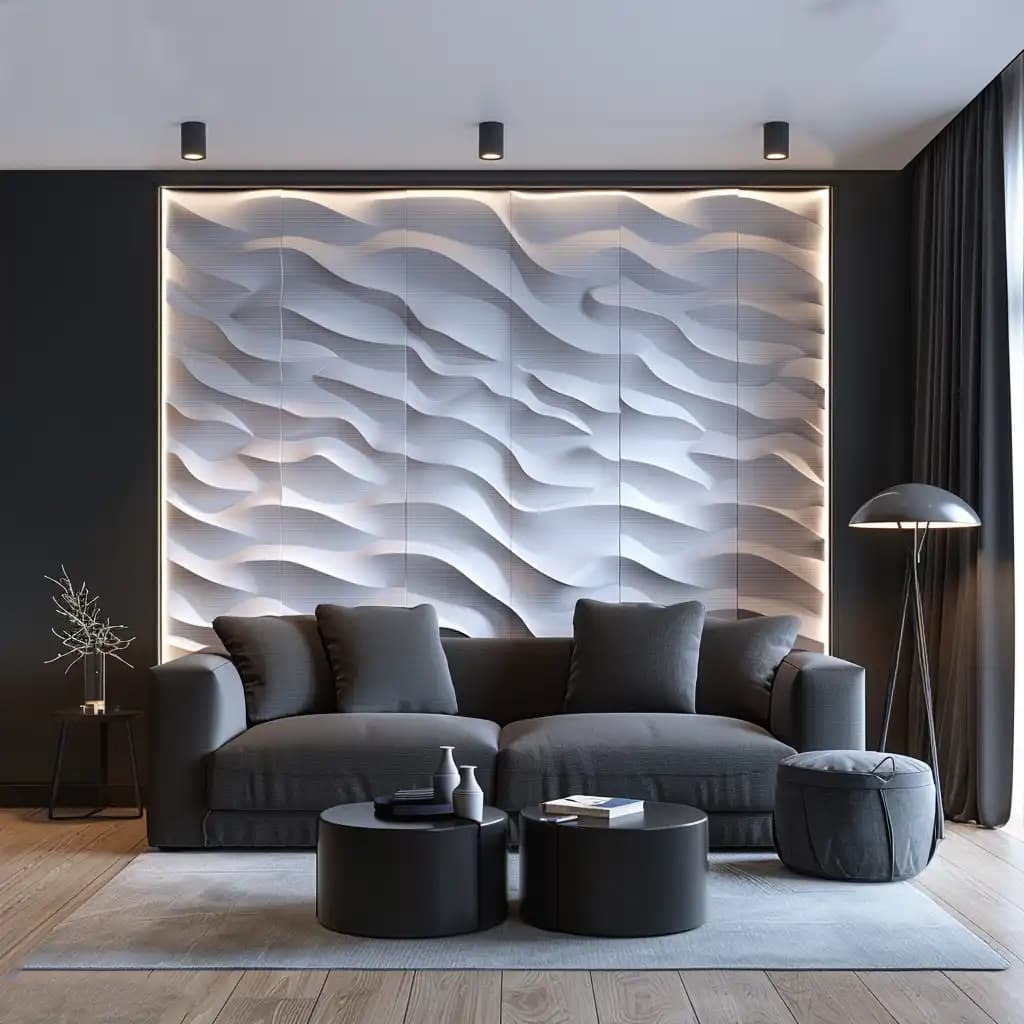
In the modern interior, walls are no longer passive boundaries. They have become canvases for architectural expression. This workshop explores the shift toward Maximum Dimension design, where 3D printing enables the creation of complex, non-repetitive, high-relief surfaces that were previously cost-prohibitive or difficult to manufacture.

By extending textures from floor to ceiling, participants will explore how immersive sculptural wall environments can be created. These surfaces behave as three-dimensional landscapes, changing with the viewer’s position and the direction of light. Rhino 3D and Grasshopper are the primary tools used throughout the workshop, providing the precise mathematical control needed to bridge the gap between creative form-finding and machine-ready form-making.

This workshop focuses on the design of bespoke, production-ready interior wall systems. Participants will investigate how a simple 2D concept can be translated into a fully articulated 3D textured surface through algorithmic logic.

Design Typology
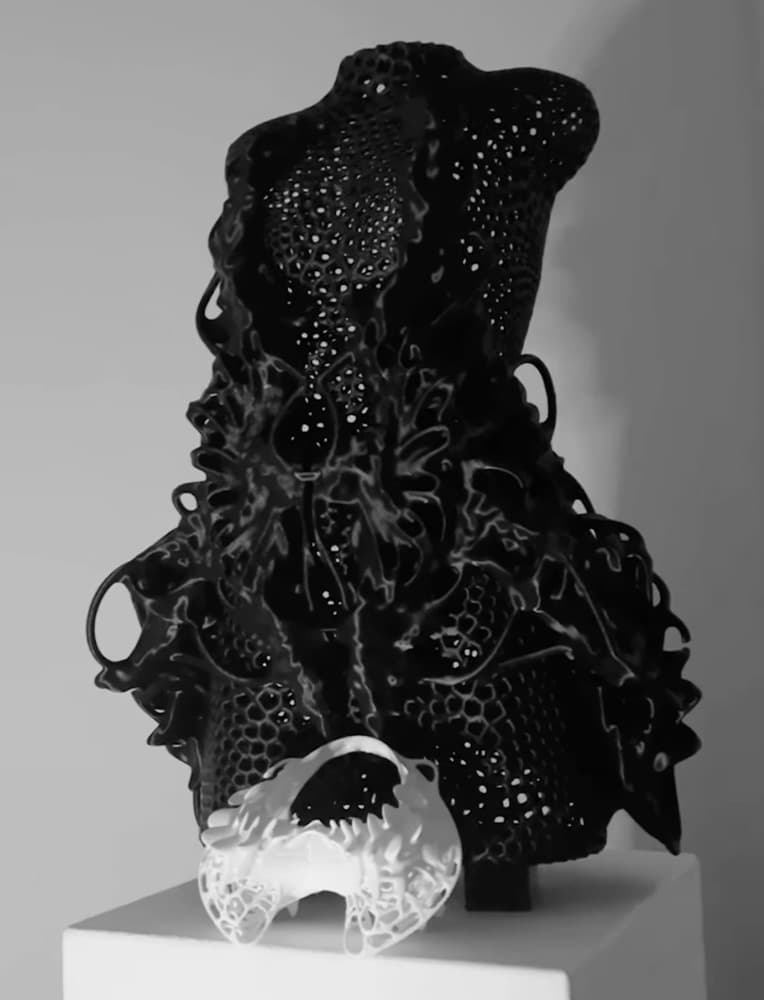
The workshop explores design strategies driven by both manufacturing constraints and aesthetic intention, with a specific emphasis on biomorphic patterns and non-repetitive surface logic.

Technical Depth
At the core of the workshop is Grasshopper. Participants will develop custom parametric scripts to automate texture generation, panel subdivision, and joint integration for large-scale wall systems.
How to translate 2D patterns into 3D-printable relief systems
Principles of fabrication-aware design, including no-support geometries
Advanced Grasshopper workflows for integration and slicing logic
Techniques for managing large-scale data in high-resolution 3D prints
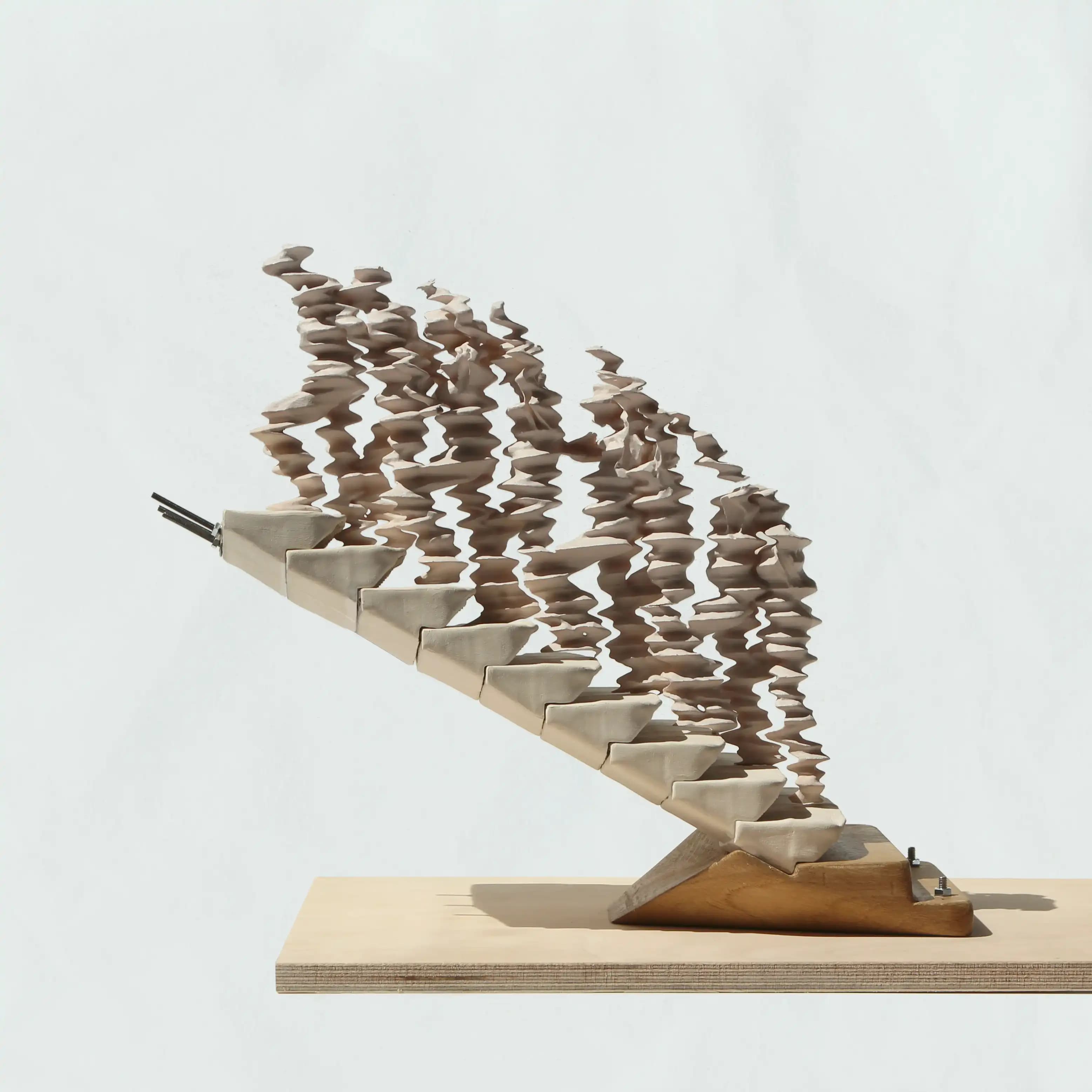
Strategies for interlocking, mounting, and assembling 3D-printed wall panels in real interiors

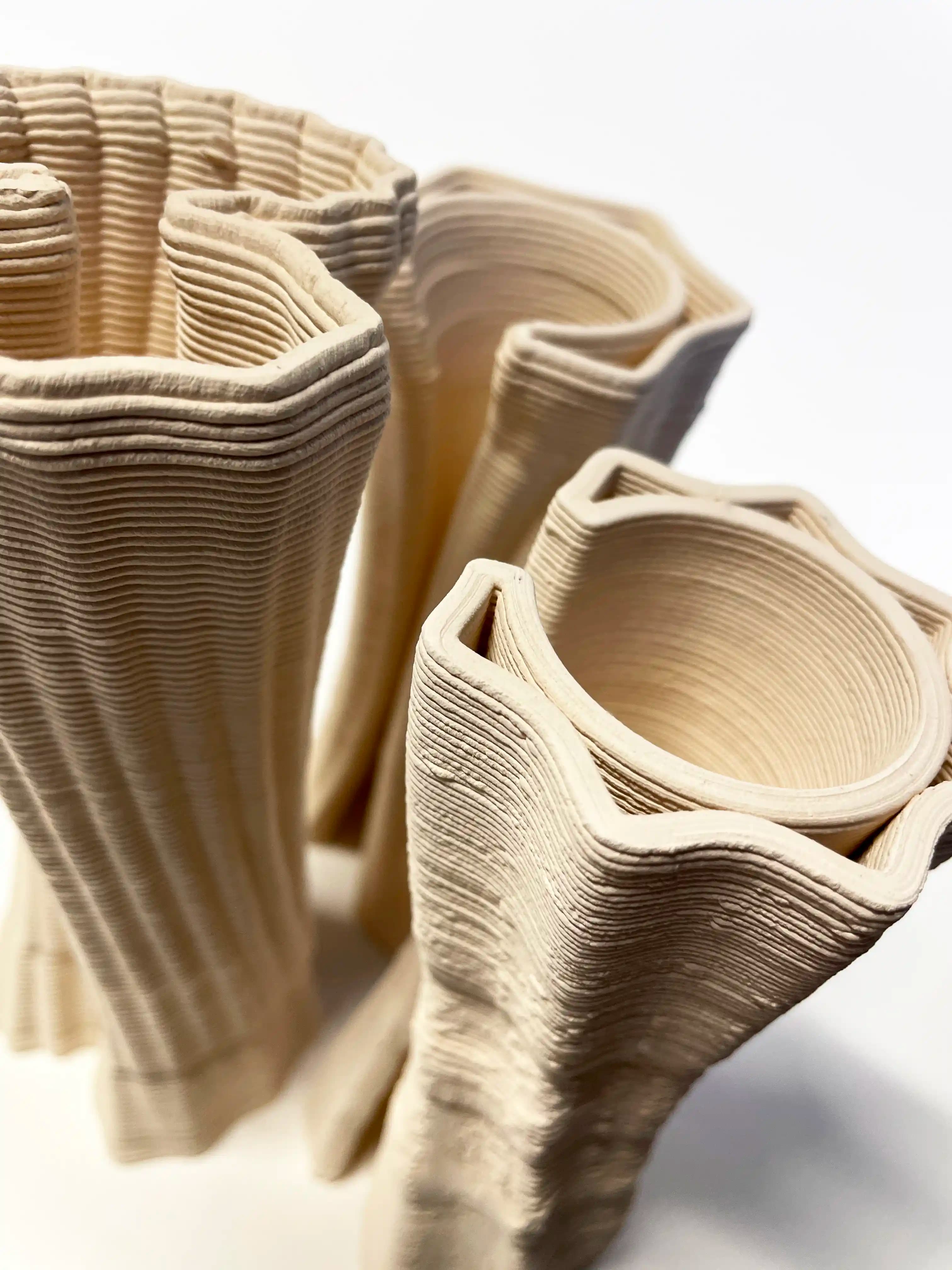
The workshop follows a Design-to-Fabrication (D2F) workflow to produce construction-ready wall panels. Instead of designing form first and addressing fabrication later, manufacturing constraints are embedded directly into the design process. These include nozzle size, layer logic, structural reinforcement, and interlocking mechanisms.

  • Ideation Phase
    Participants define key design constraints and overall wall composition, exploring typologies such as vertical-horizontal flow and bidirectional deformation.

  • Parametric Modeling Phase
    Using Rhino and Grasshopper, participants generate 3D textured wall systems based on parameters established during ideation.

  • Optimization Phase
    Models are refined for manufacturing and assembly, including wall thickness calibration and interlocking joint logic.

  • Machine Code Generation
    3D geometry is prepared for printing through slicing and toolpath logic, with examples of toolpath-driven surfaces and G-Code generation.

  • Final Project
    Each participant designs an individual signature wall using a fragmentation strategy. All projects contribute to a collective Digital Wall gallery.

Day 1: Design Logic & Materiality

  • The Theory of Layers
    Introduction to FDM, FGF, and Large-Scale Additive Manufacturing, including materials, machine kinematics, and core design principles.
  • Surface Type 1
    Setting up a Grasshopper environment for a vertical flow surface configuration.
  • Assembly & Detailing
    Designing keyhole mounts and tongue-and-groove joints directly within the 3D model.
  • Assignment
    Participants develop a variation based on one of the discussed surface typologies.

Day 2: From Digital Mesh to Physical Tectonic

  • De-brief & Sample Review
    Review and discussion of participant-developed wall designs.
  • Surface Type 2
    Creating a bidirectional surface configuration with integrated assembly and detailing logic.
  • Slicing & Toolpathing
    Preparing surfaces for 3D printing, including toolpath-driven surfaces and G-Code generation.
  • Conclusions & Feedback
    Final review, discussion, and Q&A session.

Instructors:

Biography
Mirko Daneluzzo is an Italian architect and computational designer whose work bridges academic research and professional practice in computational design, digital fabrication, and material systems. He earned his Master’s degree with honors at the University of Applied Arts Vienna, studying under Greg Lynn and François Roche, and has collaborated in teaching and research contexts across Europe.He is the co-founder and Chief Design Officer of NYXO, an architecture and product design studio operating between experimental objects and industrial production, and teaches Computational Design and Design Laboratory at LABA Academy of Fine Arts in Rimini. His work has been exhibited internationally, including at the Venice Architecture Biennale and the Beijing Biennale, and focuses on how digital technologies, simulation, and advanced fabrication processes such as 3D printing can generate new structural and aesthetic languages.

No reviews yet.

No comments found.