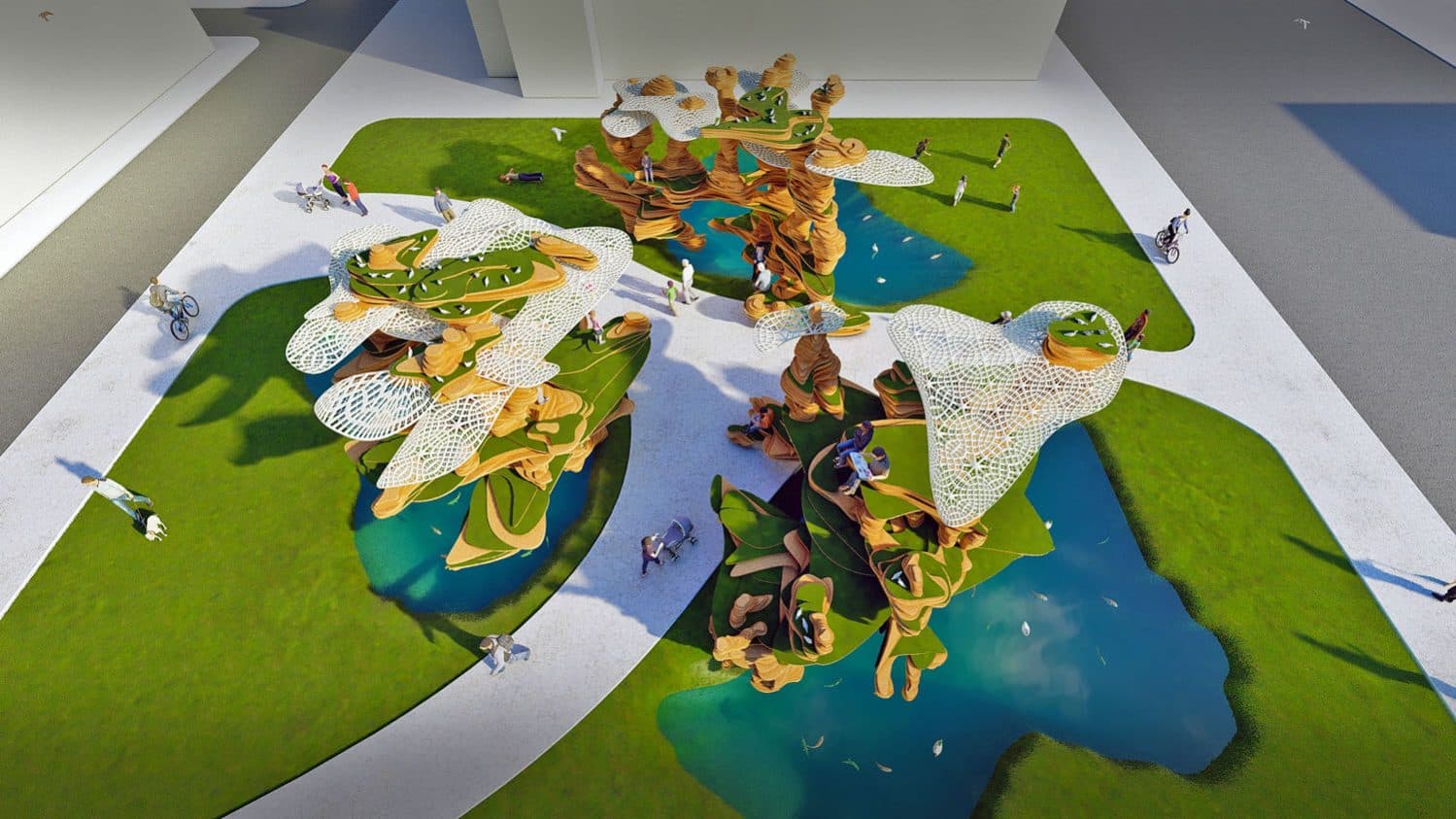
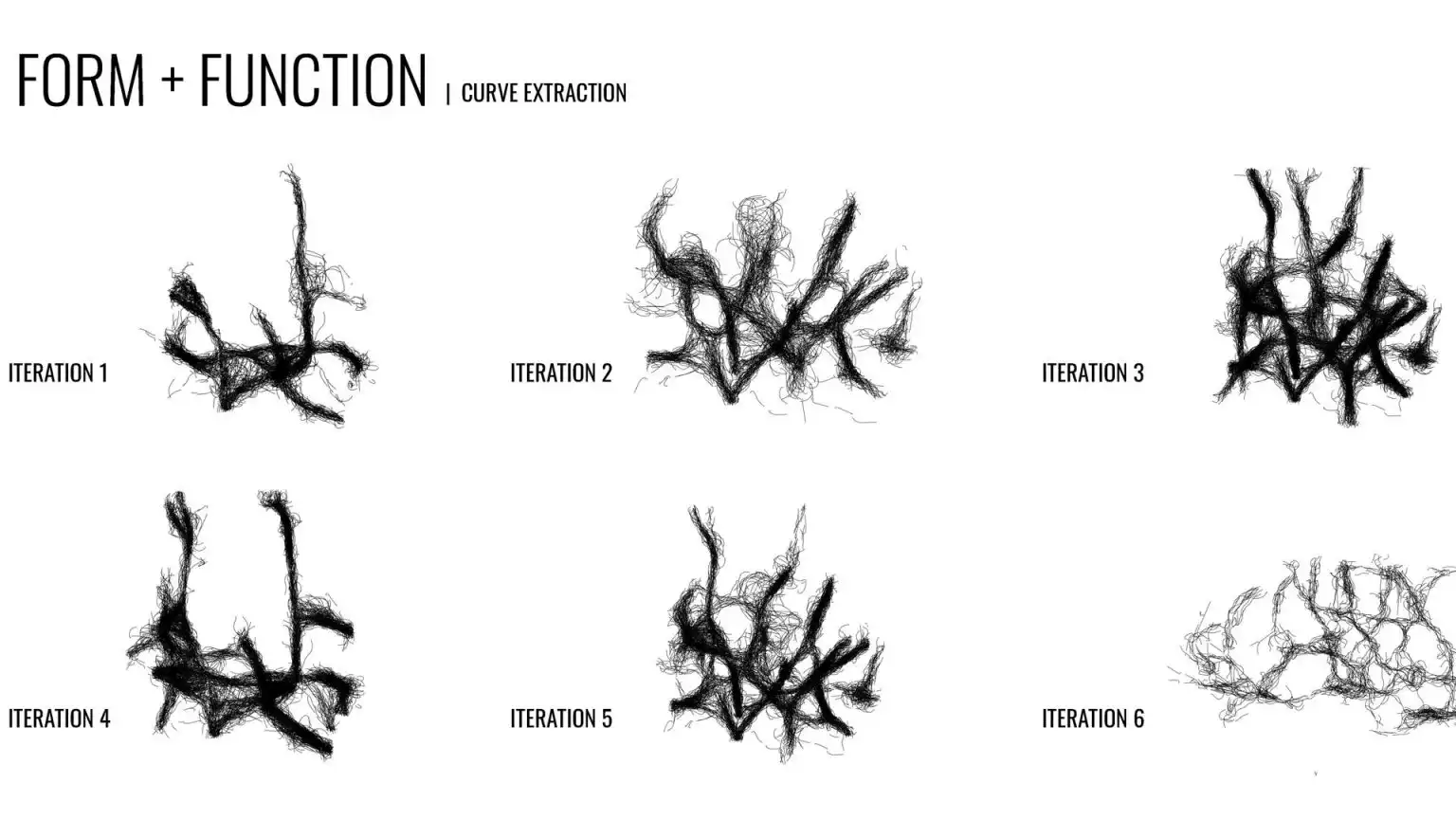
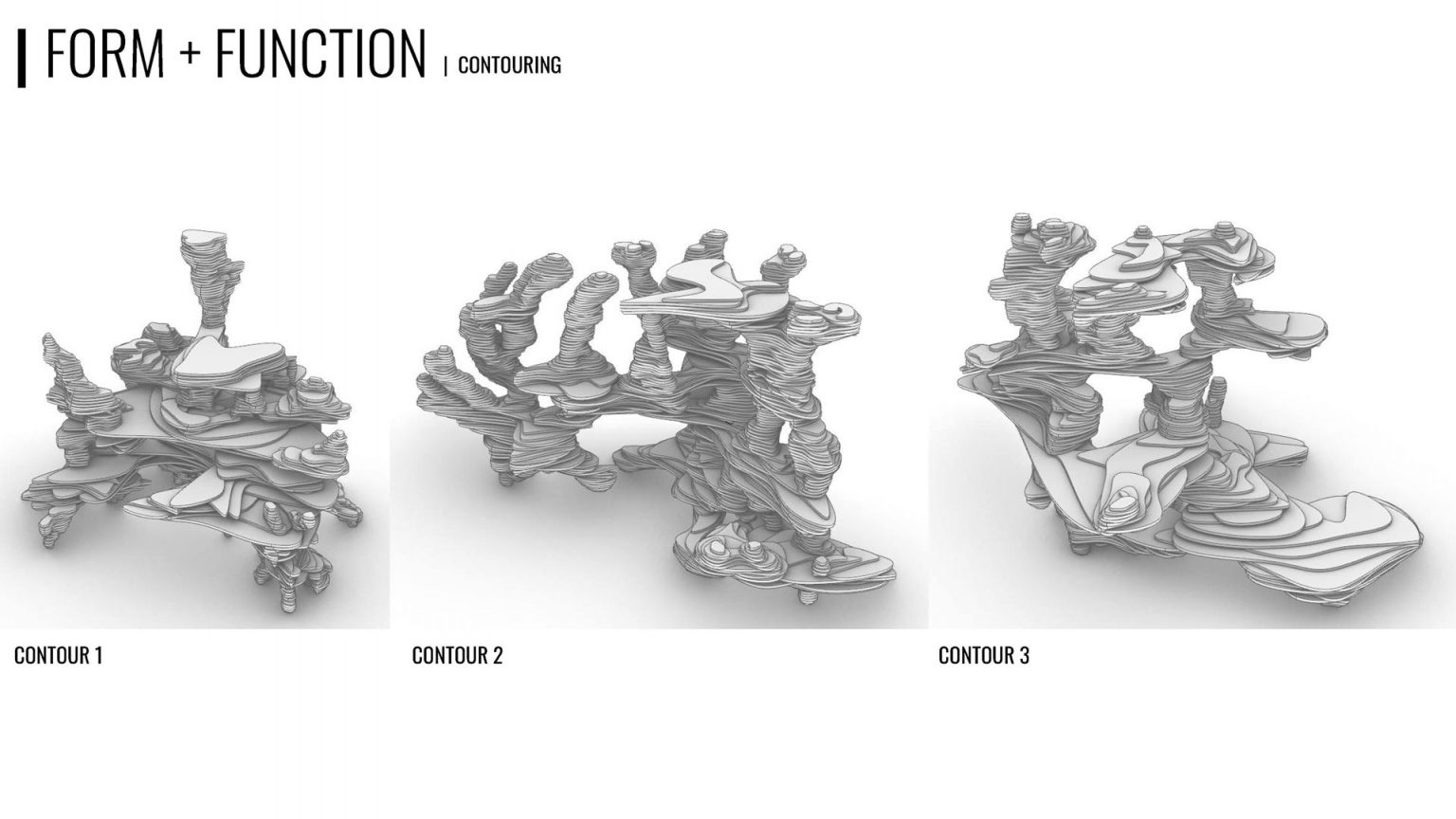
In the Form-Finding exploration of the project, students look for harmony between architecture & nature to achieve a merger between form and the materiality and integration of its natural context. The goal was to bring nature back to the city and raise ecological awareness by activating an underutilized urban space. Above all, the students strive to create an eco-structure that will evoke human connection and awaken a sense of play.
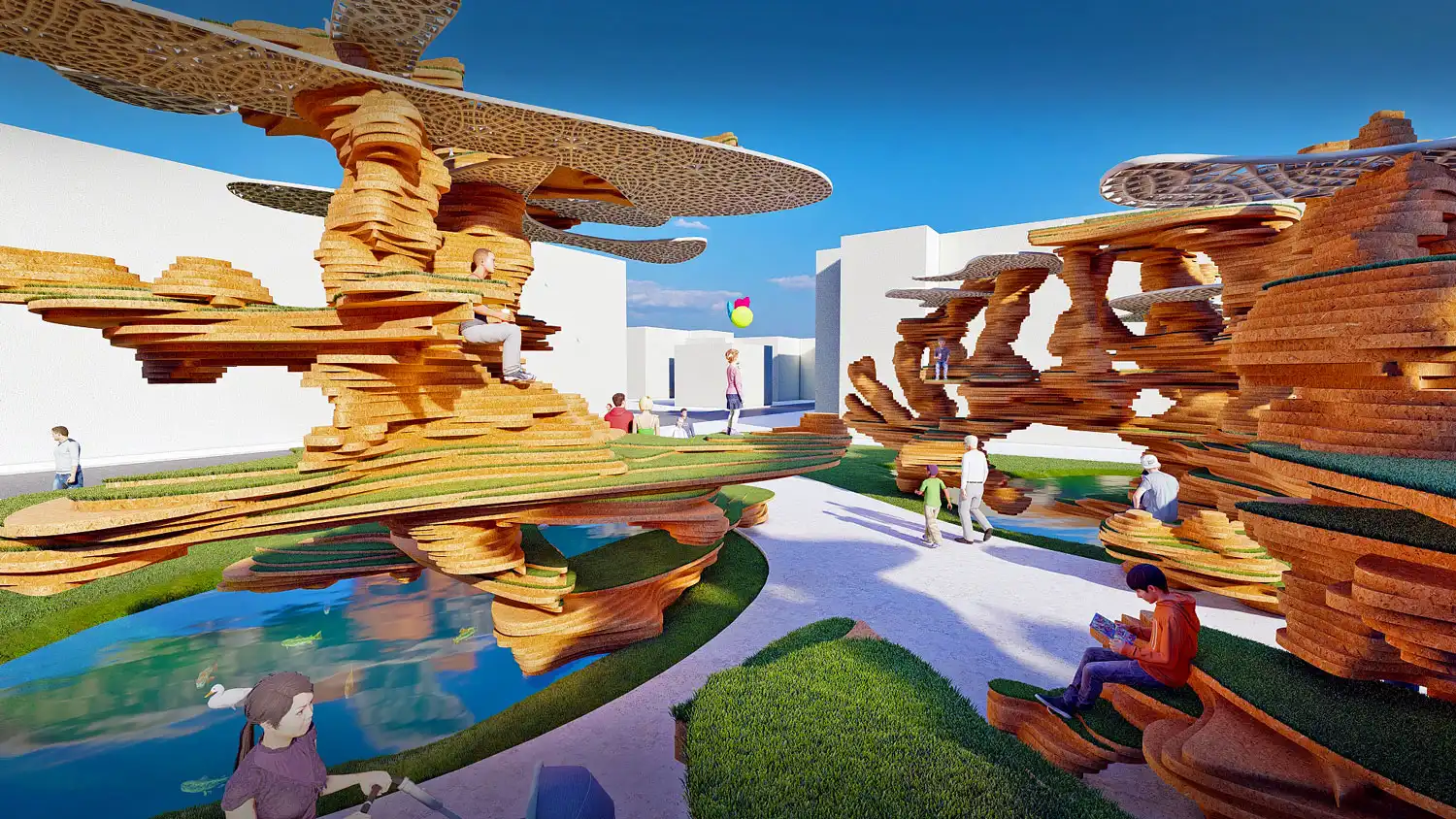
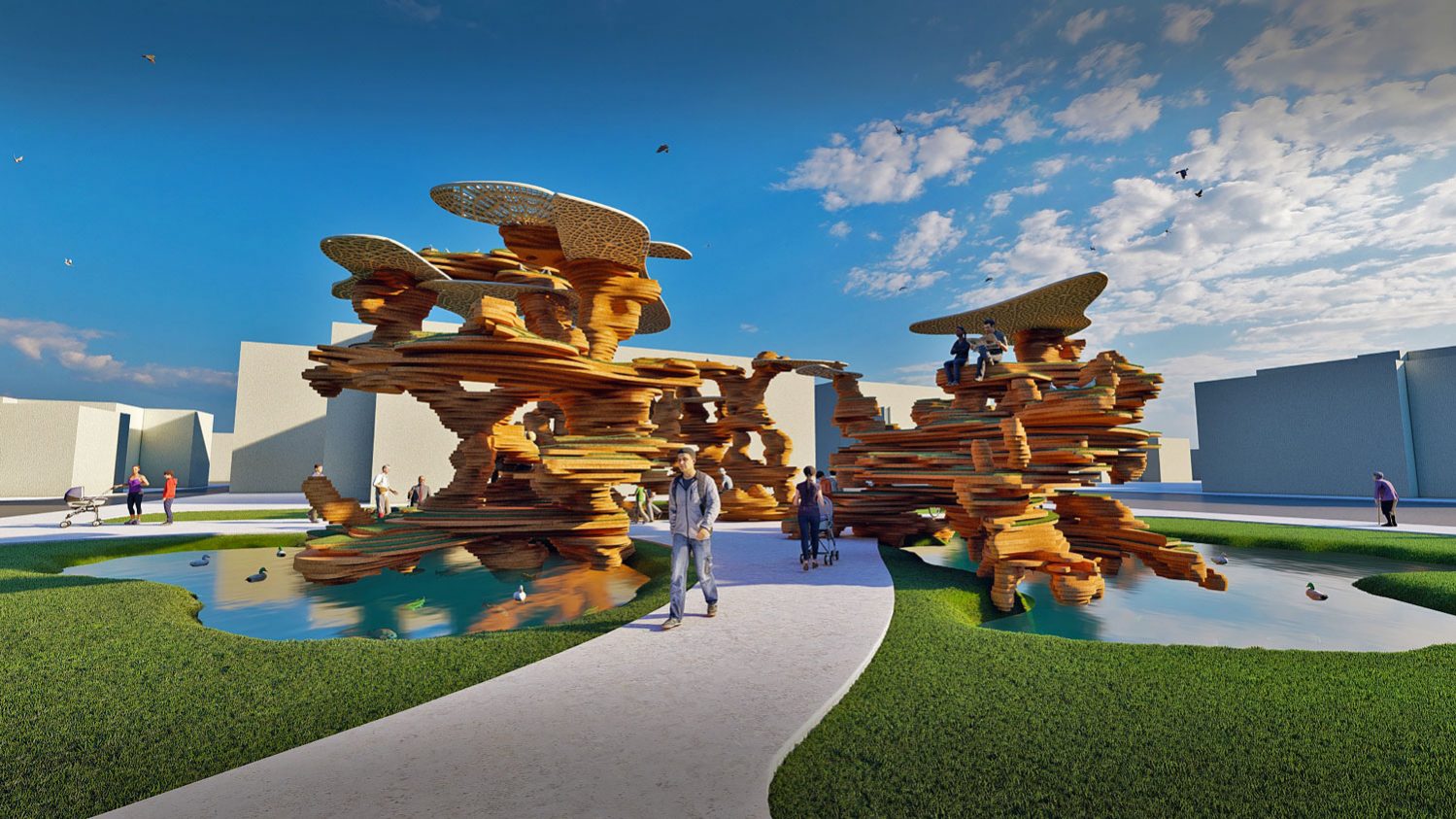
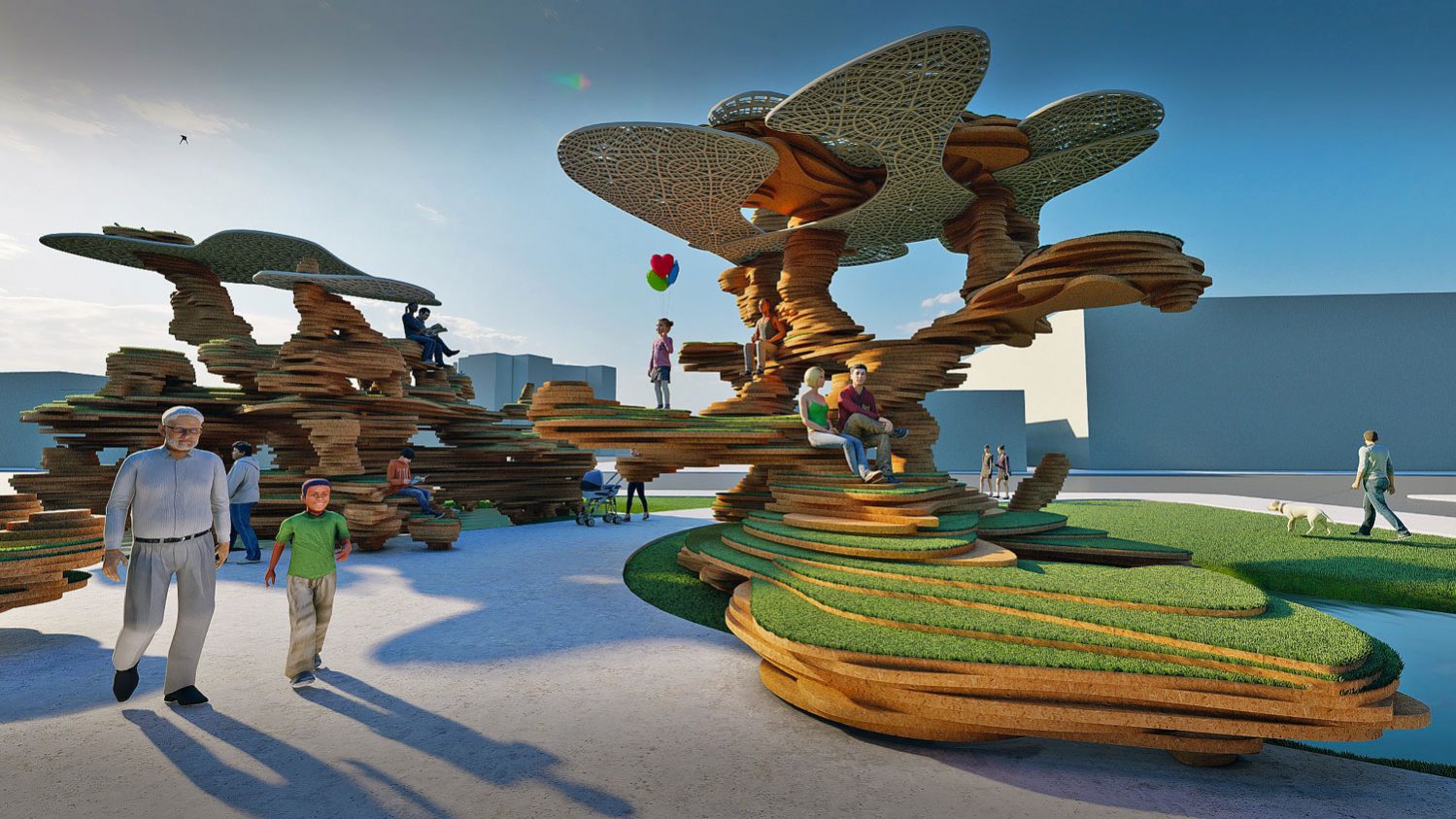
One of the inspirations of the project is biomimicry. Biomimicry in Architecture studies nature and emulates forms, processes, systems, and strategies to solve human problems to create ecological standards & sustainable design solutions.
Another inspiration for the project is Buckminster Fuller’s tessellation techniques for dome geometry. They were one of the first attempts to integrate bionics into architectural design.
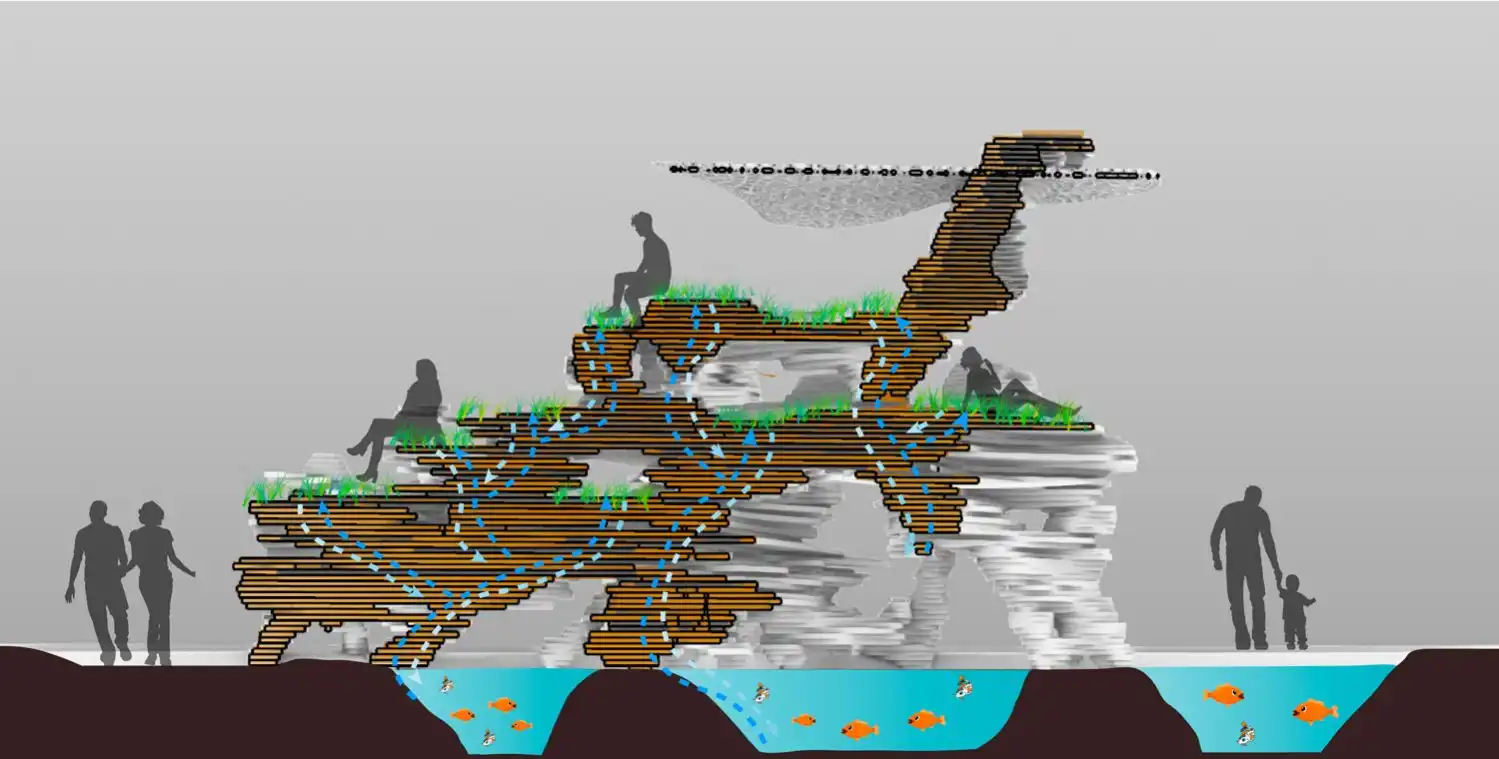
By incorporating emerging technologies and tools, such as parametric, algorithmic, and generative design methods, students could move beyond mimicry of geometry and order and into enhancing environmental, structural, and material performance by learning from the mechanisms and properties found in nature.
Arthur Mamou – Mani and his team from Mamou-Mani led 6 intriguing sessions with PAACADEMY’s ‘Eco-Parametric Structures studio workshop on creating an ecological solution through computational design methods. The session focused on developing a parametric, modular, and environmentally conscious system in an online studio through interactive workshops and discussions.
Credits:
Studio workshop by PAACADEMY
Studio title: Eco-Parametric Structures
Lead by: Arthur Mamou-Mani and his team
Project name: Hanging Eco-Gardens
Students: Ara Keuroghlian – Luis Lopez – Yervant Megurditchian
Date: 2nd March until 13th April 2021