Article
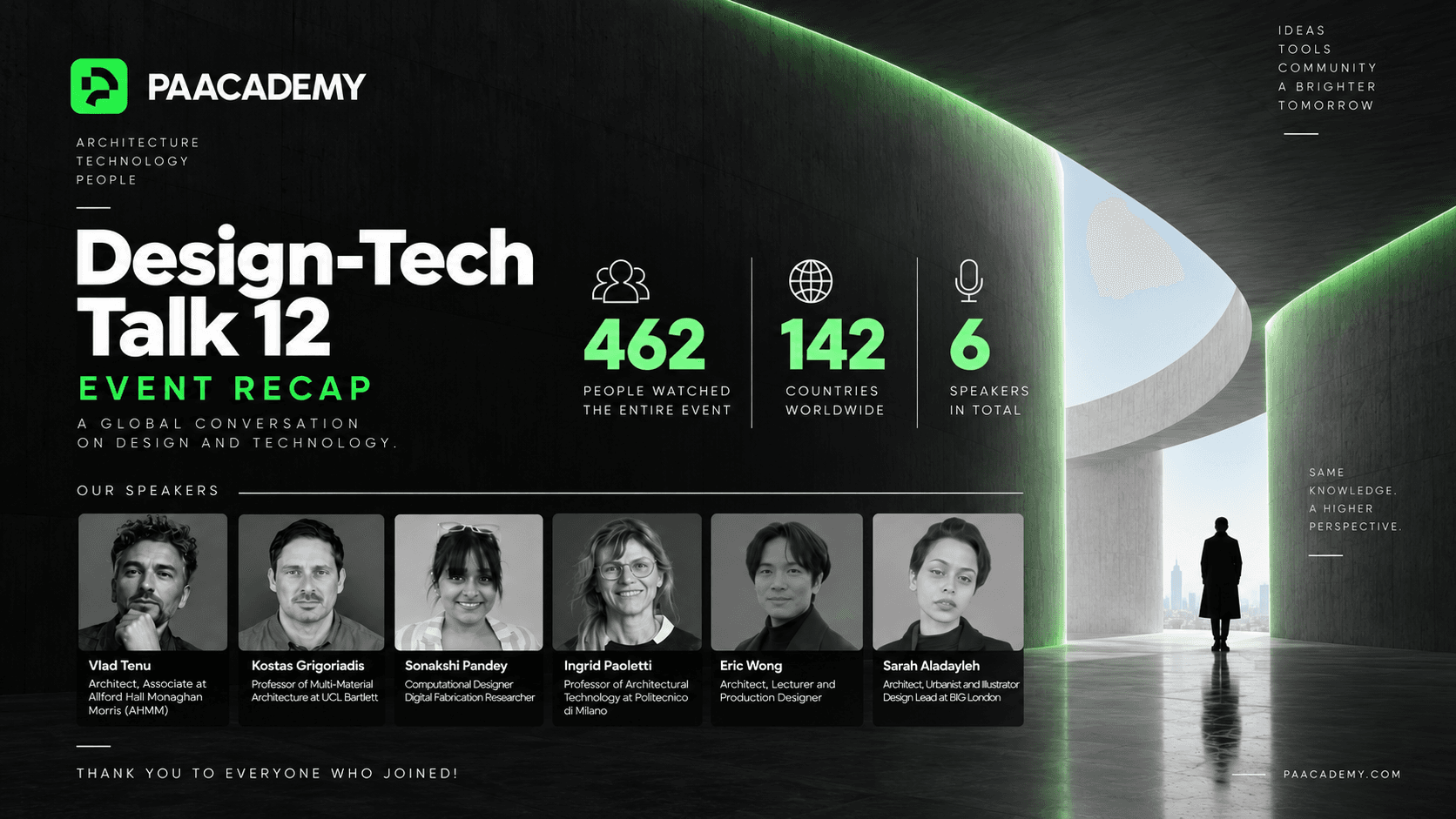
For two days, 462 participants from 142 countries gathered online around a shared question: where is architecture heading as computation, fabrication, new materials, artificial intelligence, and interdisciplinary creative practices increasingly reshape the profession? Design-Tech Talk 12, organized by PAACADEMY on September 19–20, 2026, brought together six architects, designers, researchers, and educators whose work approaches that question from markedly different directions.
Across approximately eight hours of presentations and discussions, the conference moved between multi-material architecture, computational form-finding, 3D printing, textile fabrication, urbanism, illustration, speculative world-building, and material research. Rather than presenting technology as an isolated subject, the speakers repeatedly returned to its relationship with physical matter, storytelling, experimentation, craft, and the way architects translate ideas into built or imagined environments.
The event was moderated throughout both days by Hamid Hasanzade, founder of Parametric Architecture and PAACADEMY, and Aleyna Kırcalı, Education Manager at PAACADEMY. Their conversations with the speakers extended each lecture through questions about education, professional practice, emerging technologies, experimentation, and the changing responsibilities of designers.
More significantly, the geographic reach of Design-Tech Talk 12 reflected one of the central ambitions behind PAACADEMY’s online events. Architectural knowledge has historically been concentrated around particular universities, conferences, studios, and cities, making direct access to leading practitioners difficult for much of the global design community. Bringing hundreds of participants from 142 countries into the same virtual room demonstrates another model: one in which a student, young architect, researcher, or designer can encounter emerging ideas regardless of where they are physically located.
Kostas Grigoriadis: From Multi-Material Architecture to Computational Speculation
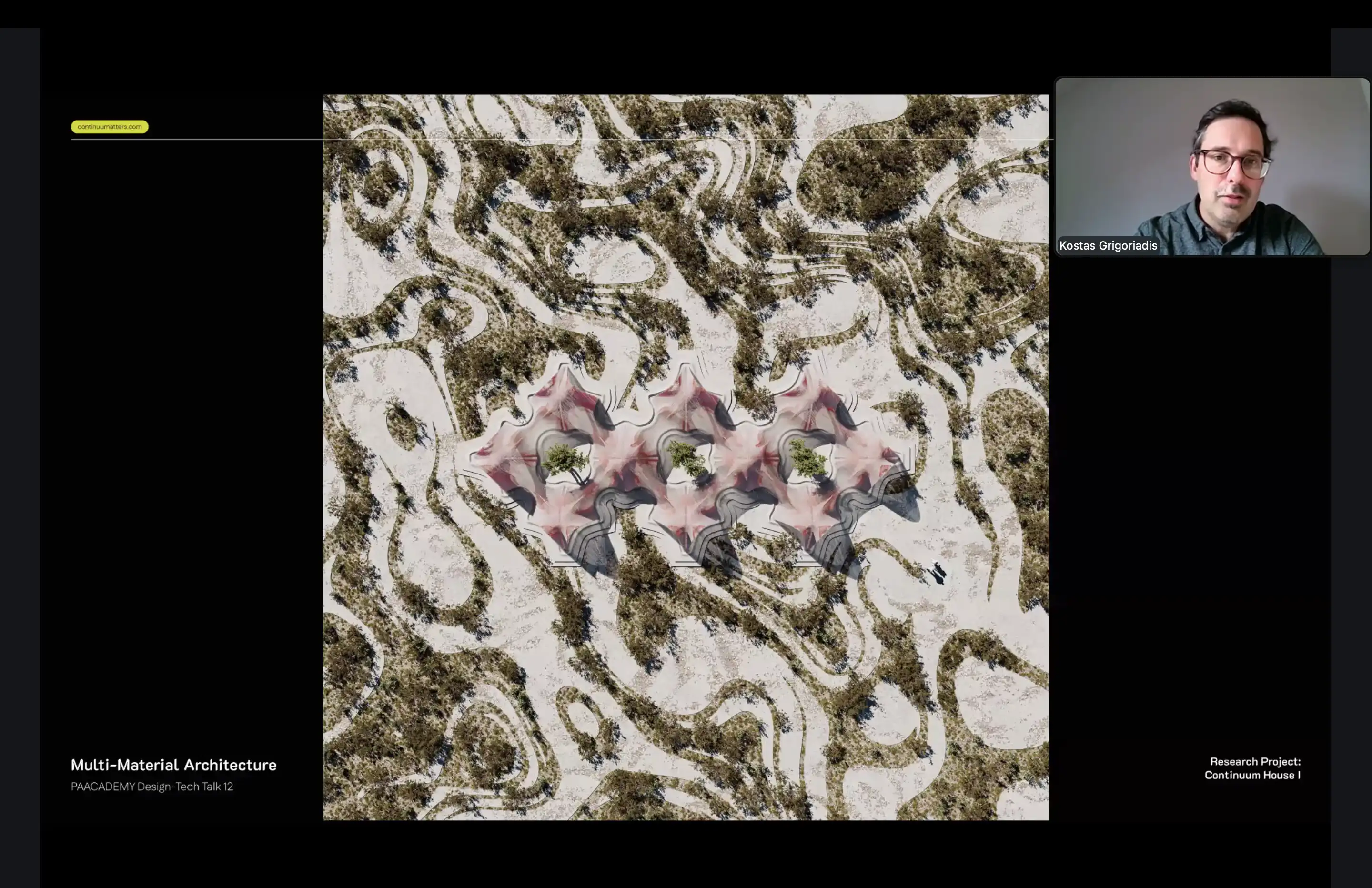
The conference opened with Kostas Grigoriadis, Professor of Multi-Material Architecture at The Bartlett School of Architecture, UCL, whose lecture, Multi-Material Architecture: Building Statistics and Speculations, connected more than a decade of architectural research with built projects and speculative experimentation.
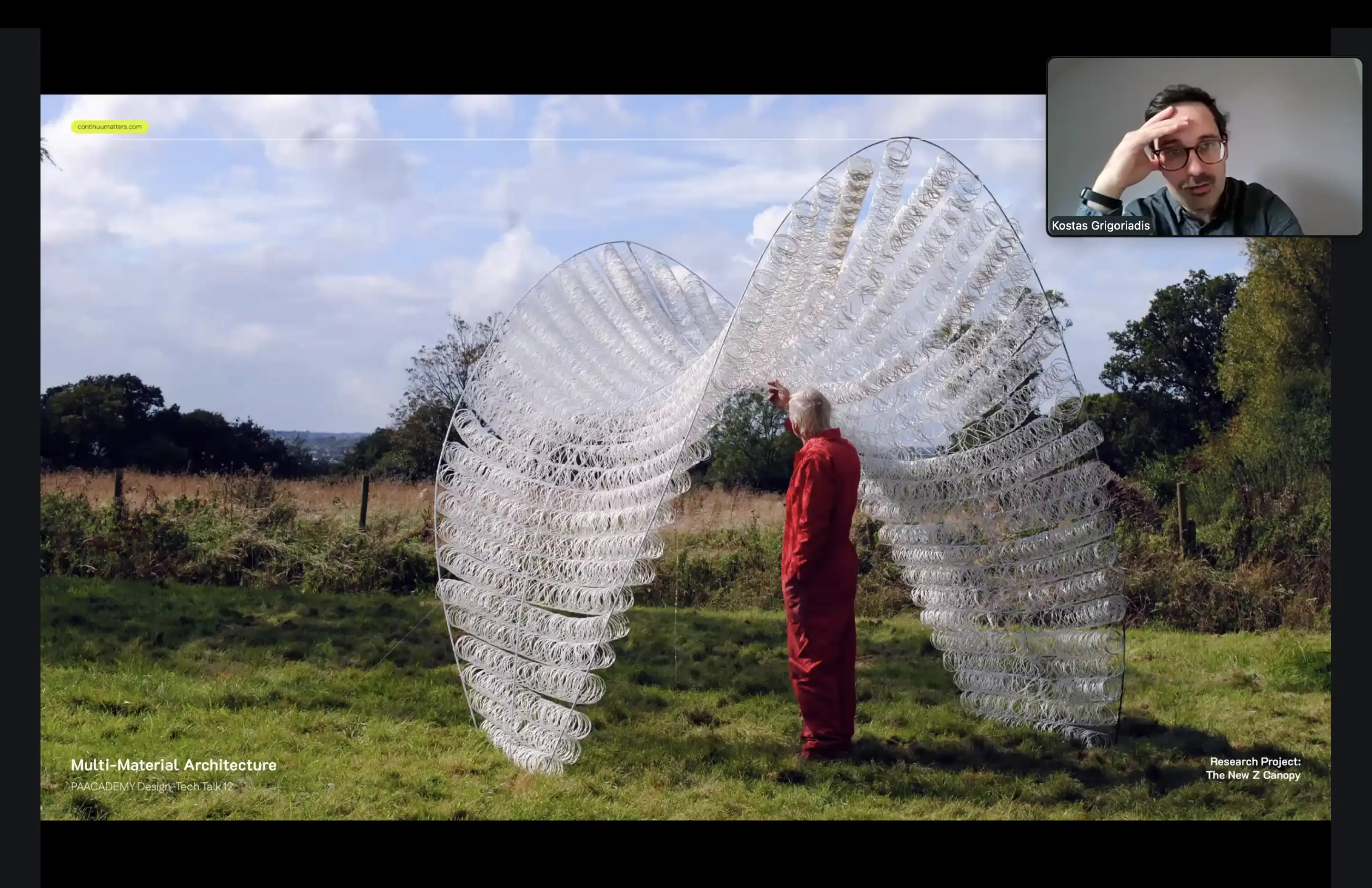
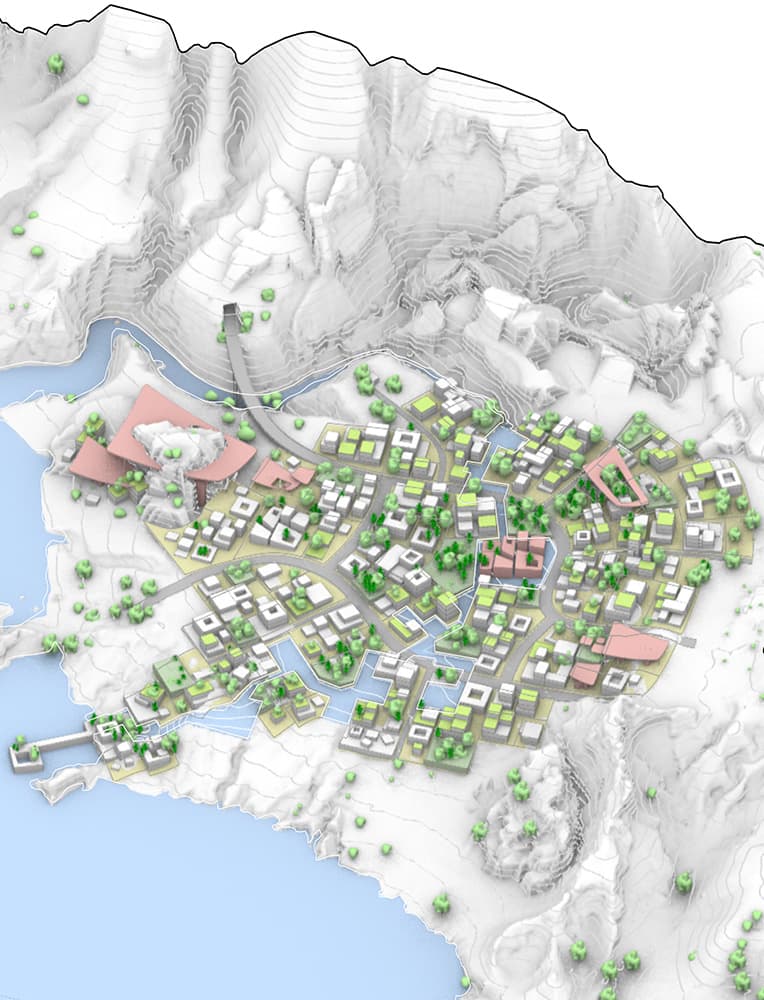
Grigoriadis began with architecture itself, discussing projects such as the Cozoo Tourist Center in China before gradually moving toward research into multi-material systems and topology optimization. A recurring question was why architectural design so often begins with familiar Cartesian and Platonic geometries when computational tools now allow designers to investigate forms responding more directly to forces, materials, and performance.
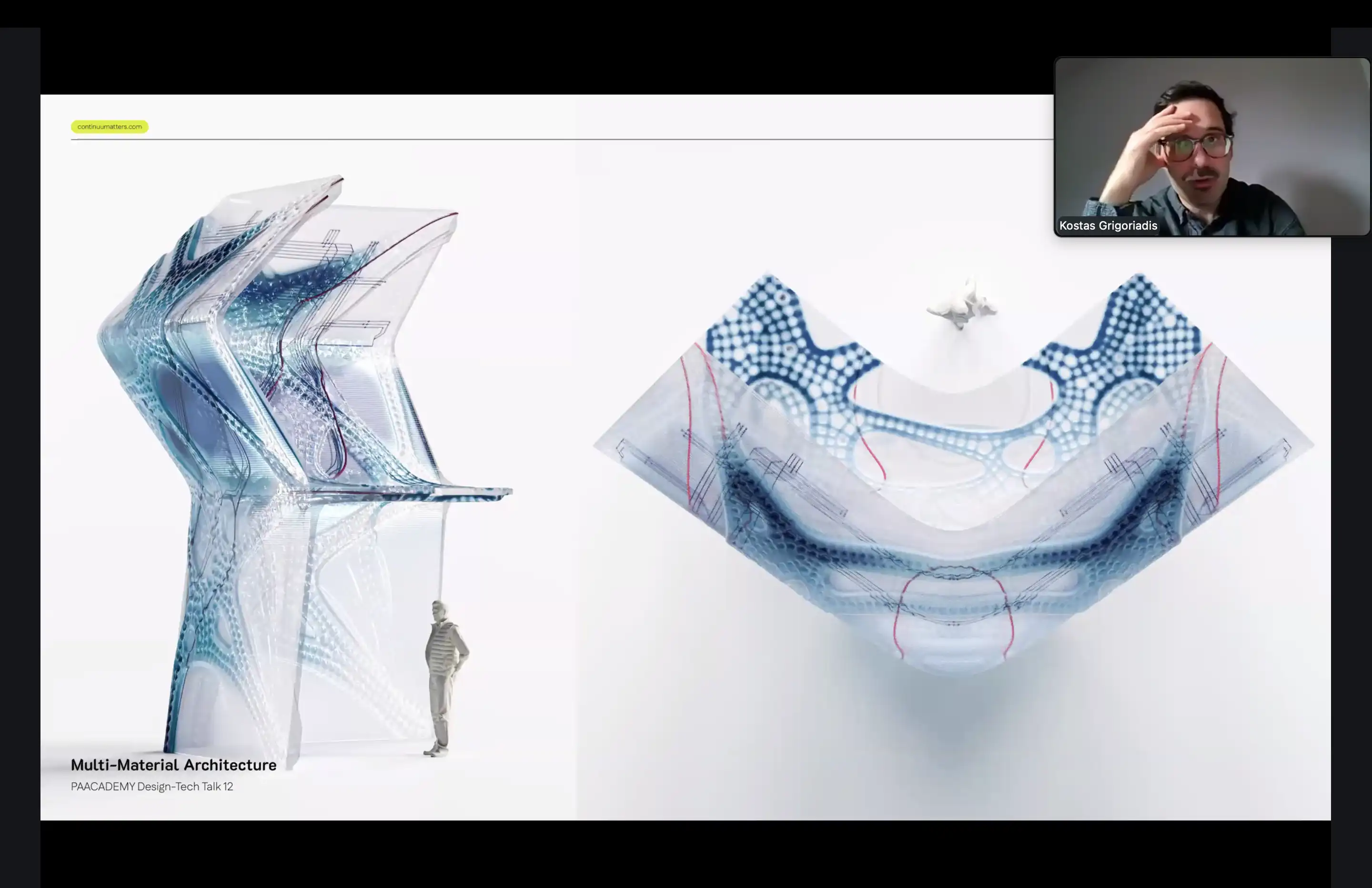
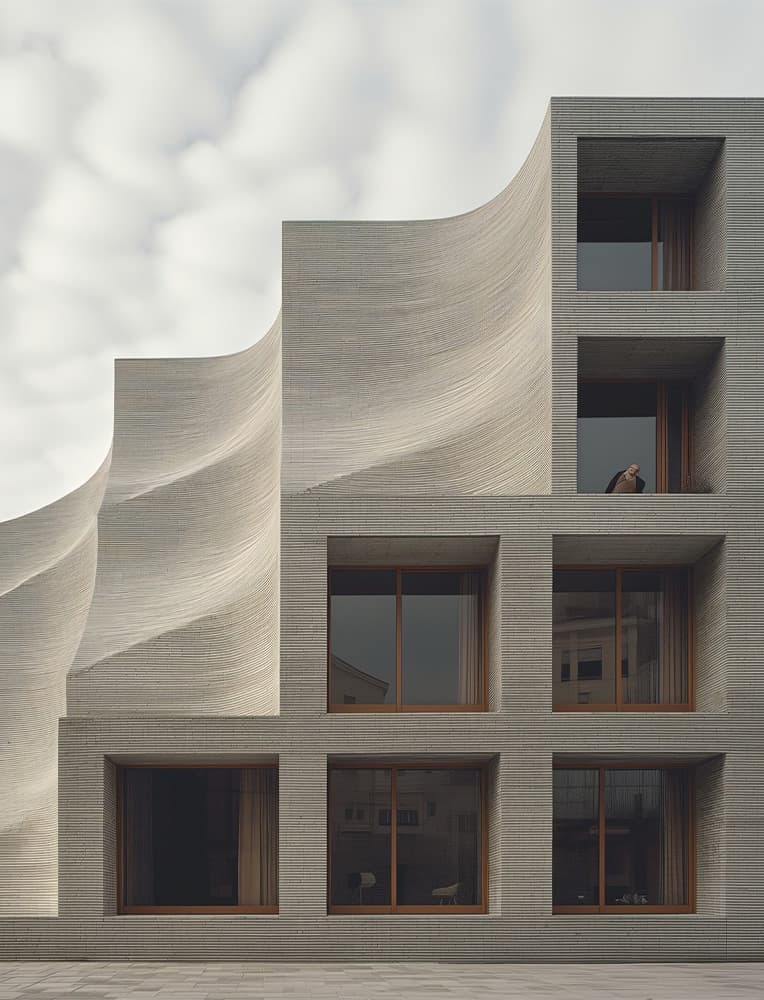
His lecture demonstrated how computation can become more than a means of producing complex geometry. Through research into material continuity, optimization, additive manufacturing, and digitally generated structures, Grigoriadis positioned computational design as a method for reconsidering the relationship between geometry and matter. The presentation ultimately moved from constructed architecture toward increasingly speculative possibilities, suggesting that experimentation can establish new architectural languages before they become conventional building methods.
Vlad Tenu: Finding Form Through Algorithms, Nature, and Fabrication
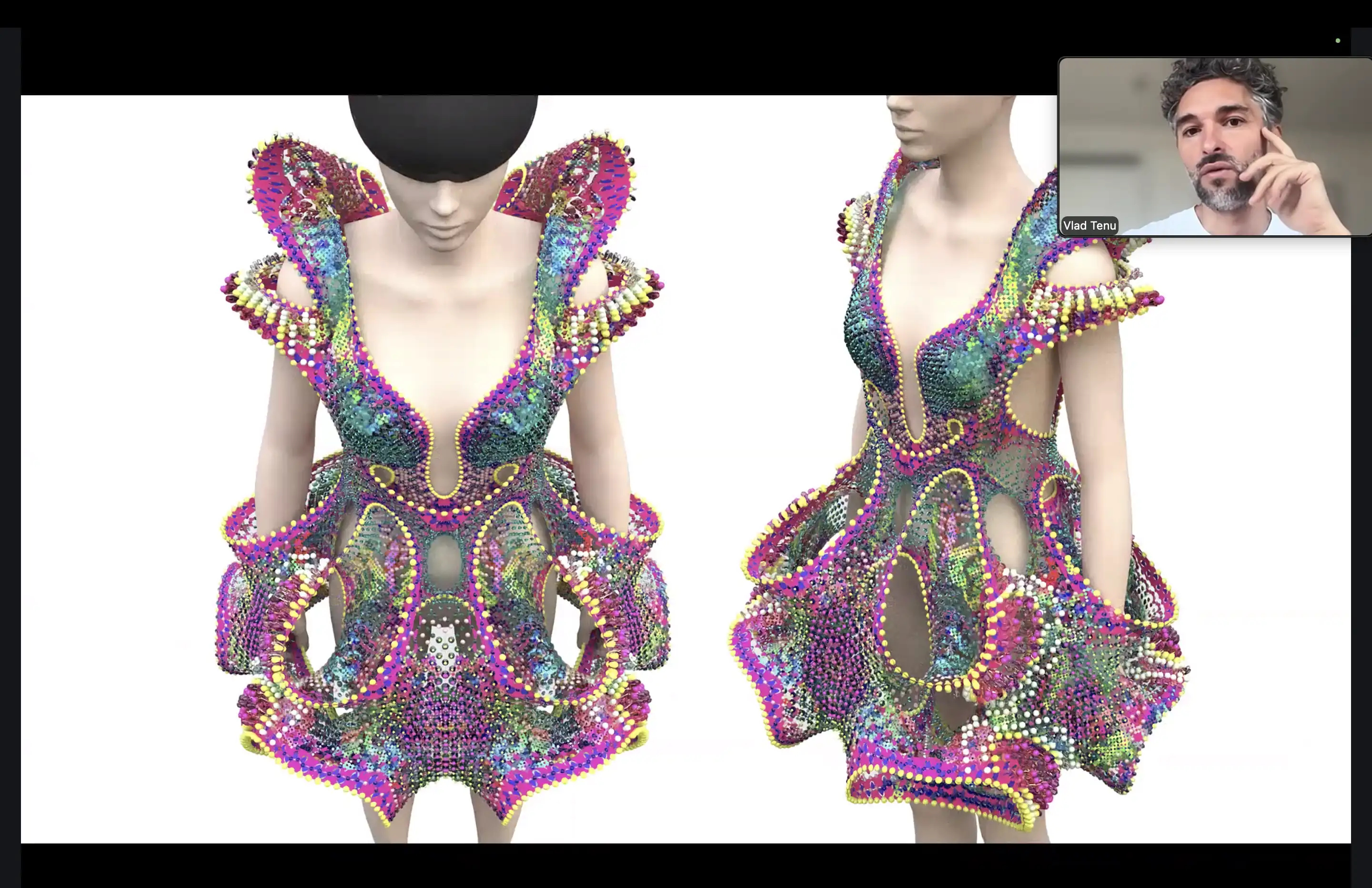
Romanian-British architect, designer, and artist Vlad Tenu followed with Glimpses of Infinite Symmetry, tracing a creative journey spanning architecture, computational design, installations, sculpture, and fabrication.
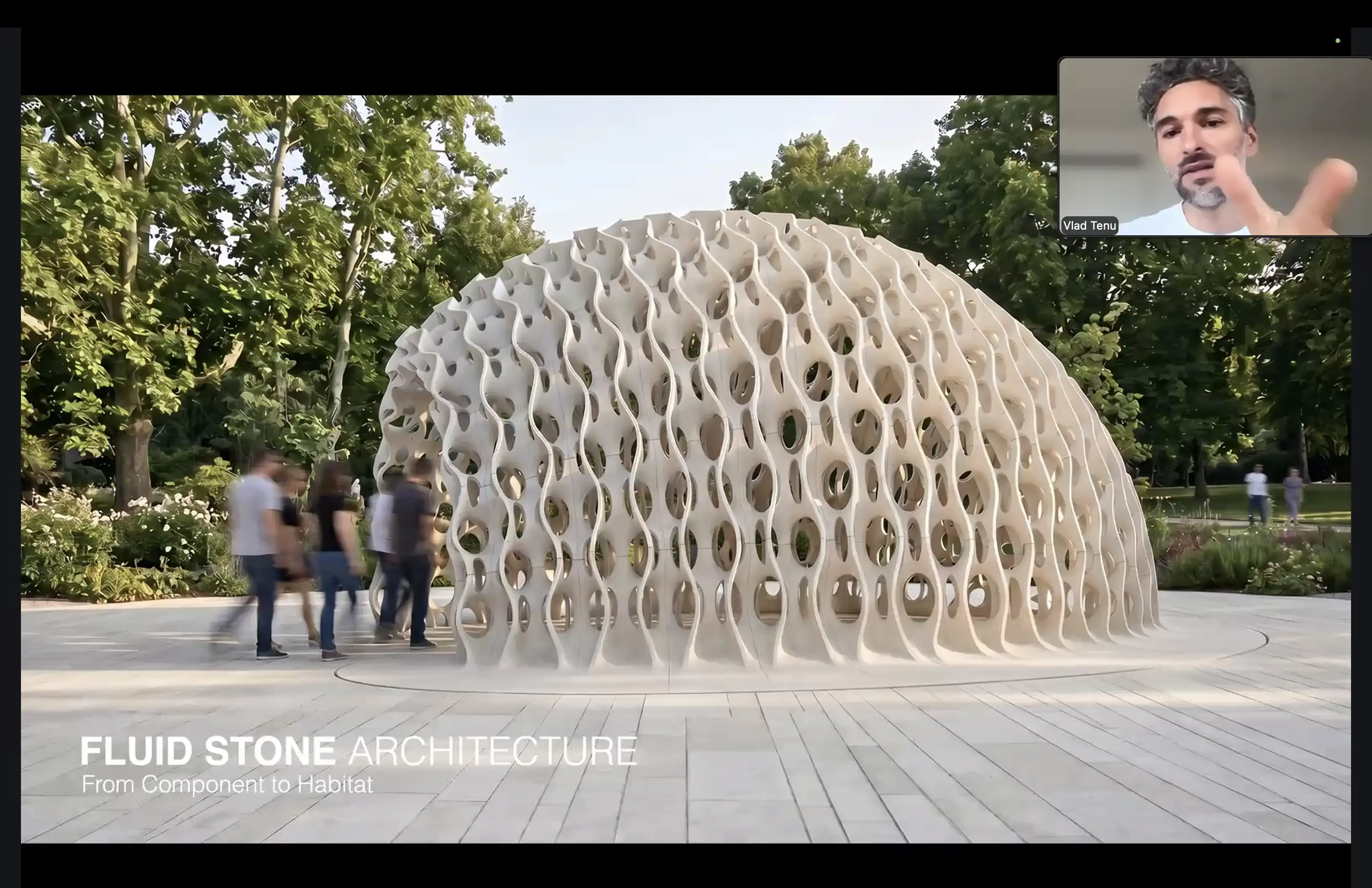
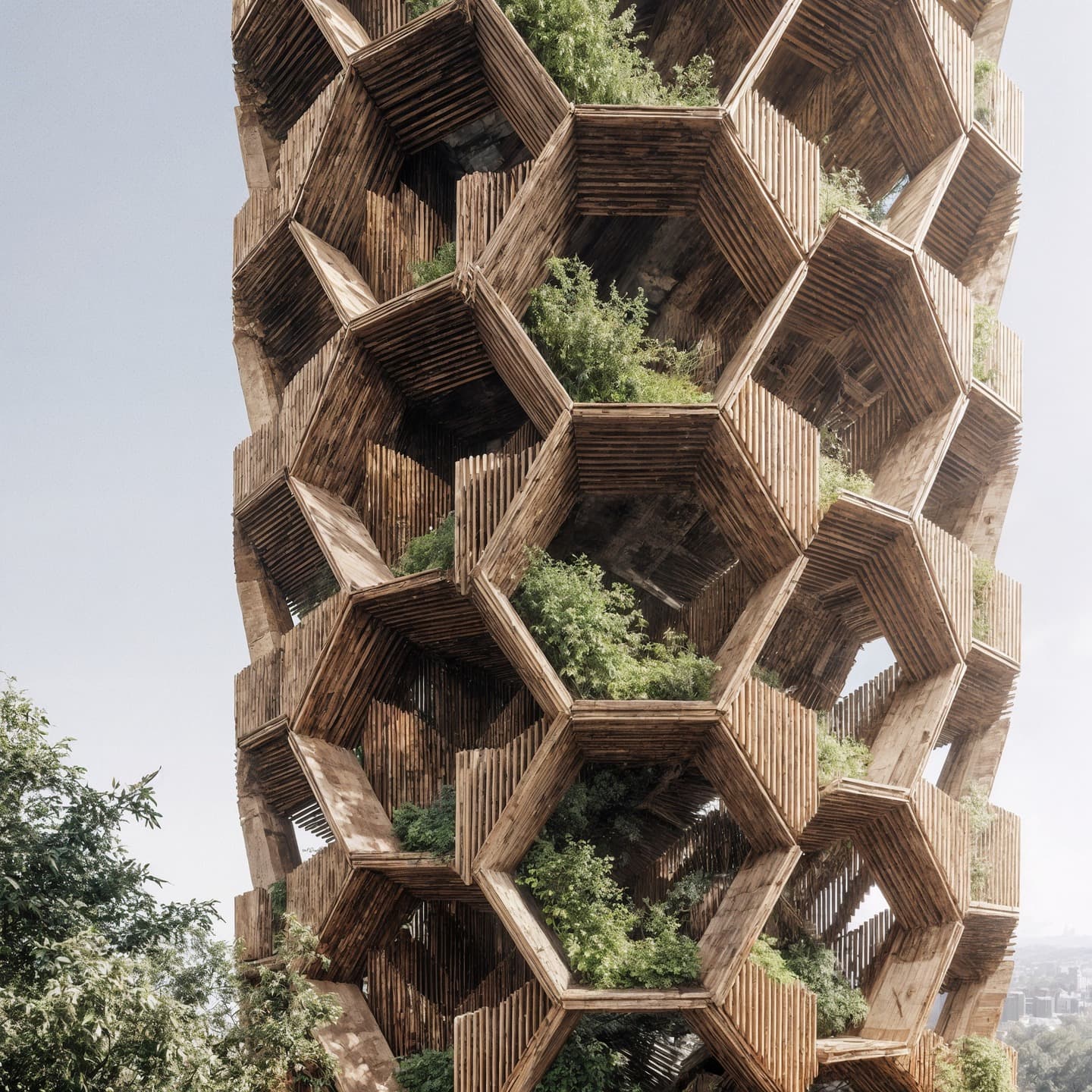
Tenu situated contemporary algorithmic design within a longer history of form-finding, referring to precedents such as Antoni Gaudí and Frei Otto before reflecting on his own early encounters with computational methods. His research into minimal surfaces and self-organizing systems became an important foundation for understanding geometry not as a predetermined visual composition, but as something that can emerge through rules, forces, and iterative processes.
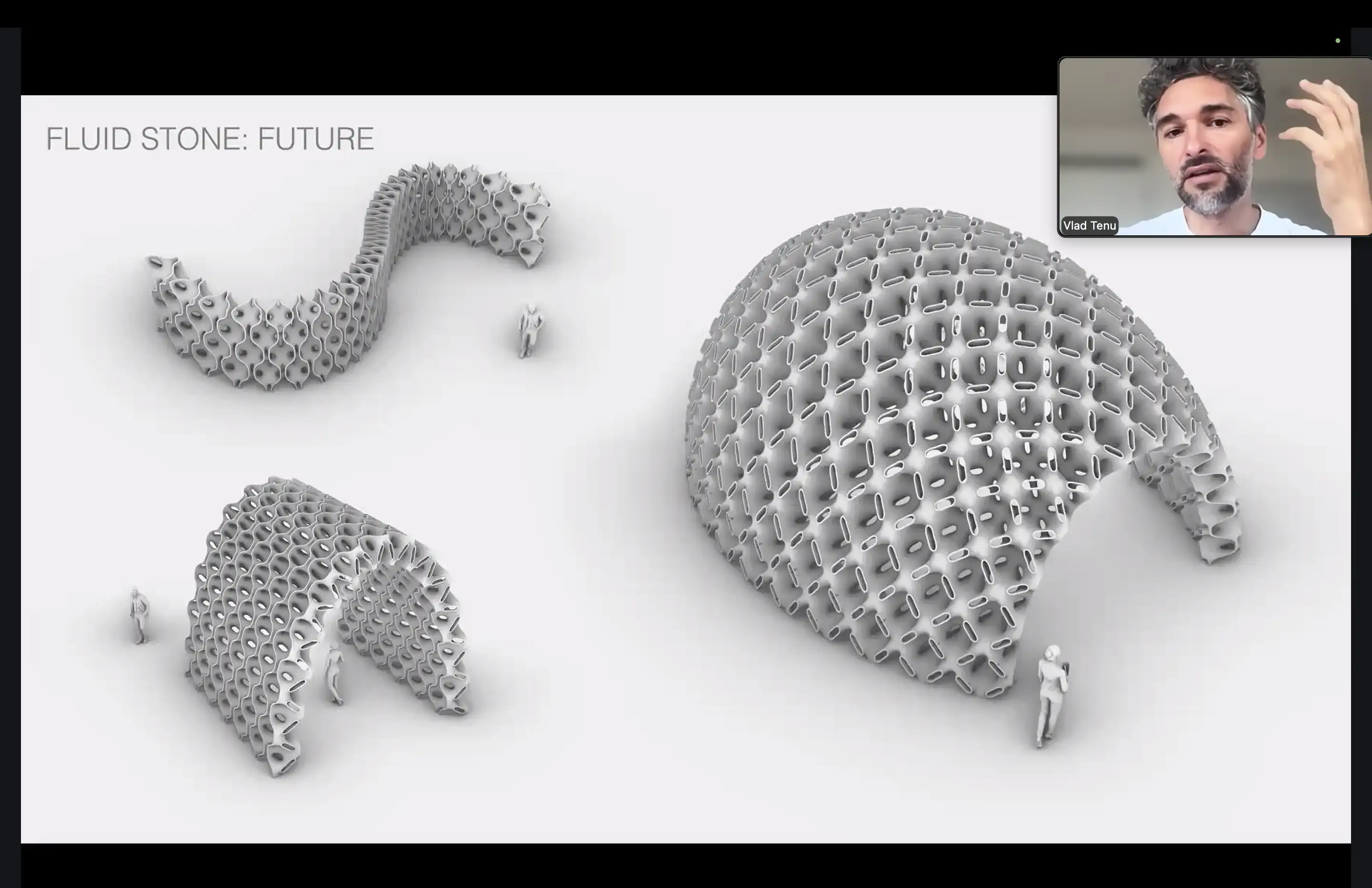
From early Processing experiments and 3D-printed prototypes to larger fabricated structures and artistic collaborations, Tenu demonstrated how digital geometry acquires new meaning when translated into matter. His presentation continually crossed scales and disciplines, revealing a practice in which computation, natural systems, material behavior, and fabrication inform one another. Rather than separating architecture from art or research from making, his work suggested that some of the most productive design territories emerge precisely between those categories.
Sonakshi Pandey: When Rigid Geometry Meets Flexible Textiles
The first day concluded with San Francisco-based architectural designer Sonakshi Pandey, whose presentation brought computational geometry into direct contact with textiles, additive manufacturing, and robotic fabrication.
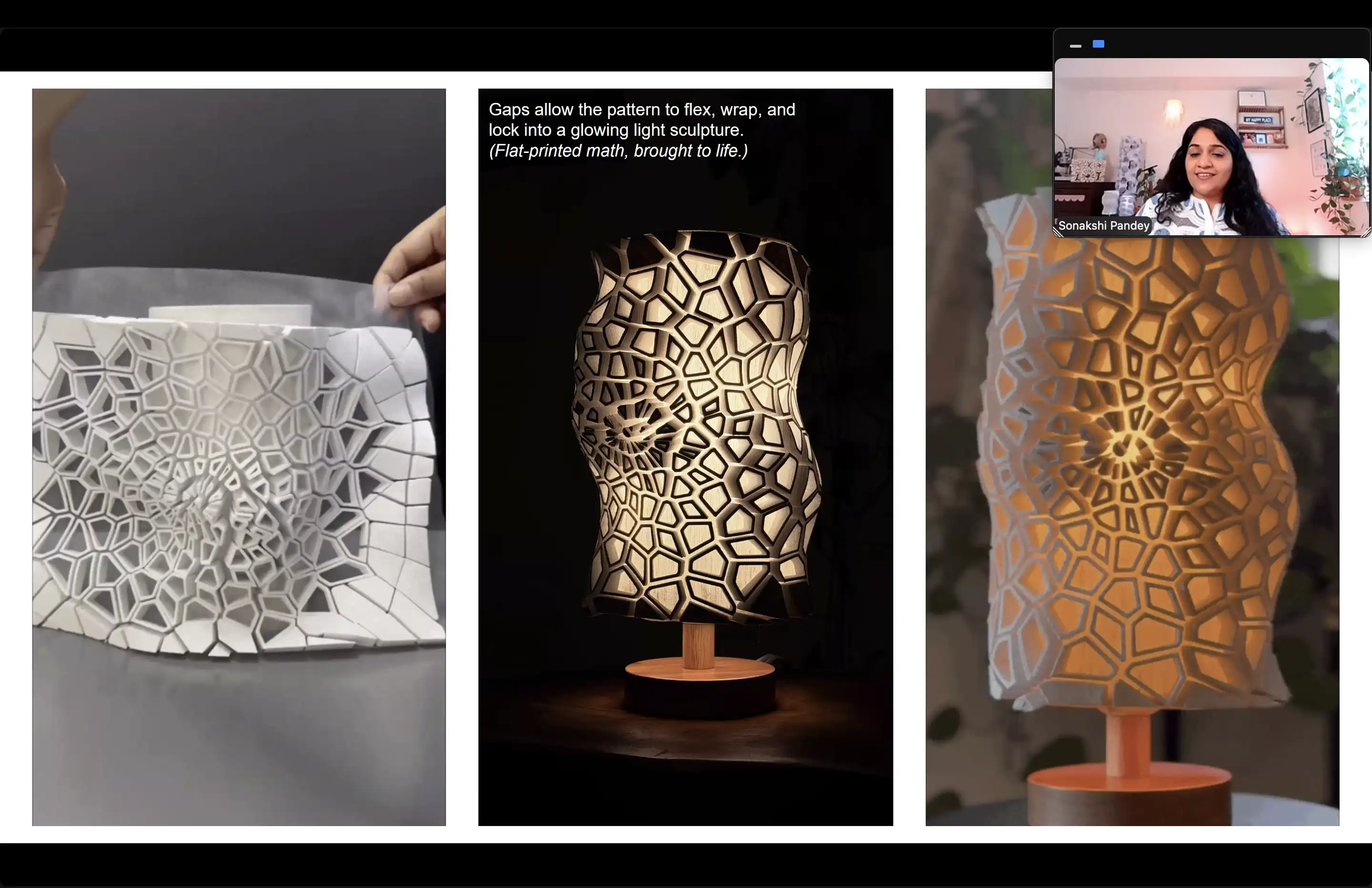
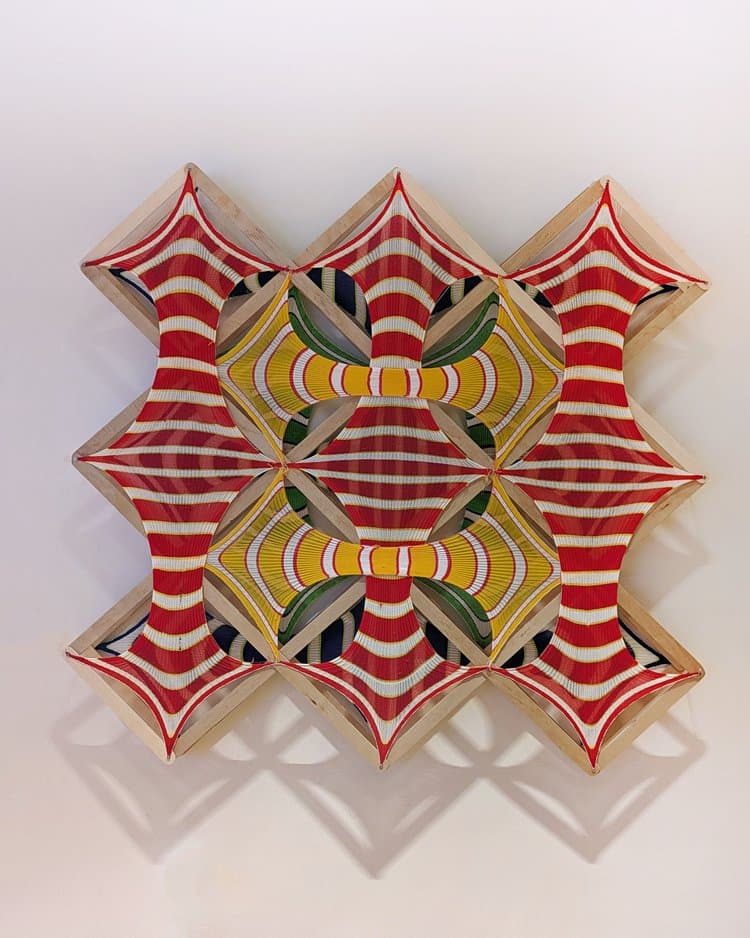
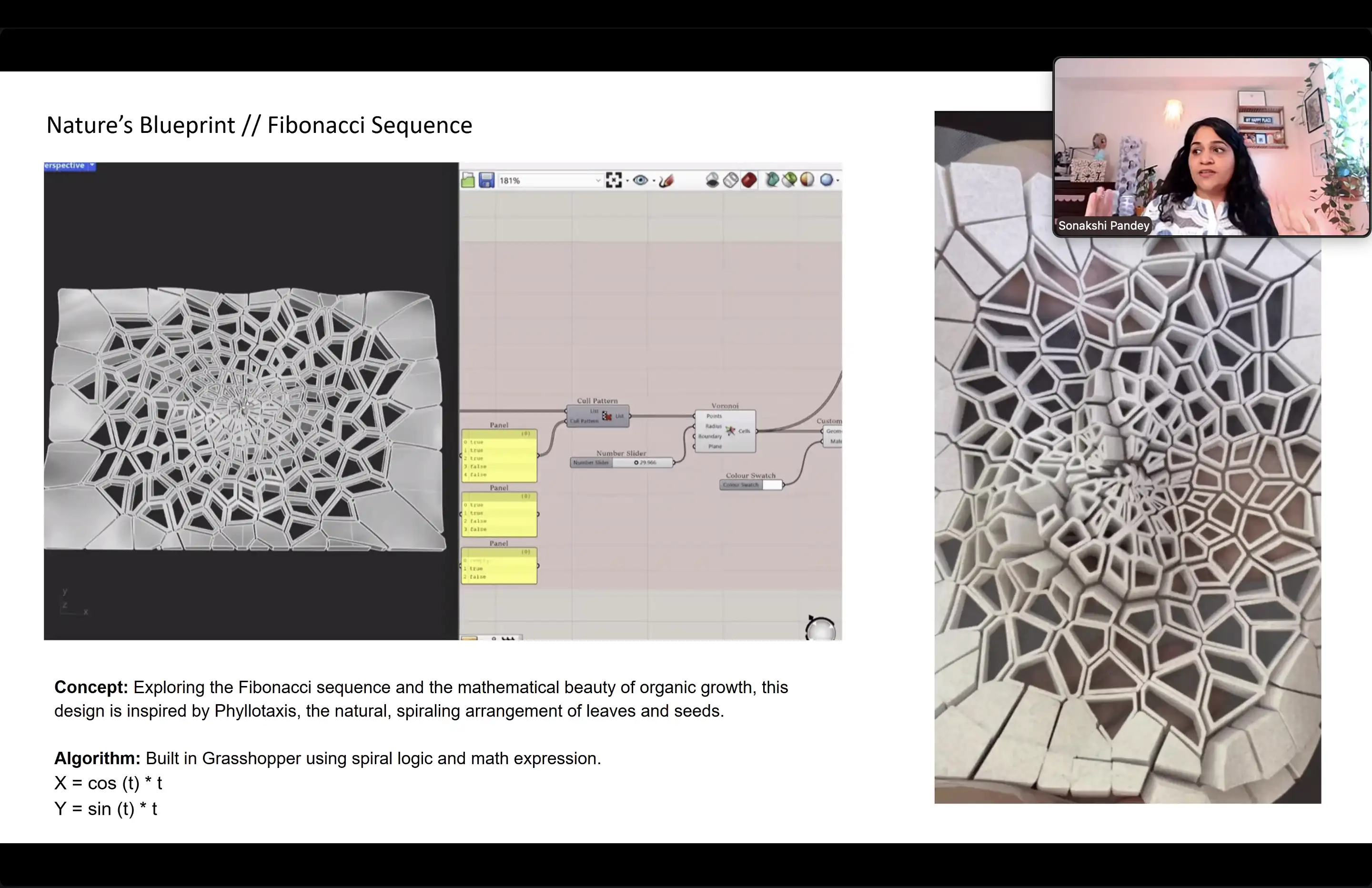
Pandey introduced her ongoing independent research project, Tactile Continuum, which investigates 3D printing directly onto fabric. While the technique has been explored extensively within fashion and textile design, her research asks how it might expand toward objects, sculptural systems, and architectural applications. Computational geometries generated in Grasshopper are printed onto flexible textiles, creating composites in which rigid printed elements can move, deform, and respond through the behavior of the fabric beneath them.
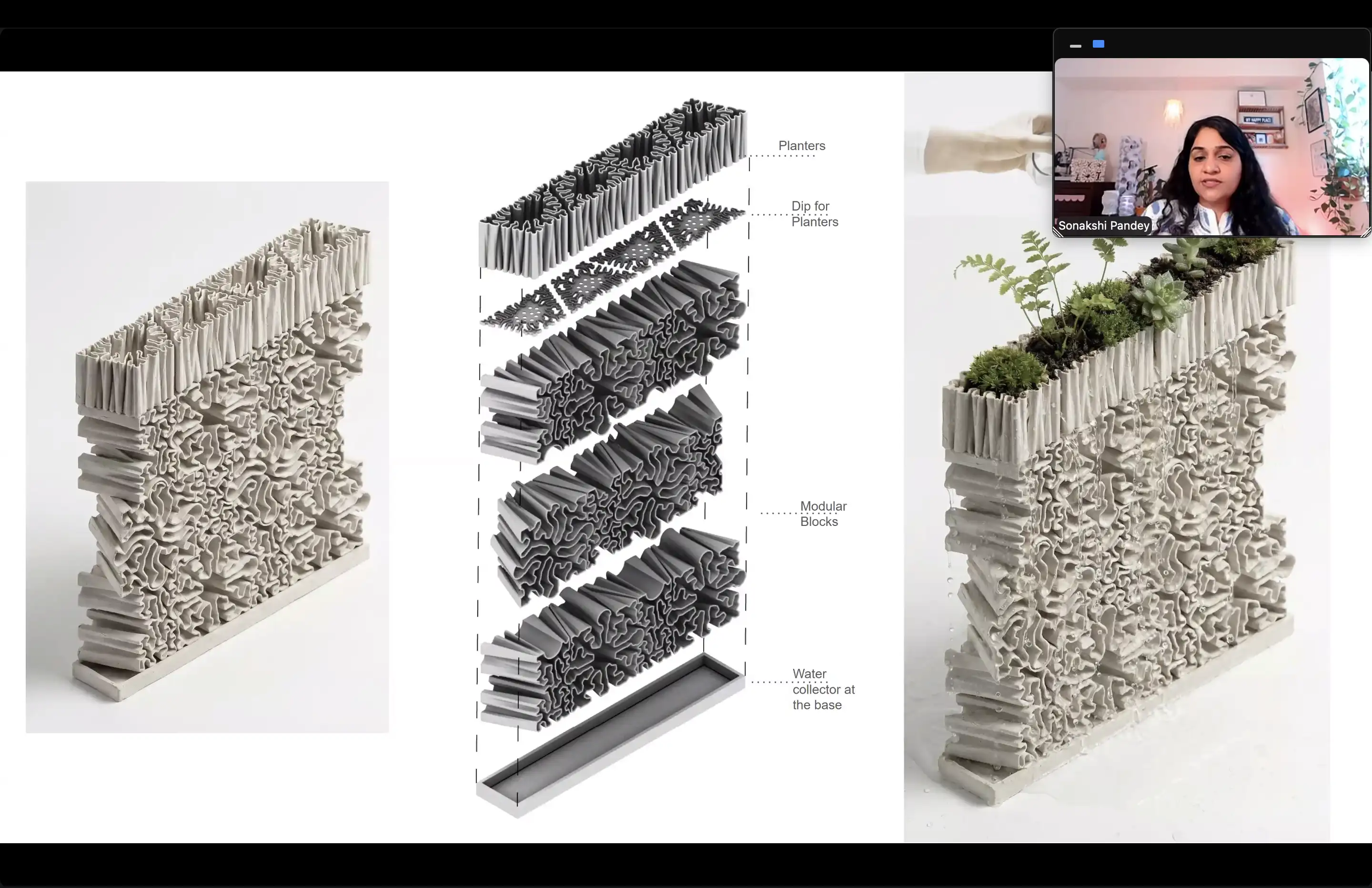
She walked the audience through the experimental process itself, from sketches and computational scripts to desktop 3D printing and material tests. Light also became an active component of the research, with printed textile systems transformed into illuminated sculptural objects. Pandey’s lecture was particularly valuable in showing experimentation not as a polished final outcome but as a sequence of prototypes, discoveries, failures, and adjustments through which new fabrication possibilities gradually emerge.
Sarah Aladayleh: Architecture as Instruction and Narrative
Day two opened with architect, urbanist, and illustrator Sarah Aladayleh, Design Lead at BIG in London, who structured her presentation around the idea of design and narrative through instruction.
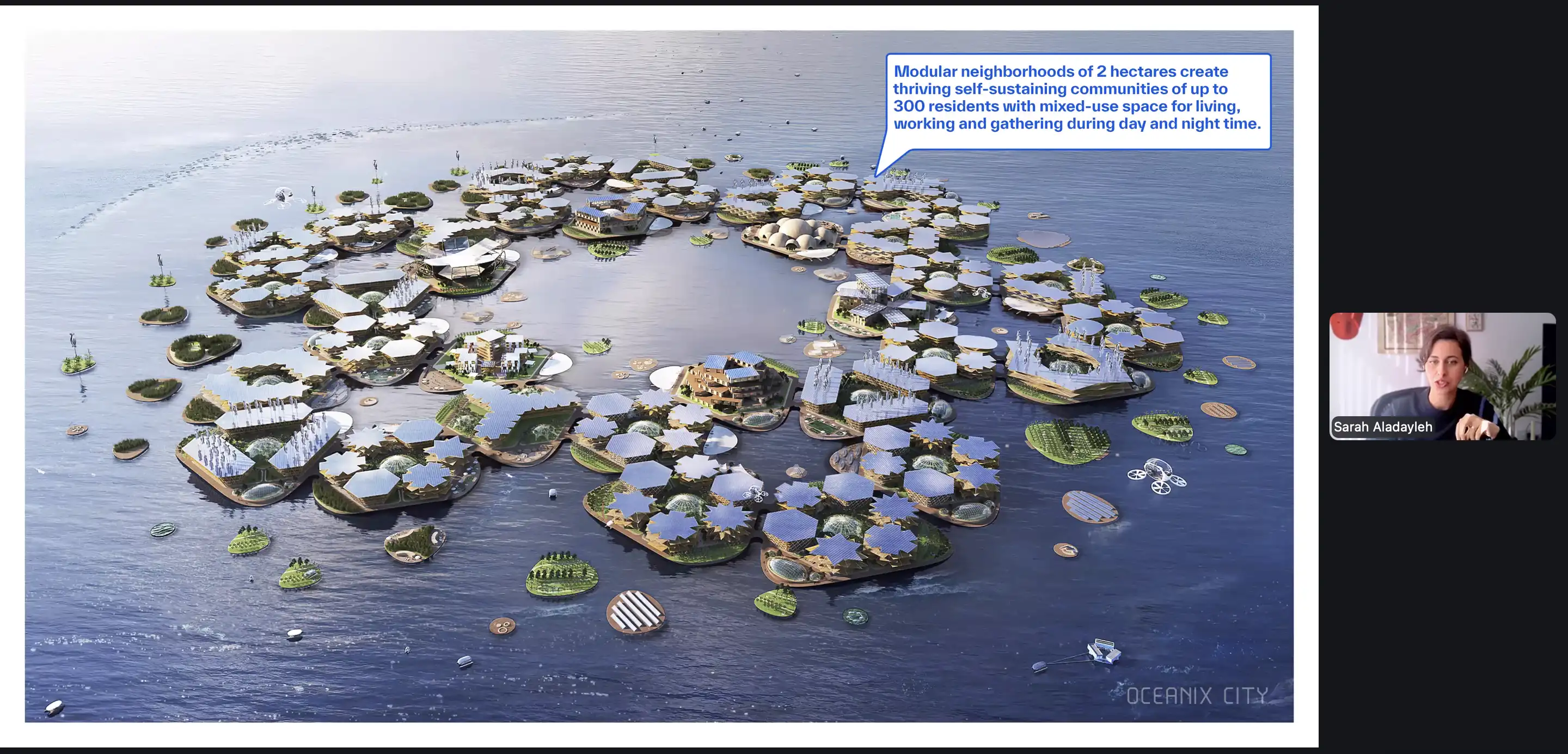
Moving between analog illustration, fabrication, architecture, and large-scale urbanism, Aladayleh explored how designers communicate complex ideas through drawings, diagrams, systems, and narratives. Her visual language is strongly influenced by technical manuals, patent drawings, assemblies, and kit-of-parts representations, yet she often subverts their apparent objectivity to create illustrations with cultural and narrative depth.
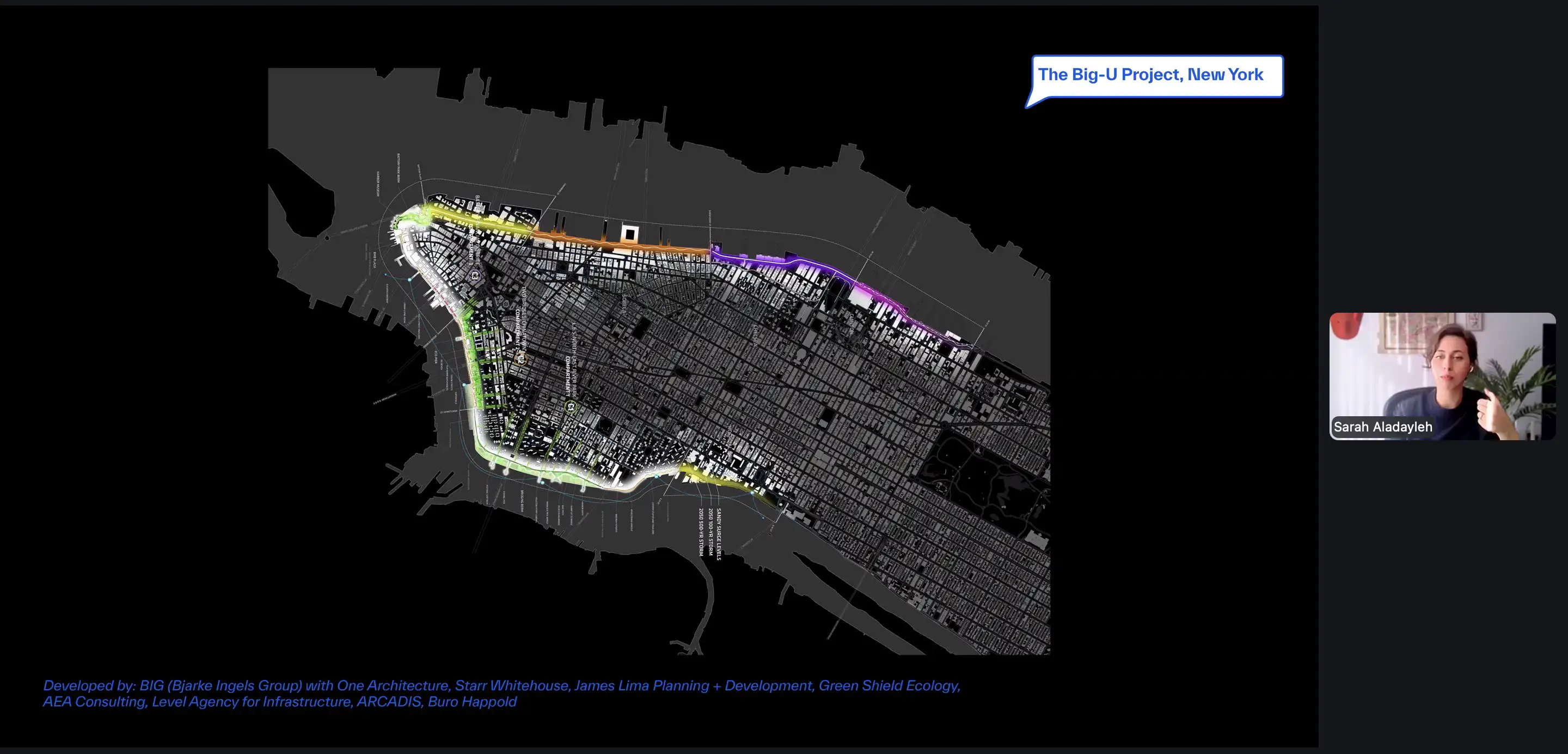
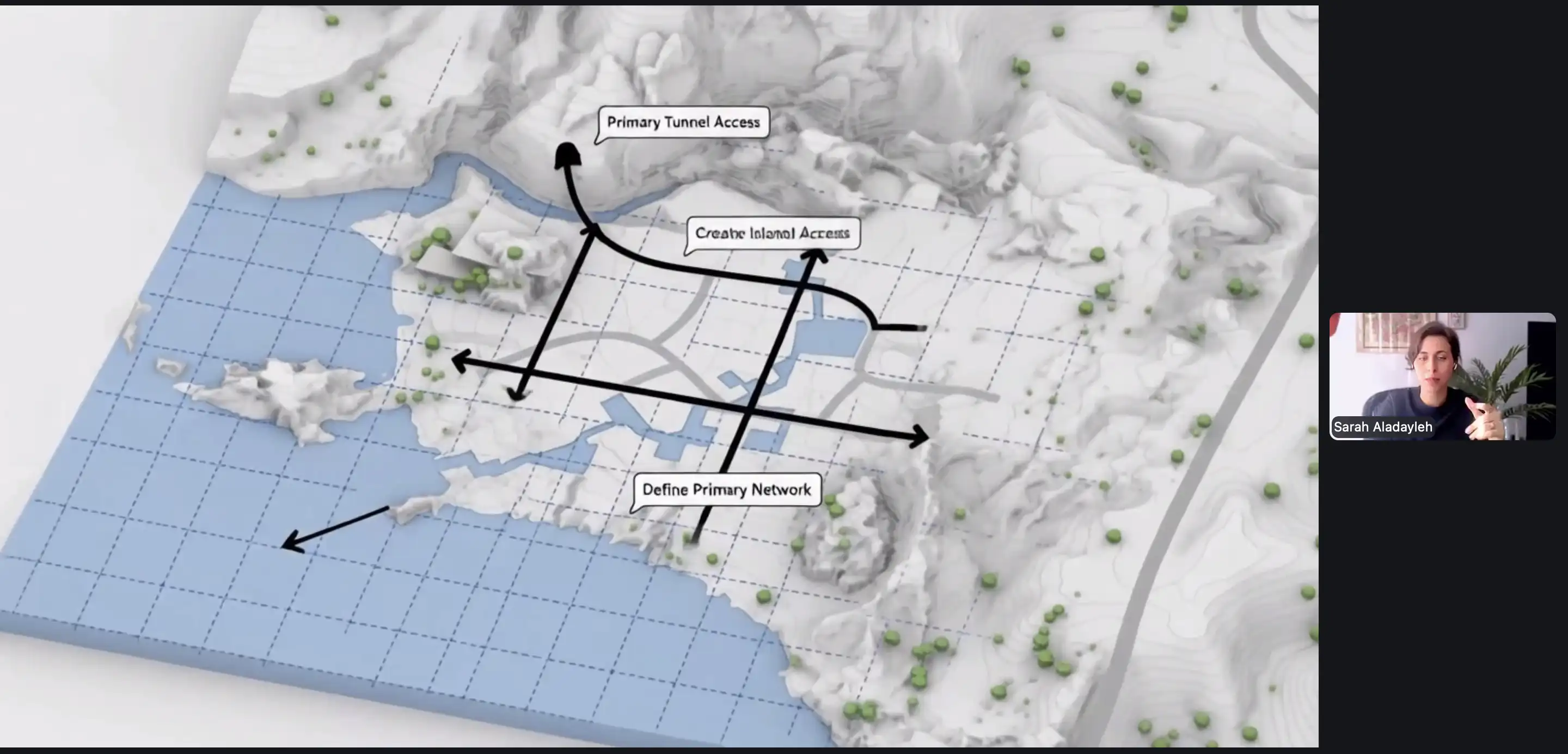
Her presentation expanded this approach from objects to cities. Working across masterplanning and urban design, she showed how diagrams and frameworks can communicate spatial strategies while storytelling gives those systems meaning. At a moment when agentic AI and automated design tools are developing rapidly, her lecture also raised a timely counterpoint: new technologies may increase speed and efficiency, but they can simultaneously reinforce the value of tangible making, authorship, visual communication, and narrative thinking.
Eric Wong: An Interdisciplinary Practice Beyond Architecture
Architect, educator, illustrator, and designer Eric Wong continued the second day with a presentation titled An Interdisciplinary Practice: From Drawing, Teaching, Physical Models to Virtual Opportunities.
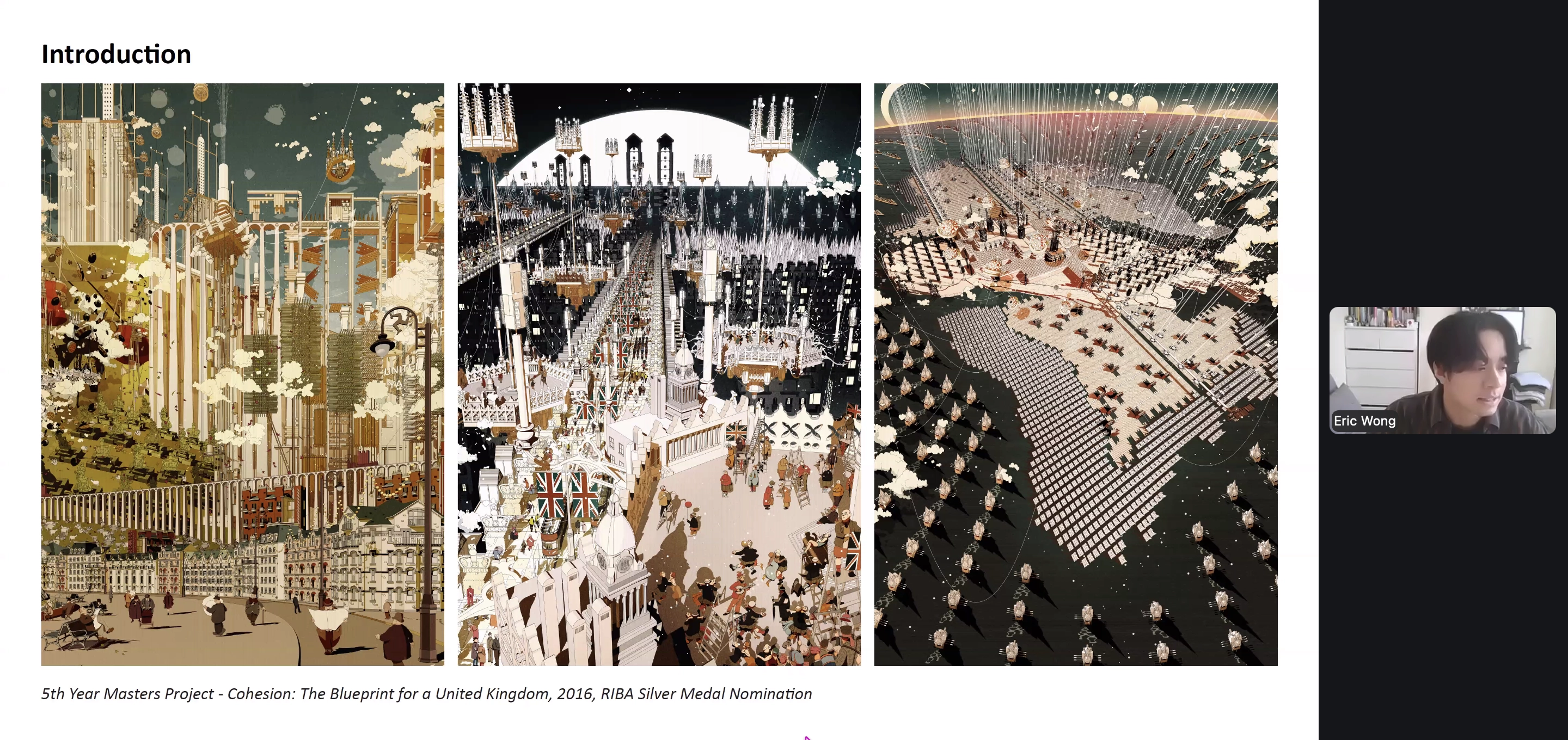
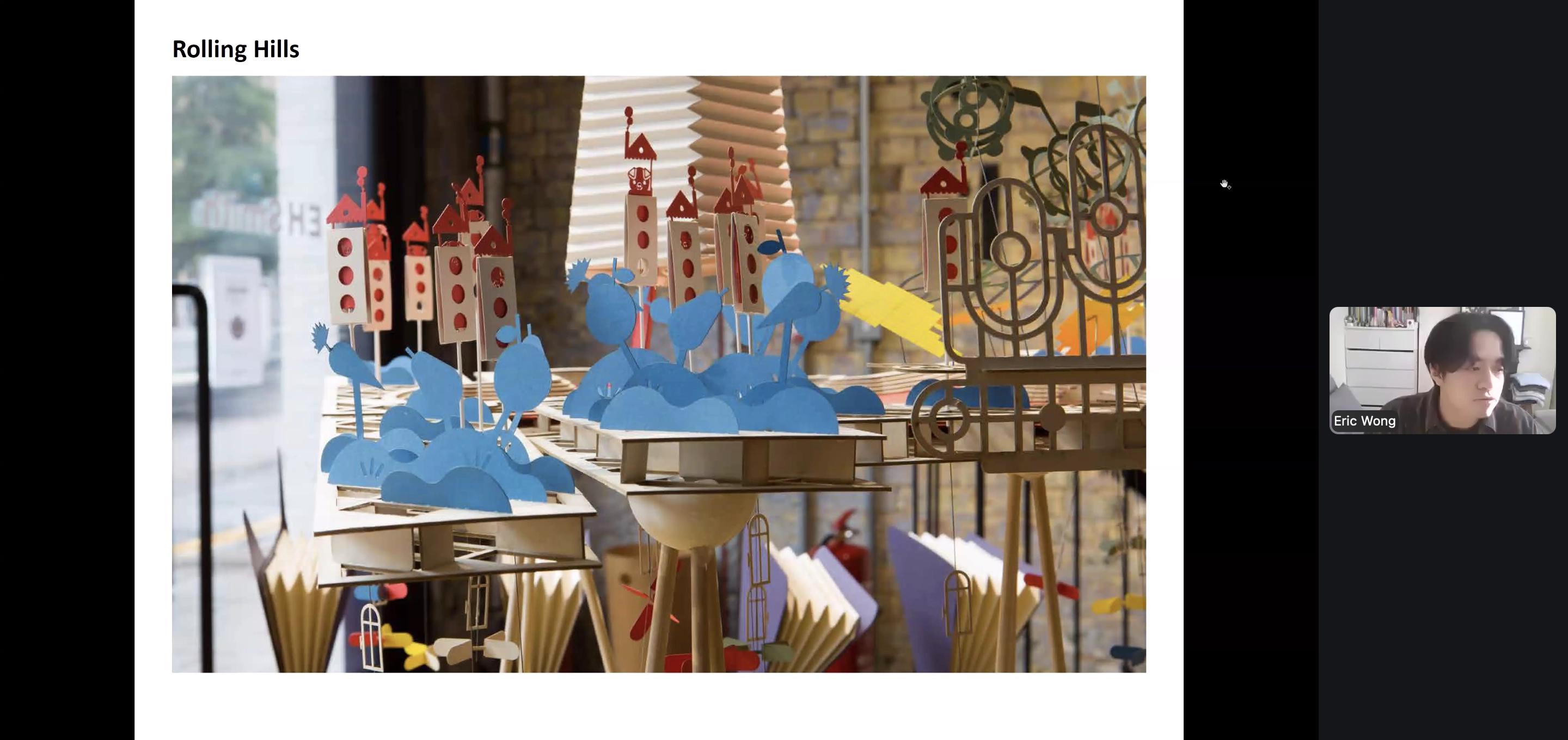
Wong’s lecture demonstrated how an architectural education can become a foundation for creative work far beyond conventional building practice. Moving through professional architecture, hand drawing, model-making, teaching, installations, publications, and speculative design, he presented a body of work unified less by a single medium than by an attitude of curiosity and world-building.
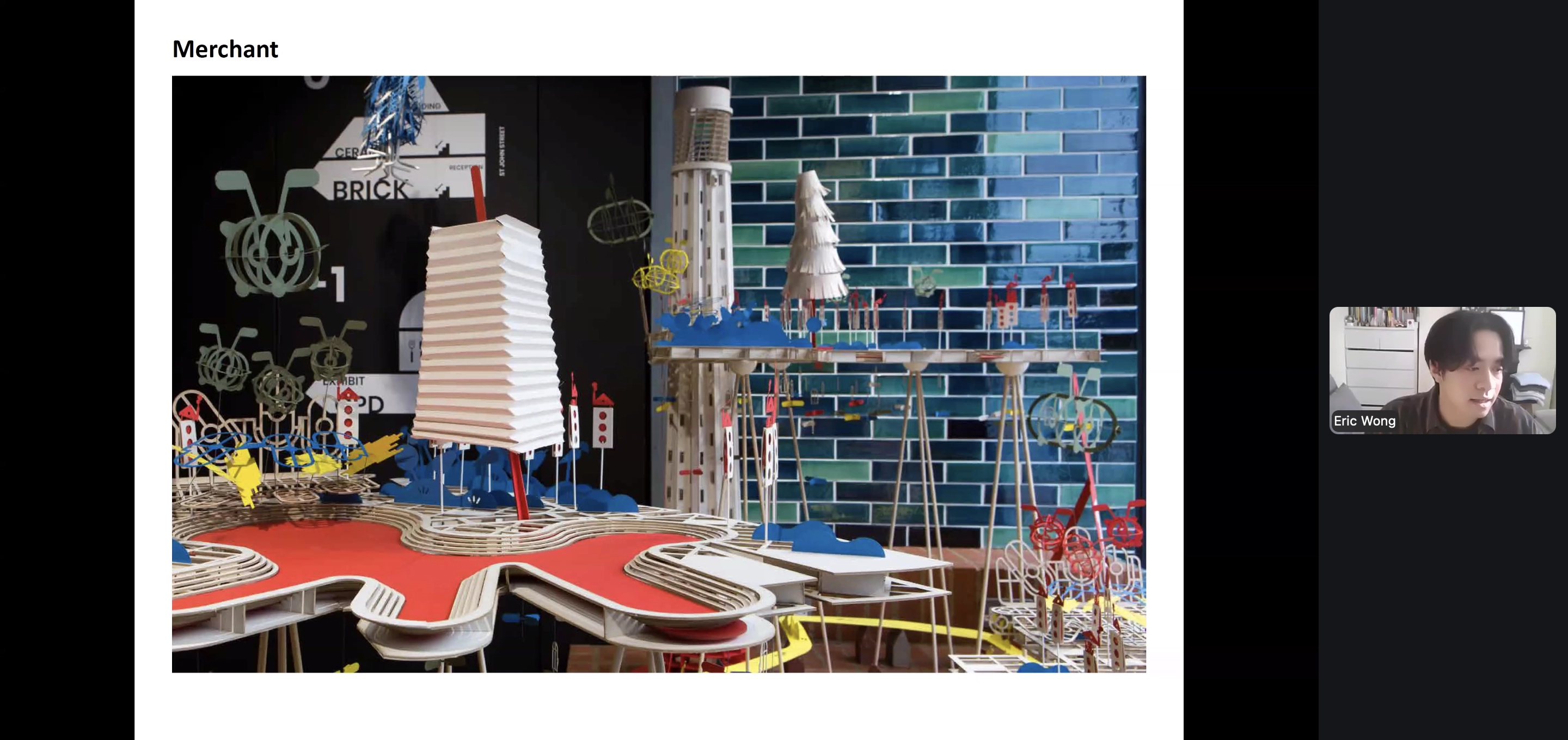
A particularly compelling dimension of the lecture was his work with Oscar-nominated director Mamoru Hosoda on the animated film Belle, for which Wong worked as a concept artist and production designer on the virtual world known as “U.” The project illustrated how architectural thinking, scale, spatial organization, atmosphere, narrative, and visual systems can migrate into cinema and virtual environments. His teaching work similarly emphasized experimentation across physical models, collages, digital drawings, and hand-crafted representations, reinforcing the idea that architects should not be defined by one tool or one mode of production.
Ingrid Paoletti: Toward a More Responsible Material Culture
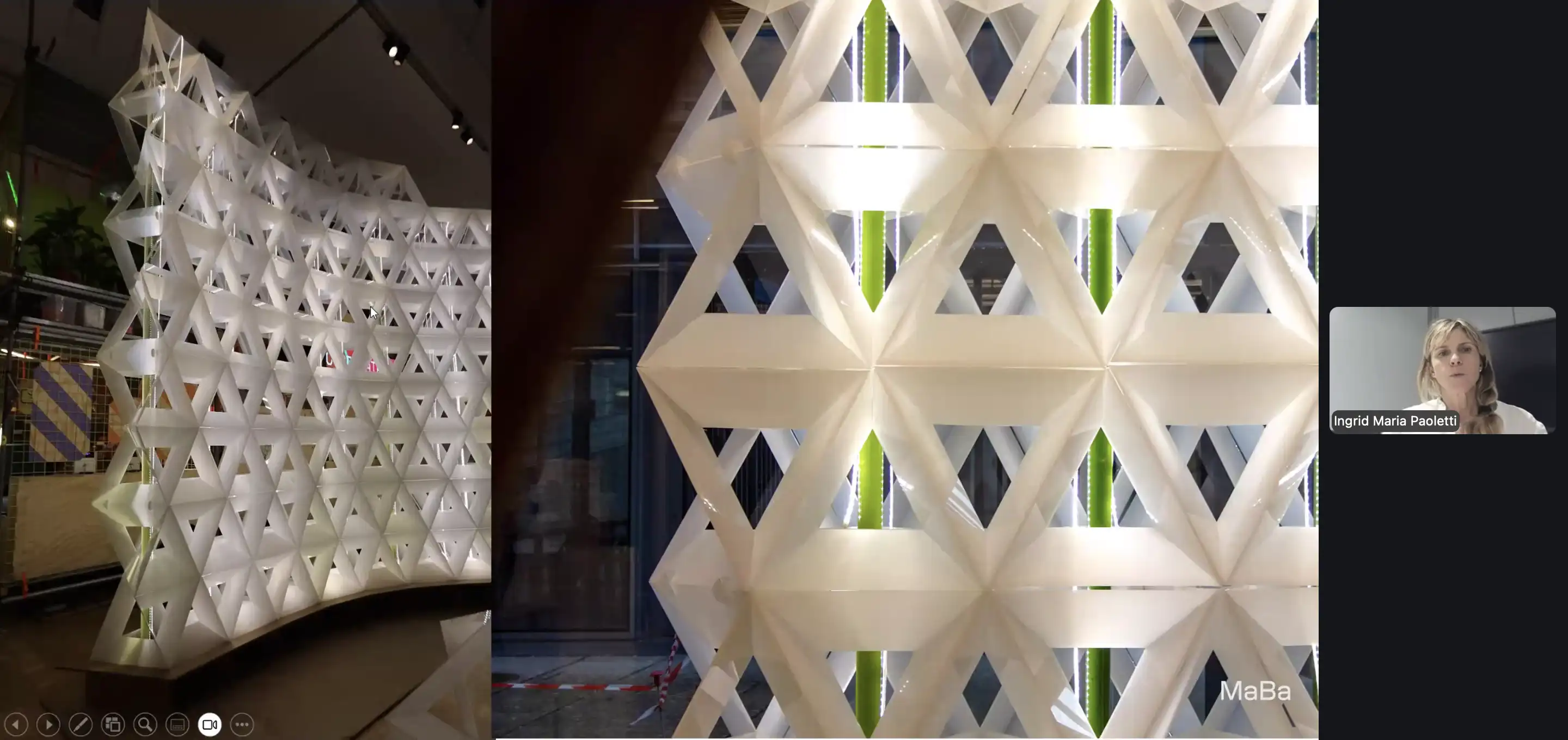
The conference concluded with Ingrid Paoletti, Full Professor of Architectural Technology at Politecnico di Milano and founder of the Material Balance research group. Her presentation shifted attention toward the intersection of advanced technologies, computation, bio-based materials, waste, and responsible material cultures.
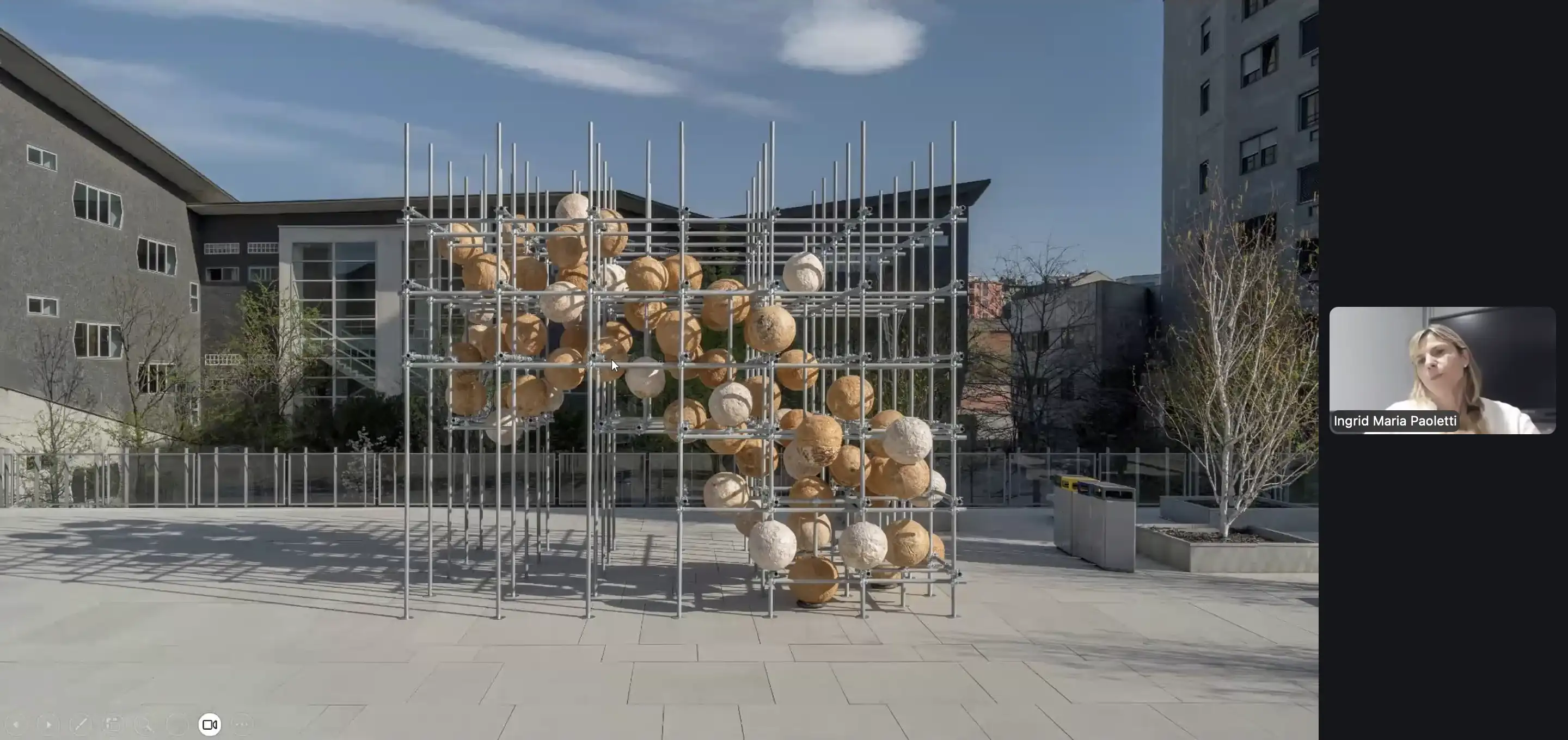
Paoletti introduced the philosophy behind Material Balance through the principle of conservation of matter: material can be transformed, but it cannot simply disappear. This idea becomes a framework for research that asks architects to think carefully about where materials originate, how they are processed, and what happens to them after use.
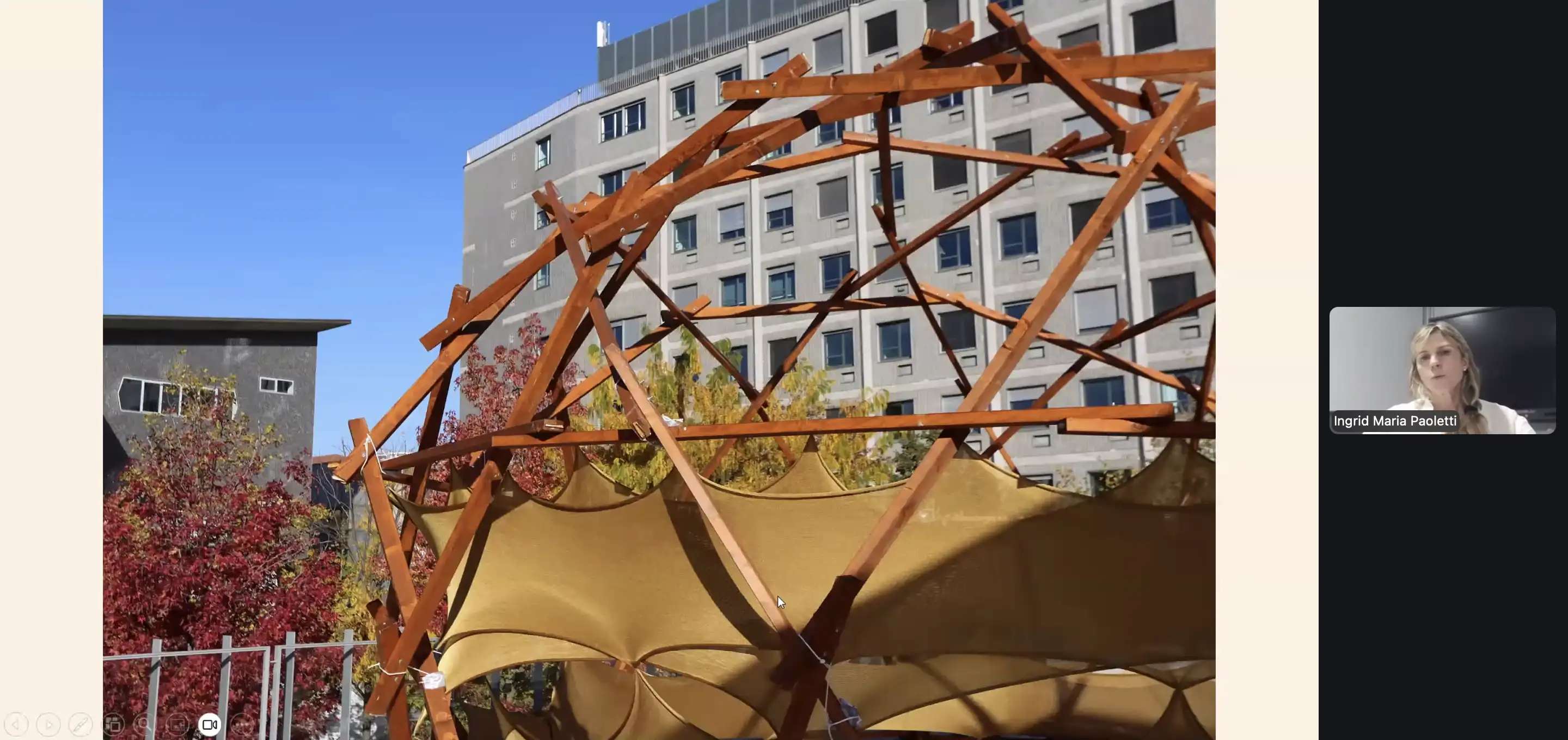
Among the projects presented was research developed around construction waste from Expo 2020 Dubai, exploring how discarded sand could be incorporated into 3D-printed architectural components. Through experiments combining PLA with recovered construction material, computational modeling, prototyping, and collaboration with manufacturers, the research investigated potential shading components appropriate to the climatic conditions of Dubai. Across the lecture, digital tools and physical materials were treated as inseparable forces, suggesting that technological innovation must increasingly be evaluated alongside resource responsibility and material intelligence.
A Global Classroom for Architectural Knowledge
Taken together, the six presentations made Design-Tech Talk 12 less a forecast of one technological future than a demonstration of how many futures architecture is simultaneously constructing. Computation can optimize structures, generate geometries, create virtual worlds, inform cities, transform textiles, or help designers rethink waste, but each speaker also demonstrated that technology becomes meaningful through the questions designers choose to ask with it.
This is also where the wider role of PAACADEMY’s online conferences becomes significant. By making live participation free and gathering a community spanning 142 countries, events such as Design-Tech Talk create an accessible international forum for knowledge that might otherwise remain within universities, research laboratories, professional studios, exhibitions, or geographically limited conferences. The screen becomes not a substitute for the architectural classroom or conference hall, but another kind of global classroom, one capable of connecting different cultures, disciplines, levels of experience, and approaches to design.
Design-Tech Talk 12 is now available in the PAACADEMY library, where the complete recordings of all six presentations can be watched with an active Pro Membership. For those who could not attend the live conference, the archive extends the event beyond its original two days, allowing its conversations, experiments, and ideas to continue circulating throughout PAACADEMY’s global community.

.jpg&w=3840&q=75)