We value your privacy.

We use strictly-necessary cookies to keep you signed in and the service operational, and analytics cookies to understand how the site is used. With your consent, we also use preference and marketing cookies. You can change your choice anytime; see our Cookie Policy or Privacy Policy.

Enter CartesianForms: Architecture Reimagined competition early to win from a $120,000 prize pool.
PAACADEMY
PAACADEMY
Courses
Software
Bundles
Membership
Become MemberSign In
Loading
PAACADEMYPAACADEMY

Online EdTech platform · 2020-2026

Shaping the next generation of designers, architects, and makers through computational tools and immersive education.

Reach out

team@paacademy.com

Newsletter

New workshops, early-bird seats, and release notes, straight to your inbox.

Platform

CoursesMembershipsBundlesProjectsInstructorsSoftwareBoardsBlogFree coursesEarnCertificatesReviews

Company

AboutBusinessBecome an InstructorContactFAQHelp CenterChangelogWe're Hiring

Popular Searches

Architecture coursesGrasshopper coursesAI architecture workshopsParametric design workshopsRhino courses3D modeling coursesBlender workshopsVisualization coursesRevit coursesDigital fabrication workshops3D printing workshopsSustainability courses

Most Interested

Urban design coursesLandscape architecture coursesHoudini coursesUnreal Engine coursesComfyUI workshopsMaya coursesInterior design coursesFashion design coursesFootwear design workshopsStructural analysis coursesVirtual reality coursesComputational design coursesGenerative city designBIM coursesMetaverse coursesPhotography workshops

© 2026 PAACADEMY. All rights reserved.

Privacy PolicyCookie PolicyRefund PolicyMembership Agreement
HomeBlog

Blog

Insights, tutorials, and news from the PAACADEMY community.

Loading posts…
HomeBlogLoading

Blog post

HomeBlogNarrative Through Instruction: Designing Cities as Sequenced Stories

Narrative Through Instruction: Designing Cities as Sequenced Stories

Sarah Aladayleh10/19/20265 min read
Narrative Through Instruction: Designing Cities as Sequenced Stories

Article

Before a sprawling metropolis or a handheld object can exist in the physical world, it is usually dissected, cataloged, and communicated – almost an instruction manual. In my dual roles as an urbanist/design lead at BIG in London and a visual artist, I treat a 500-hectare masterplan and a 2D illustrated kit-of-parts as the same design challenge. The medium changes, but the obsession doesn’t. My personal practice is driven by pulling complex subjects apart into clear, sequential layers to build a spatial narrative. In this context, an instruction ceases to be a sterile command. Instead, it becomes the translation of a designer's intent.
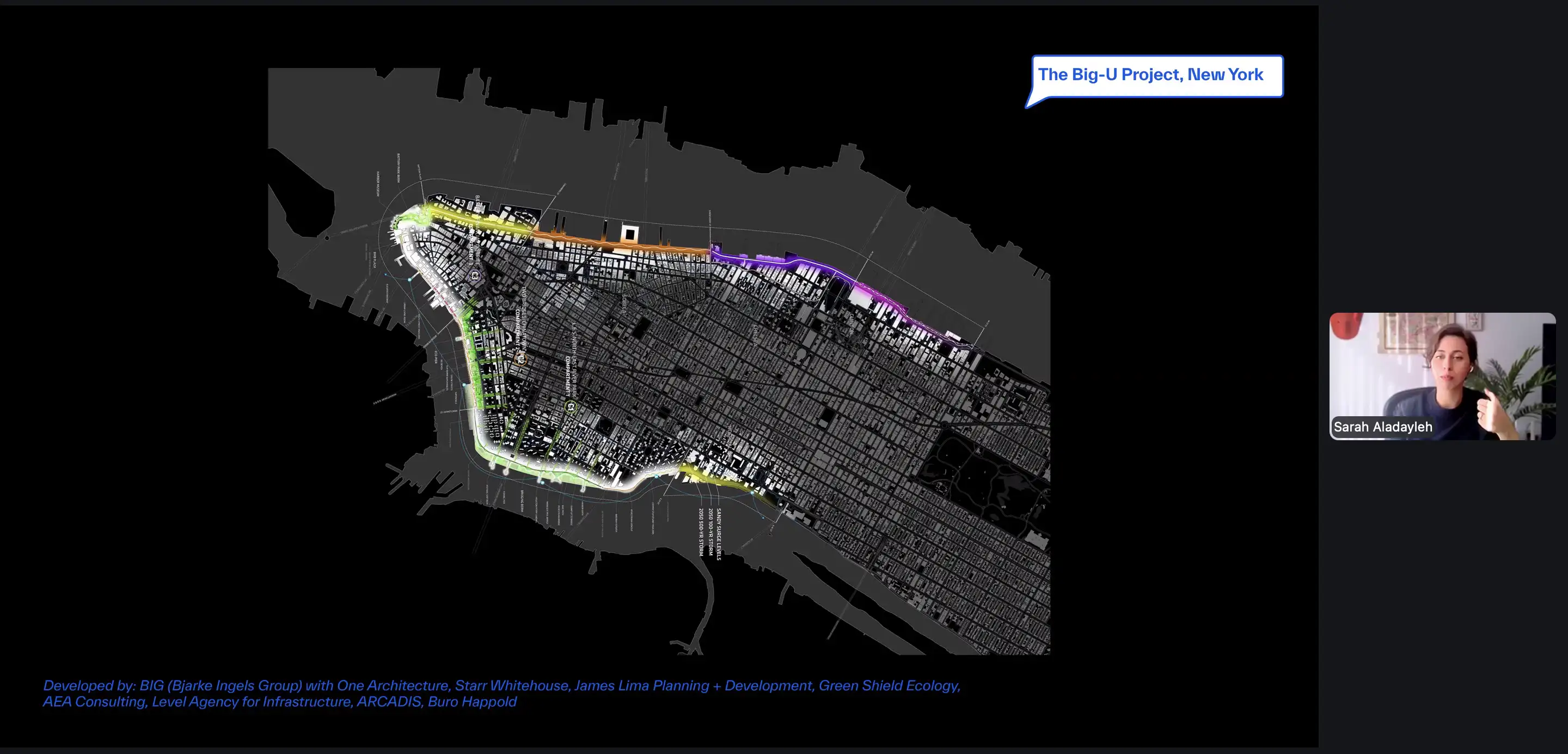

The Obsession with the Manual 

My visual work has always been influenced by technical manuals, patent drawings, and exploded assemblies. There is a rigid, authoritative language to a patent drawing; it presents itself as an objective truth. But I realized early on that if you subvert that aesthetic; if you hijack the sterile language of a manual and inject it with cultural memory, humor, or human friction; the instruction ceases to be just a directive. It becomes an effective storytelling device.

This fascination with archiving human intent formed the foundation of my postgraduate thesis at The Bartlett, titled The Repository of Gestural Anomalies. As the architecture and construction industries push toward total automation, we risk losing the "gestural anomalies" - the unique, physical nuances and spontaneous frictions of a builder's hand. By utilizing mixed reality to record and project traditional making skills, the research asked how we could digitally archive physical craftsmanship. Today, we see tech companies paying gig workers to wear head-mounted cameras to archive their movements, but they are doing it for pure automation and robotic replacement. My focus is the opposite: using the digital archive to archive or preserve human craftsmanship, aiming we do not automate away our own spatial heritage.


Scaling Up: The Masterplan as a Buildup

This philosophy can scale into urban design. At BIG, we view our work along a scalar ladder; from product to unit, building, neighborhood, and city. As architects, this means looking at urbanism through a multi-layered, granular lens, from the macro urban gesture all the way down to the bespoke façade expression.

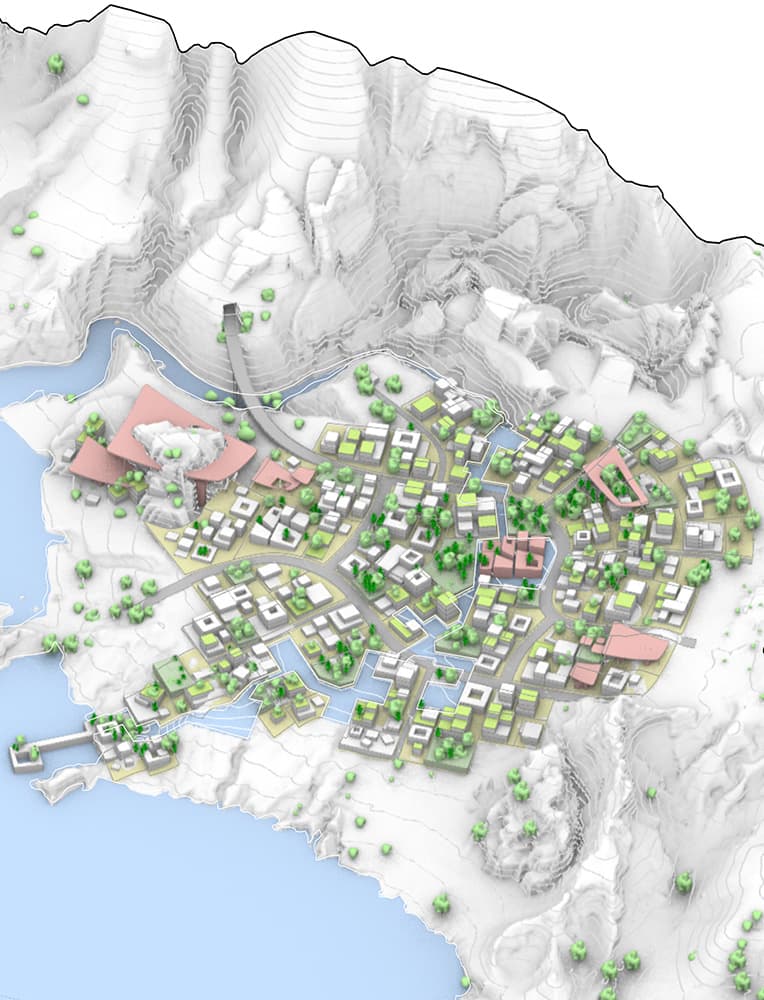
A masterplan, beyond a static map, is a sequence of frameworks; mobility hierarchies, public realms, ecological corridors, and built programs - that build up, layer by layer, to tell the proposed story of a city before it even exists. When we design a district, the logic of the framework is paramount. We extract these layers, catalogue them, and sequence them to communicate the design intent. The instruction describes how the city is allowed to grow and adapt.
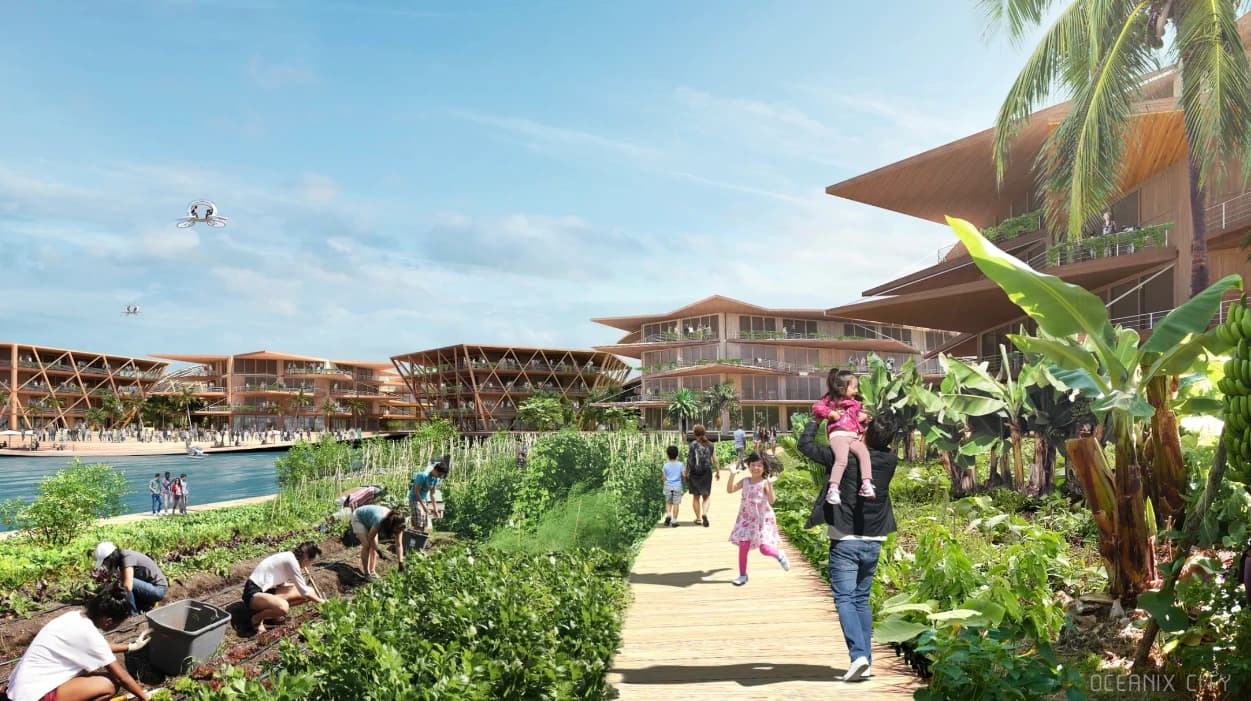
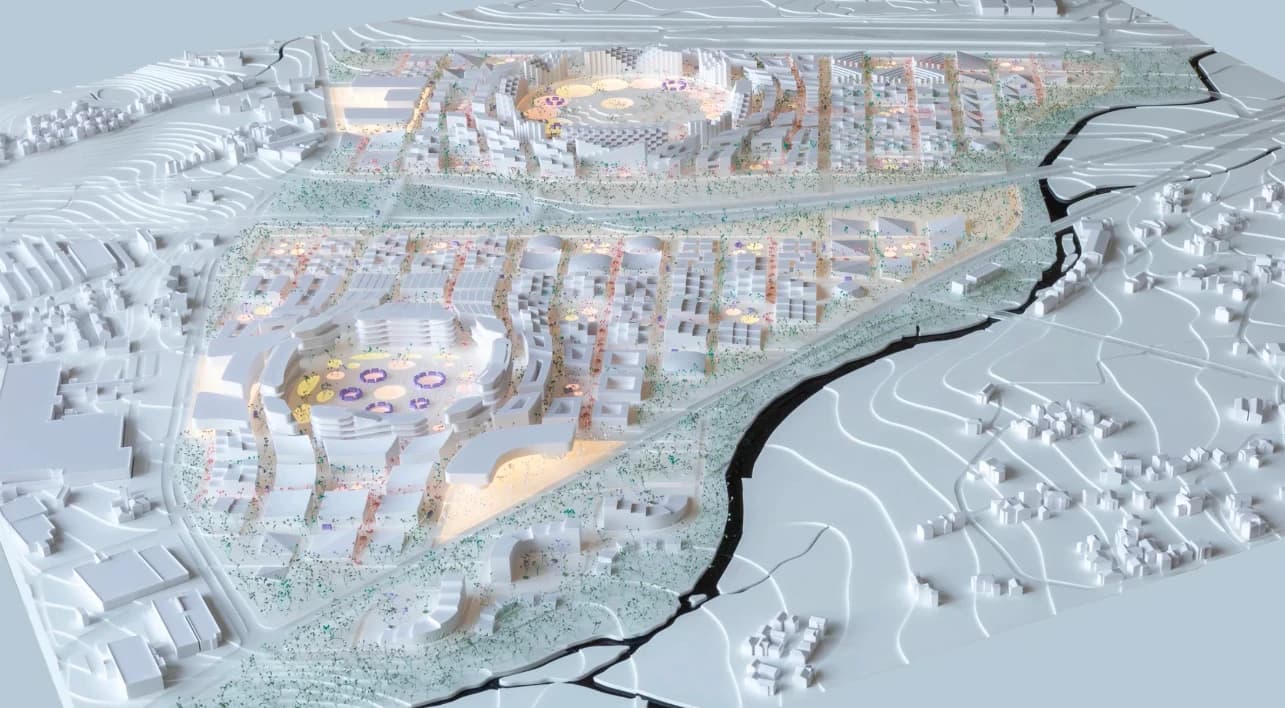
Oceanix City, Bjarke Ingels Group


The Curatorial Edge in the Age of AI

We are currently in a moment defined by the exponential growth of agentic AI systems. With tools capable of generating massive amounts of spatial data and imagery in seconds, the role of the designer is rapidly shifting. We are quickly moving beyond simply being "prompt engineers" into a future defined by curatorial direction.

In a time dominated by algorithmic generation, the tactile skill of sketching provides a distinct edge. Being able to quickly draw a framework, a section cut, or an initial concept buildup means the designer retains a level of authorial control over the narrative.

We can leverage AI, but we should use it to automate the tedious, repetitive labor of rendering, interpolating, and populating layers so we can iterate faster. AI can speed up the production of these layers, and it can animate the sequence, but to a certain extent it can’t relay the original human gesture. It cannot decide what story those layers ultimately tell (at least for now). That curatorial direction is still the archivist's job.

Toyota Vowen City, Bjarke Ingels Group


What to Expect from the Workshop

This philosophy is the engine behind my upcoming PAACADEMY workshop, Multi-Scalar Urbanism: Concept Buildups with AI, taking place on October 24th and 25th.

The workshop is designed to teach design thinking through urban diagramming but as a critical storytelling skill. A masterplan's logic must be legible through its story, shown step by step. Over the course of the two days, participants will:

Extract and Layer: Work from a provided demo masterplan (or a personal urban project) to dissect the design into distinct, communicative layers; from terrain and mobility to program and landscape.

Sequence the Pitch: Translate these extracted layers into an axonometric sequence at the urban scale, formatting them into an annotated, legible pitch deck using tools like Rhino, Illustrator, and InDesign. 

Animate with AI: Finally, we will use generative AI tools, specifically utilizing Krea AI, to animate these layers into dynamic concept buildups. Participants will learn how to prompt AI to handle the tedious work of visual interpolation and transition, turning a static deck into an immersive spatial narrative.

The goal is for every participant to leave with a developed curatorial eye, equipped to use AI to amplify their urban design storytelling while maintaining authorial control over their design intent.

Reviews

Excellent

Excellent

5 / 5 stars

0 Reviews
0 Comments

No reviews yet. Be the first!

Pro Membership

15% off workshops and Pro courses.

Join Pro

Upcoming Courses

View all
  • 01Multi-Scalar Urbanism: Concept Buildups with AISarah Aladayleh
  • 02AI-Powered Design Exploration: From Ideation to VisualizationDaeho Lee
  • 03Monolithic Furniture: Large-Scale Additive ManufacturingLuc Morroni

Recent Courses

View all
  • 01Architecture in Motion: AI Cinematic WorkflowsPouya Nasr
  • 02Tensegrity and Tensile Membranes in KangarooVirginia Melnyk
  • 03GPT-Astra in Architecture: Agentic AI Modeling with Astra, Fable, Rhino and RevitFredy Fortich
Artificial Intelligence
#Urban Design#Artificial Intelligence#storytelling
Sarah Aladayleh
AuthorSarah Aladayleh
Sarah Aladayleh is an Architect and Design Lead at Bjarke Ingels Group (BIG). Working across architecture, urban design, and visual storytelling, her practice bridges strategic spatial design with expressive graphic representation.
At BIG, Sarah works on complex, multi-scalar proposals where translating large-scale masterplans into clear, compelling narratives is central to the design process. Alongside her architectural work, she leads creative workshops exploring the intersection of traditional representation, digital tools, and emerging AI technologies. Through her teaching, Sarah helps designers break down intricate design thinking into intuitive visual stories that resonate with clients, juries, and communities alike.

Related Posts

AI Powered Design Exploration: From Ideation to Realization
Oct 15, 2026·Daeho Lee

AI Powered Design Exploration: From Ideation to Realization

Blog

AI Powered Design Exploration: From Ideation to Realization

Oct 15, 2026

Preview

I have worked in the architectural design industry for about twelve years, and the part of the work that has always interested me most is how new forms are foun...

Daeho Lee
Daeho LeeAuthor
Read article→
GPT-6 Astra Reshapes Architectural Workflows: Moving AI from Assistant to Operator
Sep 10, 2026·motamed.mahshid

GPT-6 Astra Reshapes Architectural Workflows: Moving AI from Assistant to Operator

Blog

GPT-6 Astra Reshapes Architectural Workflows: Moving AI from Assistant to Operator

Sep 10, 2026

Preview

The most important development in architectural AI may no longer be image generation. For several years, the dominant conversation around artificial intelligenc...

motamed.mahshid
motamed.mahshidAuthor
Read article→
Designing Architecture Through Ecology and AI with Ozan Ertuğ
Jul 13, 2026·Yusuf Usmani

Designing Architecture Through Ecology and AI with Ozan Ertuğ

Blog

Designing Architecture Through Ecology and AI with Ozan Ertuğ

Jul 13, 2026

Preview

Traditional architecture relied on mathematics and nature to shape design decisions, but contemporary practice marks a shift as machines and artificial intellig...

Yusuf Usmani
Yusuf UsmaniAuthor
Read article→
Inside Generative Architectural Thinking with Midjourney - Joshua Vermillion
Apr 24, 2026·PAACADEMY

Inside Generative Architectural Thinking with Midjourney - Joshua Vermillion

Blog

Inside Generative Architectural Thinking with Midjourney - Joshua Vermillion

Apr 24, 2026

Preview

Text-to-image diffusion models have quietly become one of the fastest-moving interfaces between architects and their own imaginations. Where the early conversat...

PAACADEMY
PAACADEMYAuthor
Read article→

Pro Membership

15% off workshops and Pro courses.

Join Pro

Upcoming Courses

View all
  • 01Multi-Scalar Urbanism: Concept Buildups with AISarah Aladayleh
  • 02AI-Powered Design Exploration: From Ideation to VisualizationDaeho Lee
  • 03Monolithic Furniture: Large-Scale Additive ManufacturingLuc Morroni

Recent Courses

View all
  • 01Architecture in Motion: AI Cinematic WorkflowsPouya Nasr
  • 02Tensegrity and Tensile Membranes in KangarooVirginia Melnyk
  • 03GPT-Astra in Architecture: Agentic AI Modeling with Astra, Fable, Rhino and RevitFredy Fortich