

Article
I have worked in the architectural design industry for about twelve years, and the part of the
work that has always interested me most is how new forms are found. Over time I reached a
conclusion of my own: new form rarely comes from a single moment of inspiration. It usually
starts from historical references, and new possibilities come out of transforming and varying
them. Seen this way, the early design process is a fairly logical method, not magic.
If the process is logical, it should be possible to describe it as an algorithm. My long-term goal is
a design methodology that moves from the first idea to a finished project with something close
to automation. That is still a distant goal. This workshop, AI Powered Design Exploration: From
Ideation to Realization, tests one part of it: can AI actually help at the very beginning of a
project, when nothing is decided yet, or does it only become useful once a scheme already
exists?
In the offices where I have worked, 3D computation has become steadily more advanced. To
reduce manual labor and build more efficient workflows, we moved away from typing commands
into 3D software one by one and toward Grasshopper definitions and Rhino scripts. These tools
worked well, but almost always after the early design direction had been set. They were good at
controlling geometry once an idea existed. They did not help much with finding the idea.
The starting point of a distinctive form remained an intuitive, human task, and that is where I
kept running into limits. Too often the early options felt familiar, and it was frustrating to see the
same kinds of answers come back.
Around 2023, generative image tools such as Midjourney began to appear. When I started using
them, I saw that they could be useful in exactly that early ideation stage. Midjourney is not a
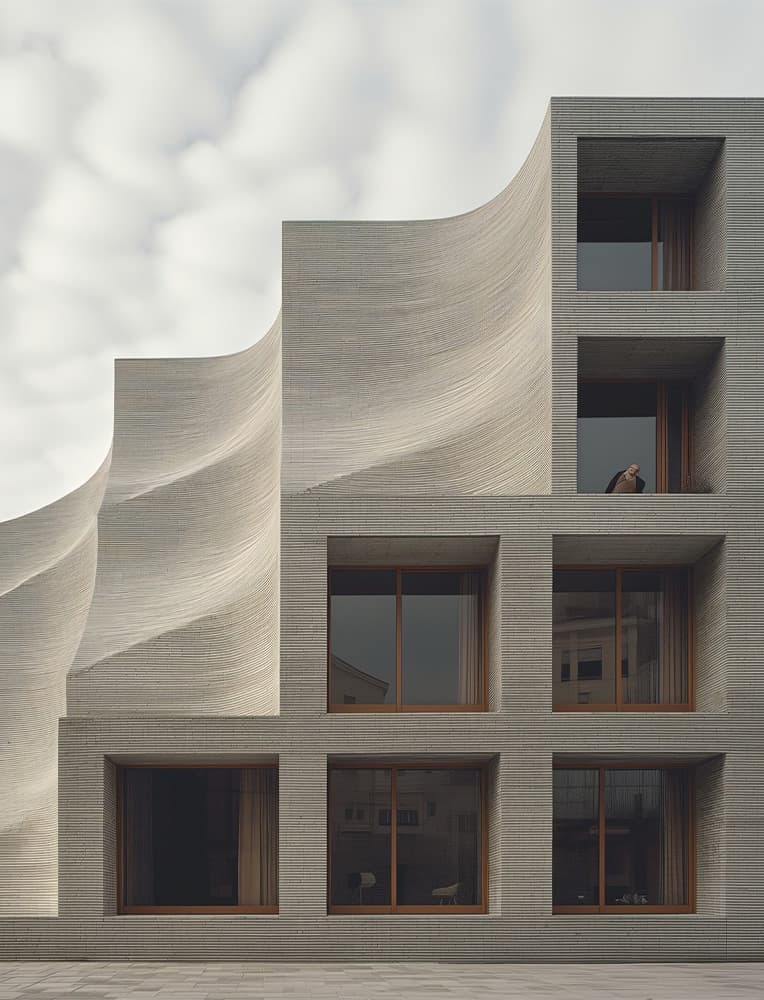
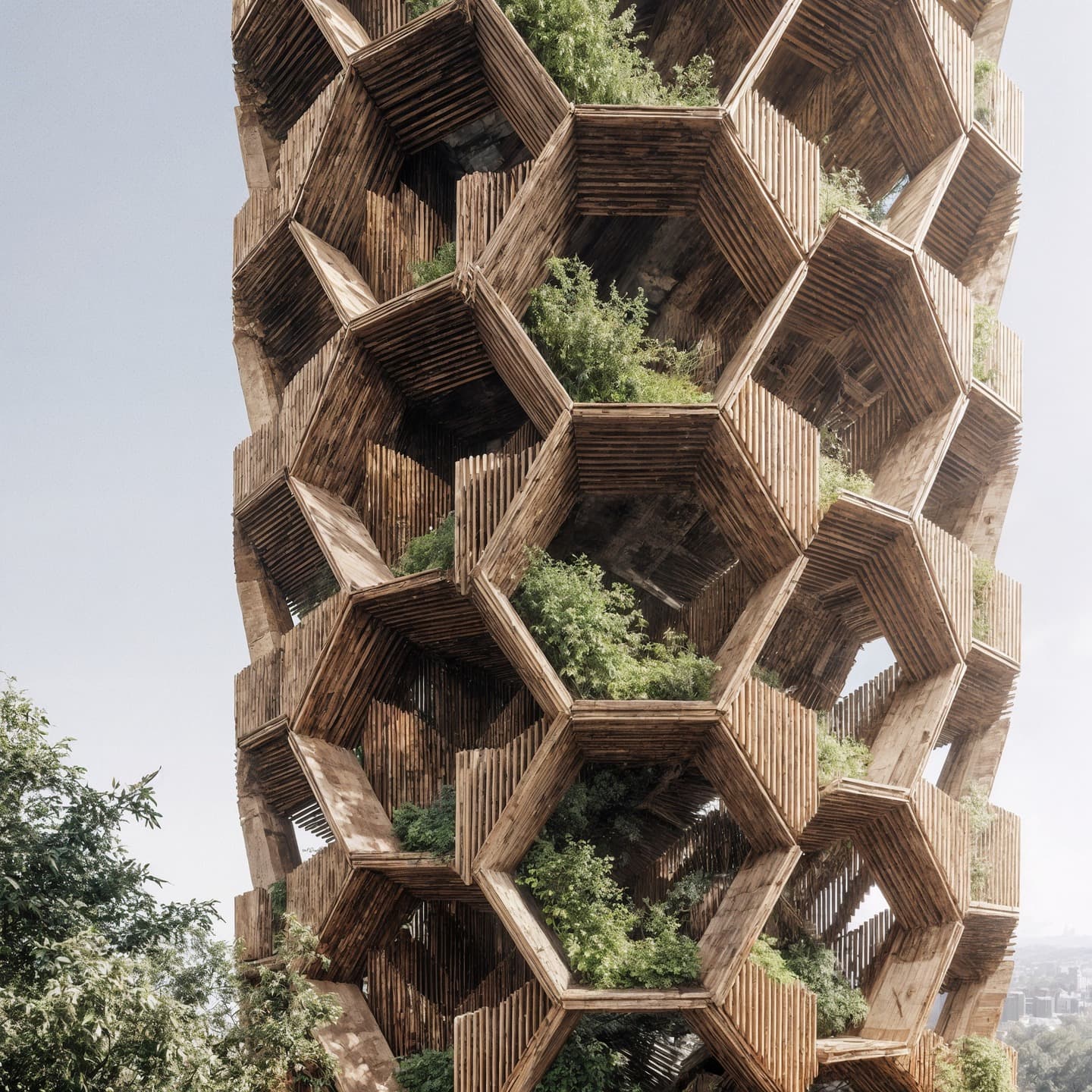
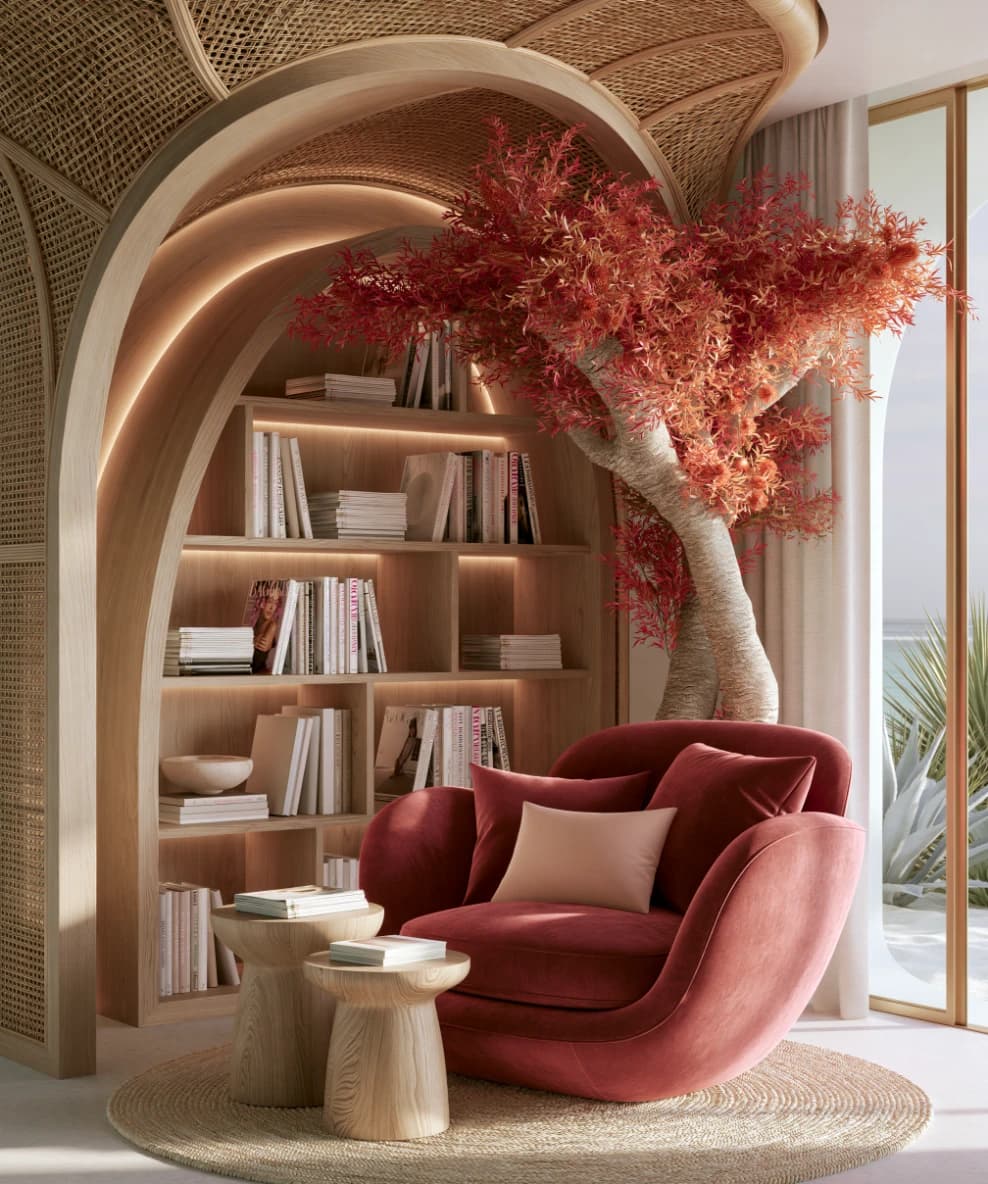
precise drawing tool, and it is not a design tool, but it is a strong mutation tool. Given a careful
description of a building, it returns variations I would not have drawn myself.
With the aim of building my own database of forms, I started posting daily work on social media.
That practice led, fortunately, to opportunities to write about generative architecture, including an
essay in Domus 1106, guest-edited by Bjarke Ingels. This workshop is the hands-on version of
that work
.Day 1: Midjourney, for searching
The workshop is split in two, because I believe the two uses of AI in architecture require
opposite mindsets. On the first day, we are searching.
Chapter A unfolds in three stages. The first is Precedent and Inspiration . We closely read a
few named buildings and objects, from architecture and from outside it. Rather than describing
them by style, which tends to produce generic images, we annotate them as architectural
anatomy: a terrace, a recess, a lintel, dual frontality, the way the load comes down, a bulkhead,
the size of an opening, the mass of a material. The output is a written anatomy list, not a mood
board. The hard part of working with references was never finding them. It is turning them into
something you can actually work with.
The second stage is Mutation and Variation . The anatomy list is written directly into
Midjourney prompts, sometimes from a single source, sometimes combining two or three.
Traditionally this kind of testing happens in physical models or 3D software, and it is slow. Here,
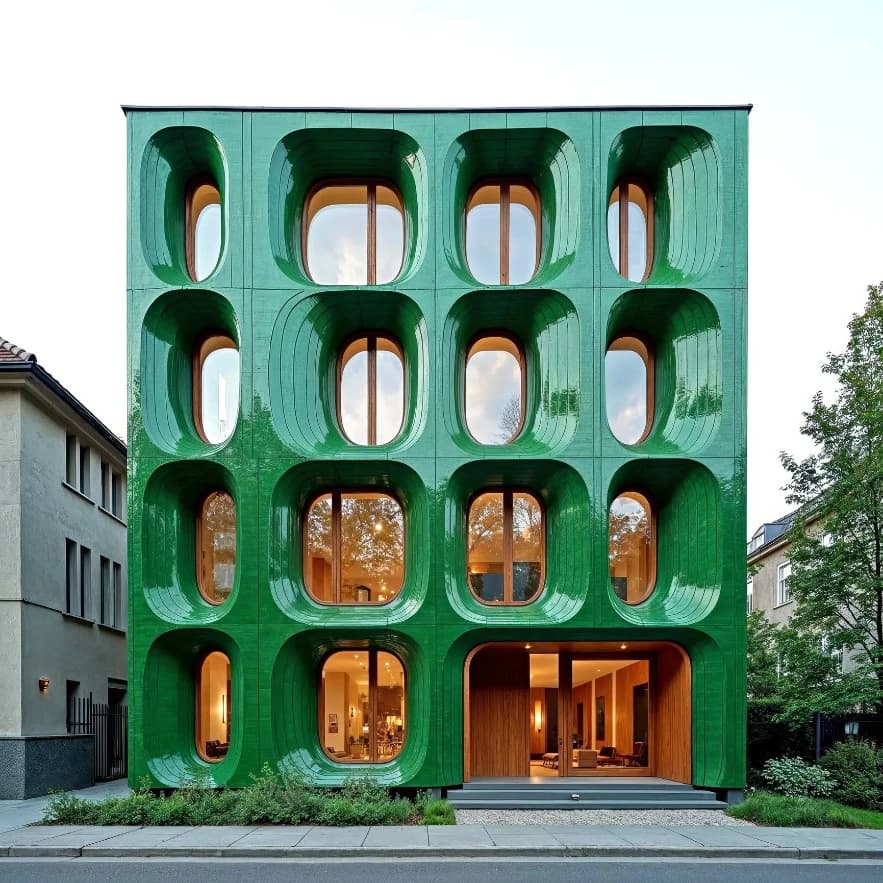
the goal is a wide field of massing, facade, and spatial options, many of them unexpected. We
are not looking for a finished image.
The third stage is Critical Selection , and this is where you are the designer. The options are
judged against the project brief. You keep one frame and name what survived in it: the depth of
a facade, a roofline, a recess, a structural opening, or simply the atmosphere. If nothing holds,
you return to the precedent or to the prompt. Day 1 closes as a complete ideation study: one
selected image, and a clear argument for why it is the best option.
Day 2: Nano Banana Pro and Kling, for showing
There is a second, unrelated problem that appears later in every project. Even after the design
direction is settled, visualization consumes a disproportionate amount of time. On the second
day, the rule is the opposite of Day 1: we make no formal variation at all.
Chapter B is a separate study; we do not continue the Midjourney image. Participants begin with
a Rhino screenshot: a perspective, an axon, or an interior. A finished render is not required, only
a clear capture. Using Google's Nano Banana Pro, image generation that respects a given 3D
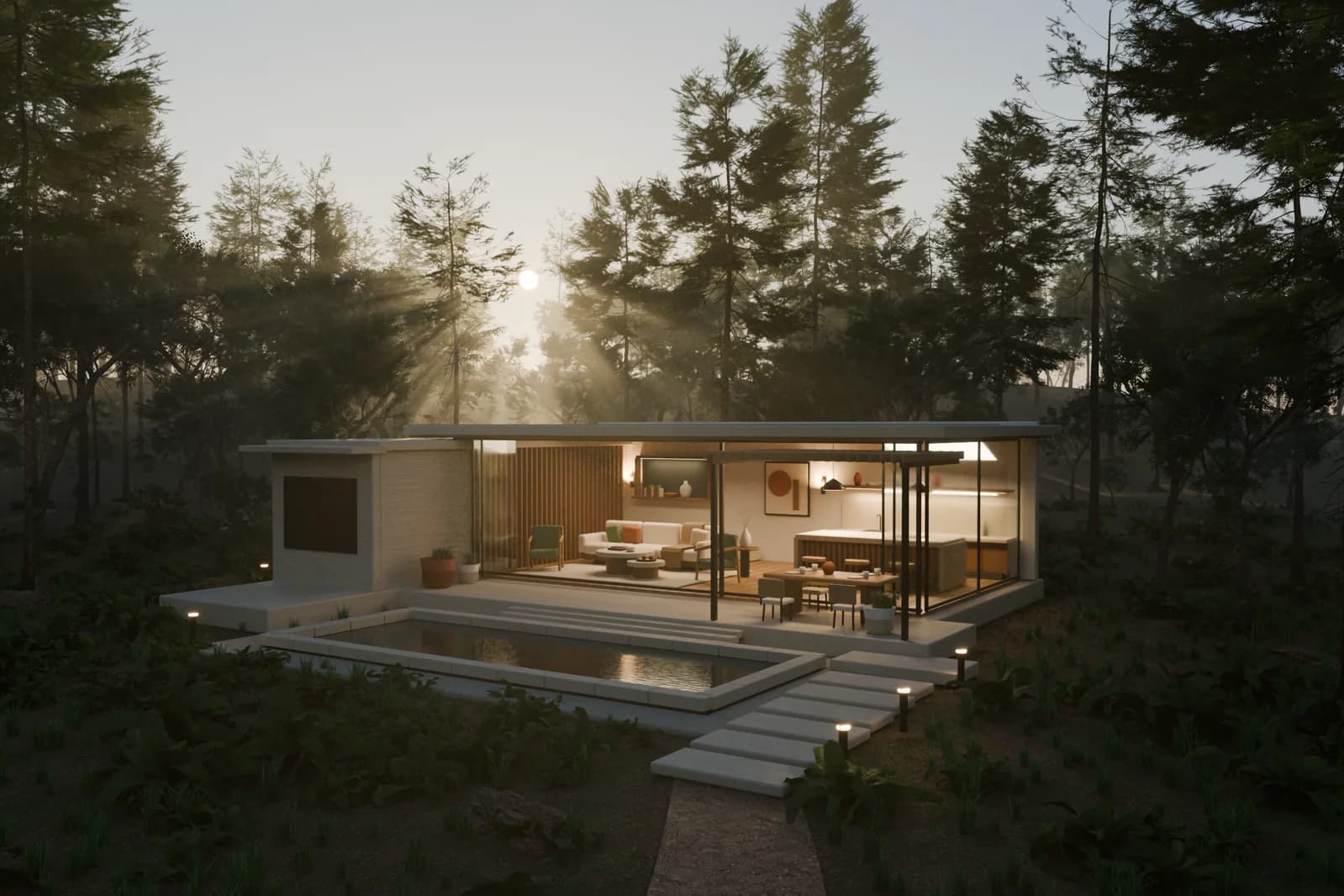
view, we turn that capture into an accurate visualization. We work with a strict hold list: massing,
openings, and proportions stay exactly as they are in the model. Only material, light, camera,
people, and context are allowed to change. Much of the session is about writing edit instructions
that change atmosphere or occupancy without touching the structure, and about testing light,
season, and camera shifts.
The approved still then goes into Kling and becomes a short clip: an approach, an orbit, a
fragment of an interior walk, or a change of light. The same rule applies: do not generate a
different building. Motion simply lets us review the same design in time, without setting up a full
animation pipeline. Day 2 ends with one accurate still and one short animation, both grounded
in the Rhino view.Understanding why Midjourney and Nano Banana Pro behave so differently, one generous and
unpredictable, the other precise and obedient, is itself one of the central lessons of the
workshop.
What to expect
Participants will leave with a clearer picture of their own ideation process, a method for
annotating a building so it can be written into a prompt, and criteria for selecting among outputs
that they can state out. They will also leave with a practical workflow for turning a preliminary 3D
view into a convincing still and a short piece of motion.
A few honest notes before we begin. AI is not a magic tool that solves all design for you. It
saves real time in ideation and in visualization, but what comes out depends on what goes in.
Choosing the right inputs, recognizing a good output, and refining it into a real project are still
human abilities. Material, site, and construction also remain your responsibility; these tools do
not know where the building is or how it gets built.
This is why I think the qualities of an architect have not changed so much as sharpened. An
architect needs a clear sense of the aesthetic they are pursuing, and the eye to judge against it.
With that in place, the right attitude is an active one: to pursue as much efficiency as possible
with new technology, rather than waiting or resisting.
The number of images you generate matters very little. Selection matters. AI is not a
replacement for the designer, and not a shortcut around design. At its best, it is a good partner.

.jpg&w=3840&q=75)



_22f146.webp&w=3840&q=75)