Article
Freeform 3D printing is redefining the manufacturing and designing of objects, from sculptures to pavilions and architectural structures to interior design elements and components. If we dive into this fascinating world, we can explore the limitless possibilities of 3D printing technology. The possibilities with 3D printing are truly exciting. It opens the door to creating unique, customized objects that simply can’t be made with traditional casting methods. Whether it’s designing smaller pieces like stylish architectural furniture or bringing to life large-scale, fully printed buildings and infrastructure, the options are virtually never-ending.
Let’s explore Freeform 3D Printing
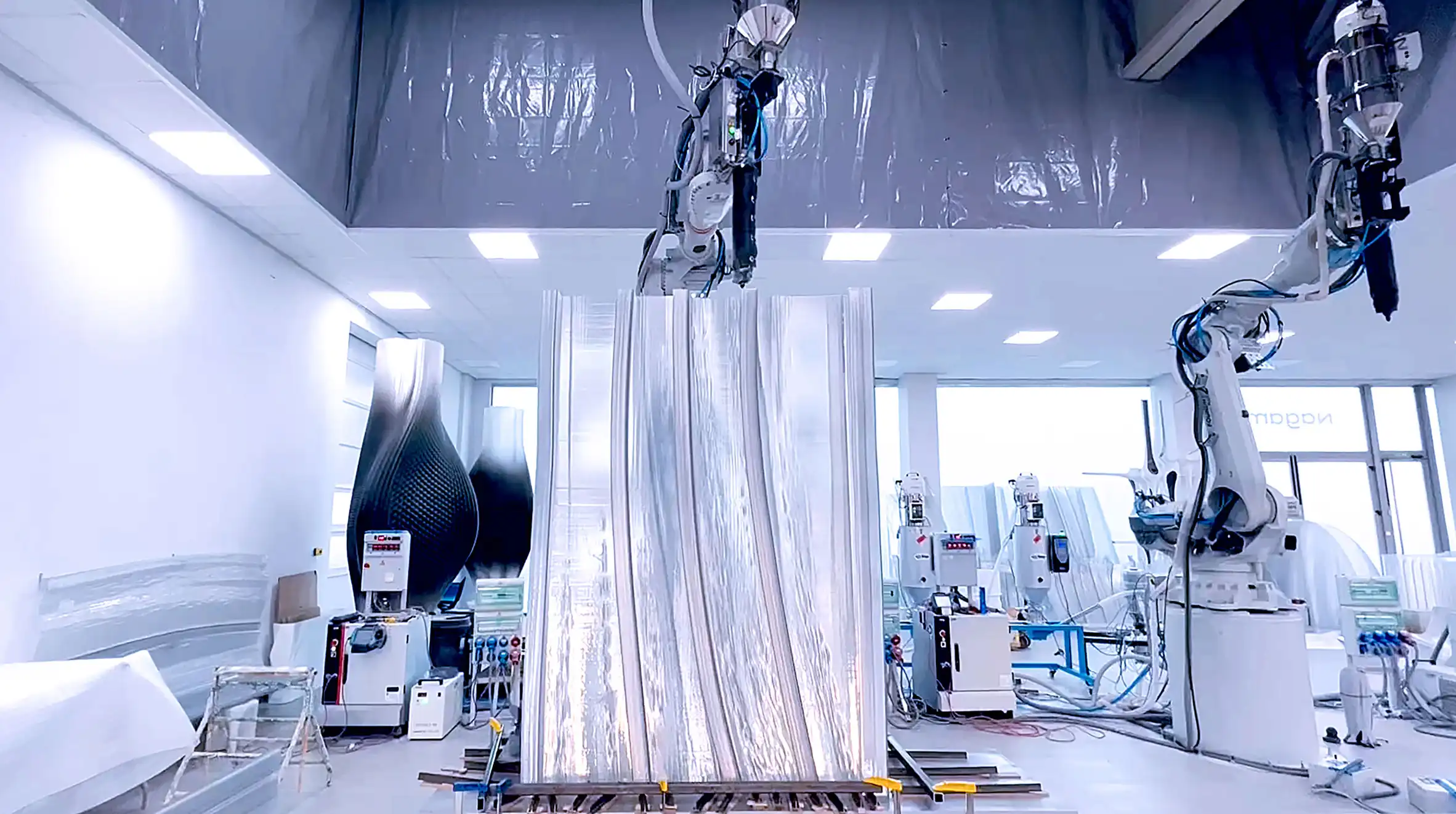
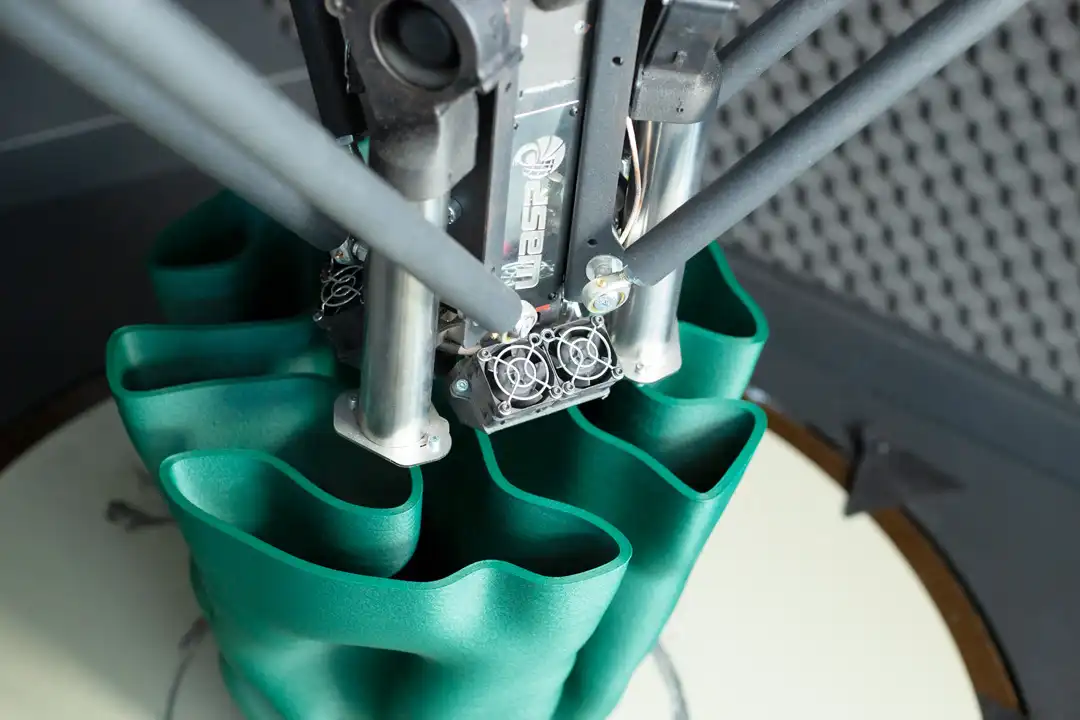
Freeform 3D printing is a sort of advanced additive manufacturing that allows for the creation of objects without the use of molds, supports, or typical stacking processes. We are familiar with the layer-by-layer method of 3D printing to produce an object; nevertheless, freeform fabrication allows the production of complex, organic structures in midair. It is possible to achieve this using advanced robotic arms, multi-axis printing, and material extrusion with advanced systems.
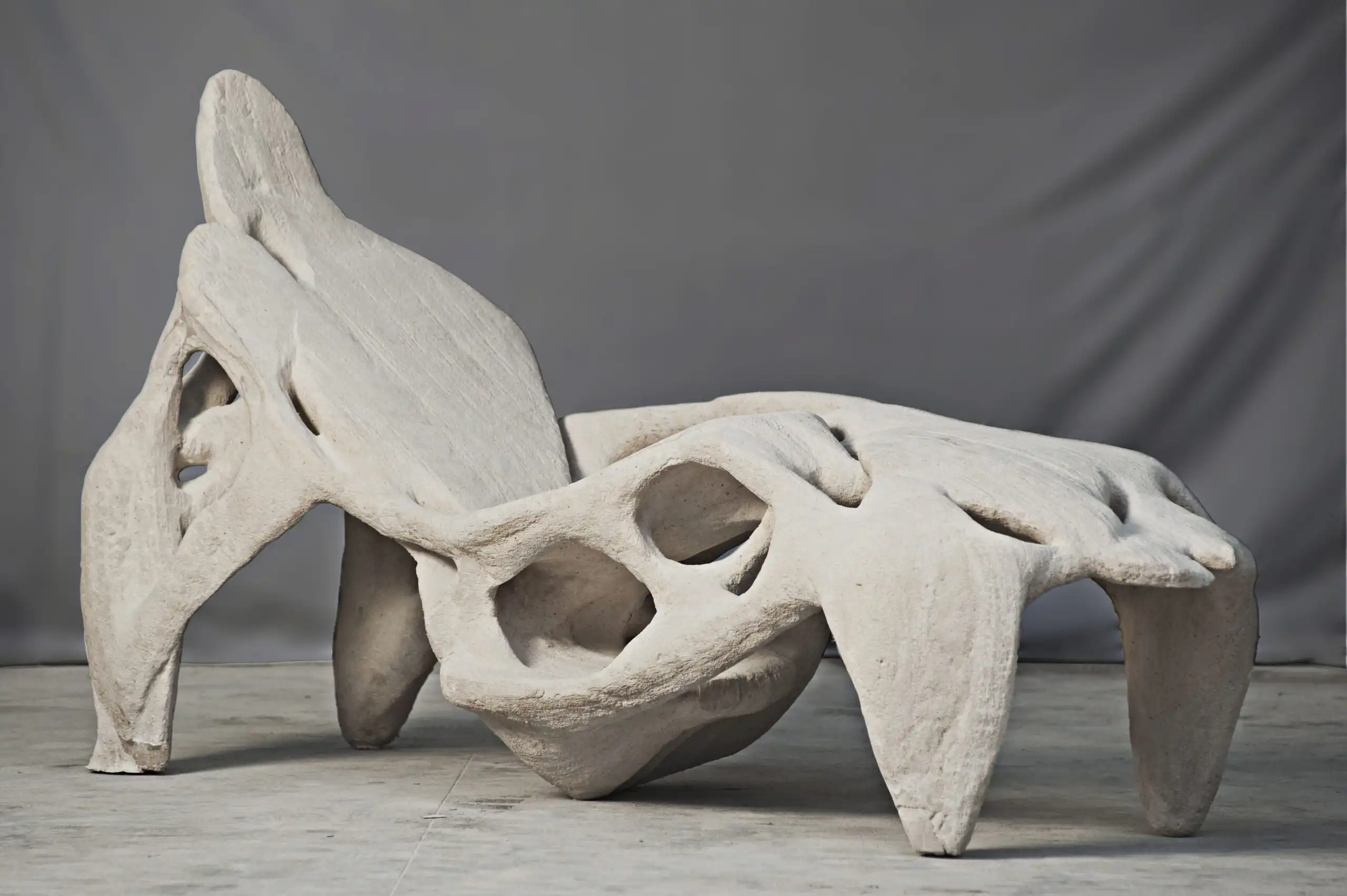
A primary benefit is to produce objects that are near to impossible without freeform fabrication. Designers imagine it as drawing in three dimensions, where the printed head may freely move in various routes to manufacture complex customized shapes, curves, or overhangs without the need to support structures. Major examples of freeform 3D printing are seen in the construction of sculptures and pavilions. It is good for the customization of parts or short manufacturing runs with no or less material waste.
Major Tech Involved
1. Robotic Arms:
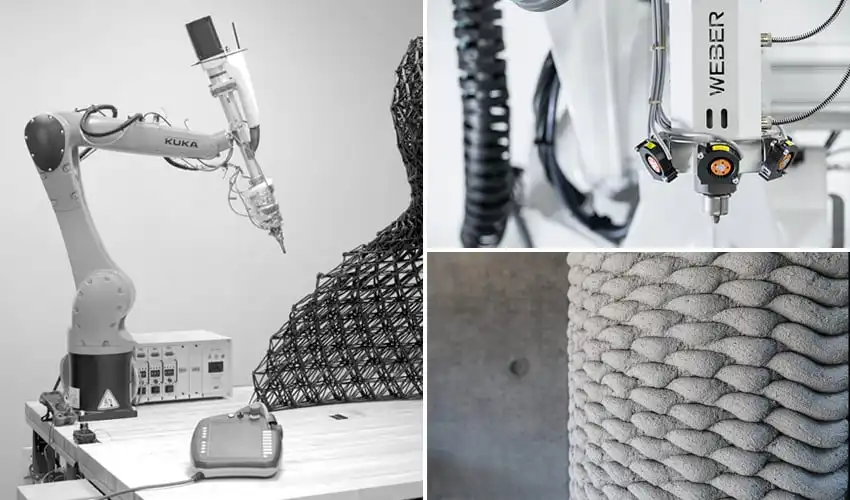
Digitally designed objects are operated with multi-axis robotic arms. Robotic arms available in variable sizes act as printers. Robotic arms move freely in all directions to deposit material where needed, regardless of on-site or off-site manufacturing. A handful of manufacturers of robotic arms are available in the market, such as German company KUKA, multinational company ABB group, Italian automation company Comau, CEAD, and MX3D are Dutch manufacturers, and Hyperion Robotics from Helsinki. The future is truly going to benefit from having more manufacturers who can implement technology effectively and thoughtfully.
2. Advanced Extrusion Systems
Specialized nozzles and material delivery systems facilitate the continuous extrusion of a variety of materials, including polymers, concrete, and metals. Extruders for 3D printers push the material to be printed in the desired shape and form, but there are multiple extruders available with dual gears, as well as small and large extruder gears. They are connected with small and large stepper motors and planetary gearboxes. Given the increasing speed of 3D printers over the past few years, a strong extrusion system is required.
3. Innovative Materials
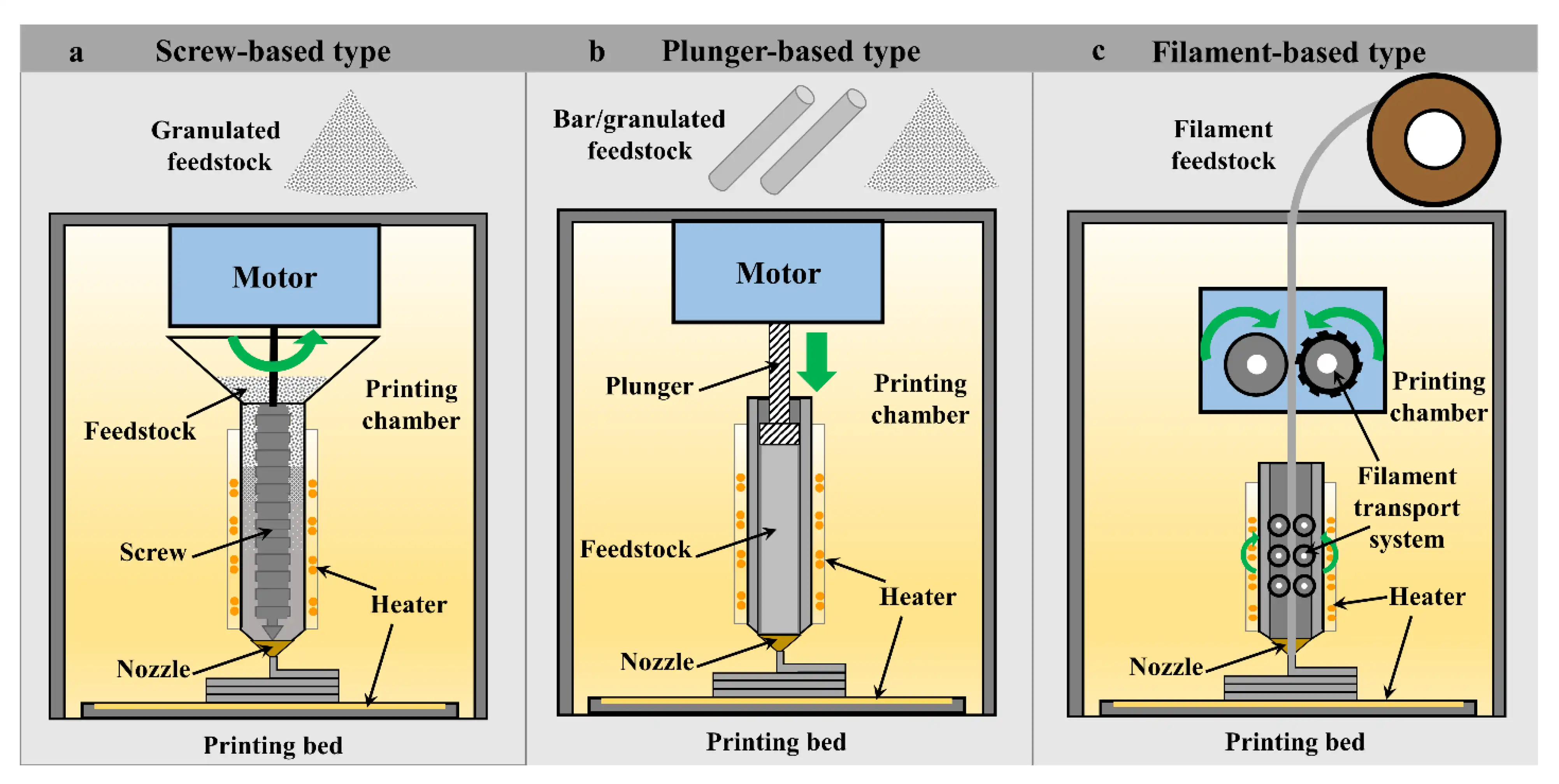
A wide range of materials, from concrete to biobased, are used for specific applications. Metal 3D printing is gaining hype in the automotive and aerospace industries. The possibility of seeing metals like titanium and aluminum in additive manufacturing has increased. Not only the type of material but also the material form and geometry play a vital role in the extrudability of 3D printing. The additive manufacturing feeding system includes granulated, bar, and filament feedstocks.
4. Real-Time Monitoring
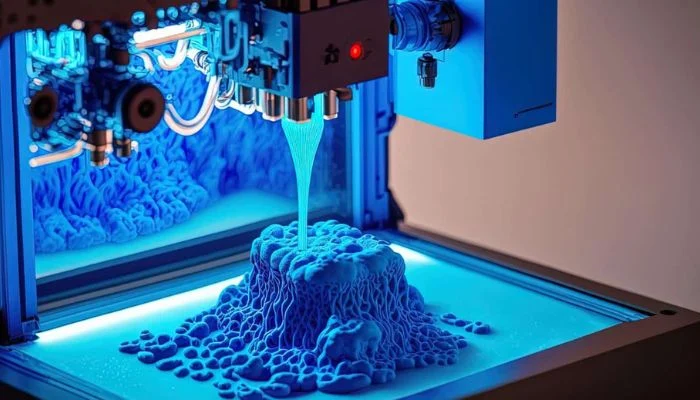
It seems feasible to print the freeform of your choice, but sometimes machines face issues and challenges during the printing process. Some obstacles are observed in terms of material workability, like warping and layer shifting, overheating of machine operating systems, and filament jamming. Hence, it is important to place cameras and sensors to monitor and bring accuracy by adjusting the errors.
Paradigms of Freeform 3D Printing
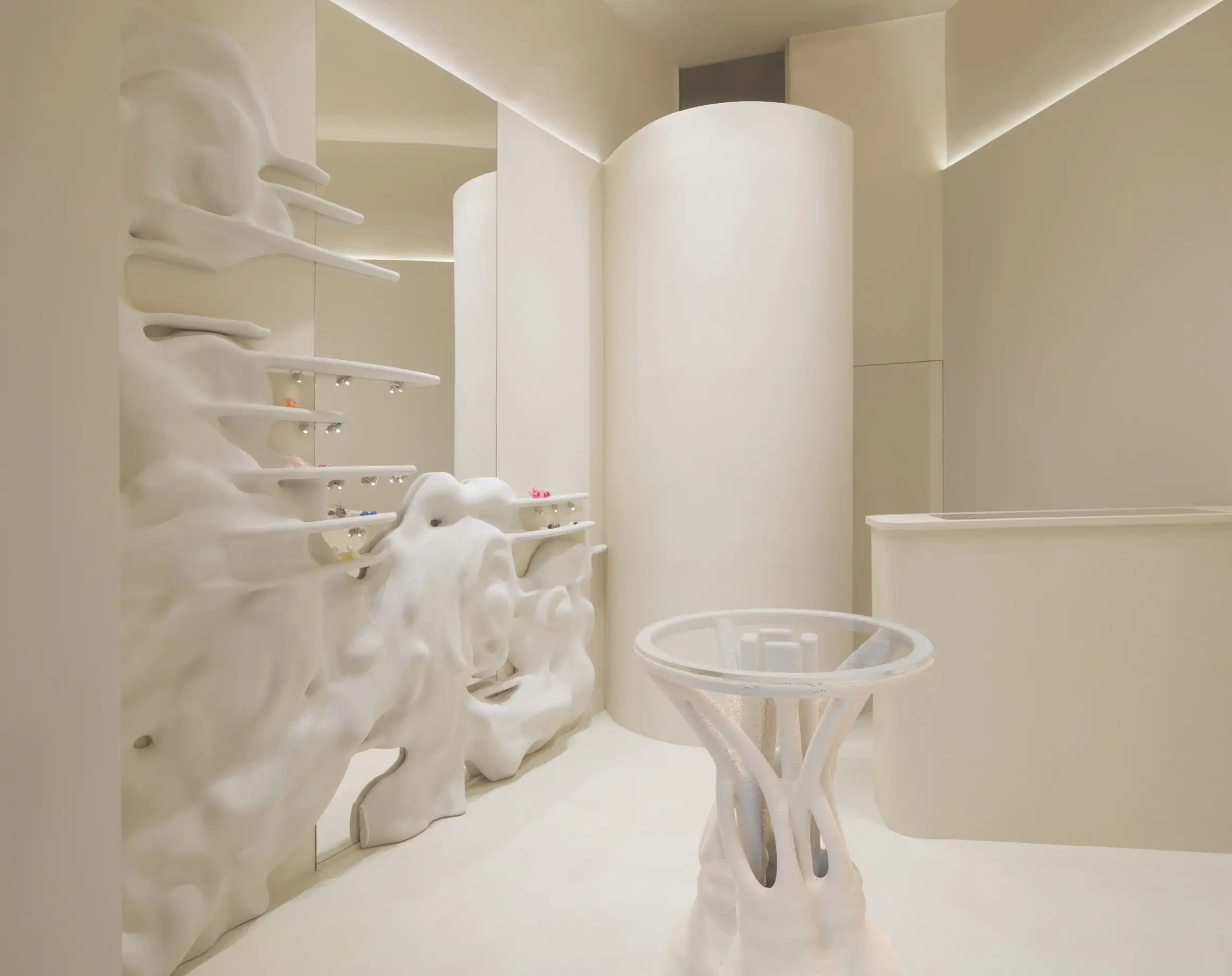
La Mansois is a 25-square-meter store in Barcelona. Zappala’s Studio designed the interior of the jewelry store by giving organic shapes to shelves for jewelry display. Furniture is 3D printed with biodegradable cellulose. Digital models optimized to be printed with the robotic arm. Unique elements made it extremely popular in retail spaces thanks to the large-scale printing technology adopted in the design process.
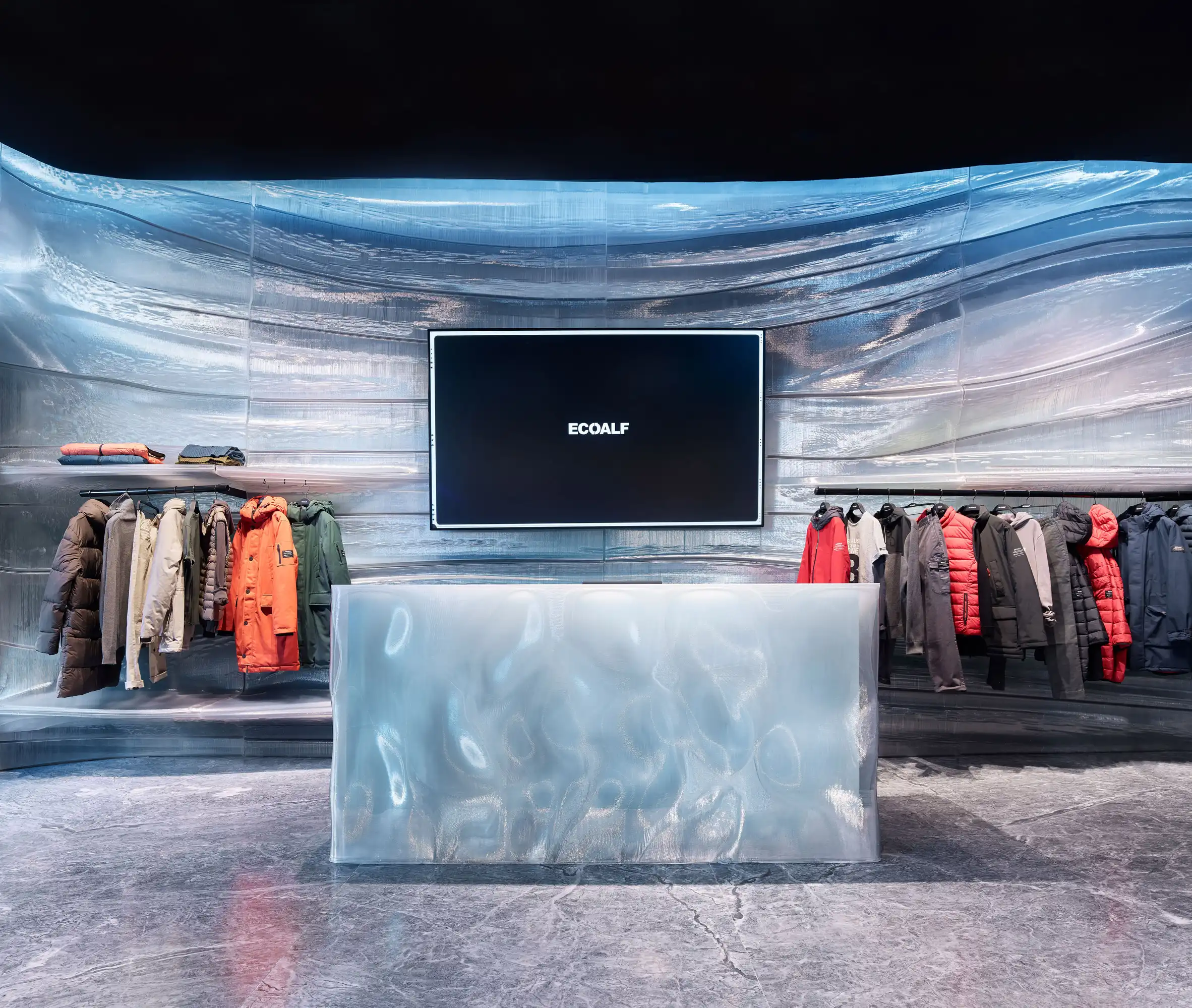
The Ecoalf store is the first fully 3D-printed interior completed by Nagami. Objects are 3D printed using recycled plastic. All of the components used for the interior can be disassembled and reused or recycled for future projects. Nagami's co-founder states, "The machines needed to literally dance to create all of these different angles," the designer explained. "Traditional 3D printing uses layers. But we can change the angle of the robot to make the kinds of curved and wavy forms you see in this project."
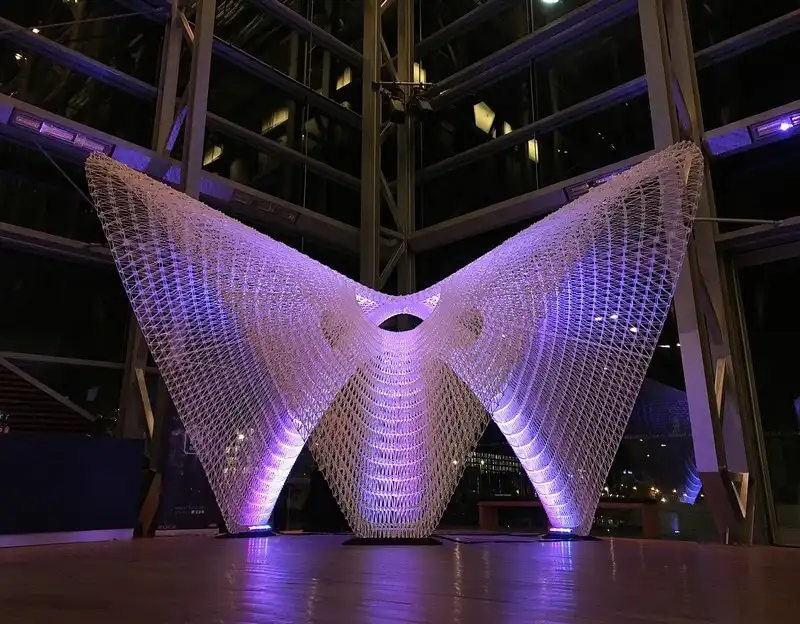
Daedalus Pavilion, a 3D printed architectural installation built by robots at a technology conference in Amsterdam. Teams of Ai Build and ARUP engineers collaborated to build this 5m wide x 5m deep x 4.5m high pavilion, consisting of 48 pieces that are 3D printed using a KUKA industrial robot. The project showcased the future of construction that is near to being transformed by robotics and artificial intelligence.
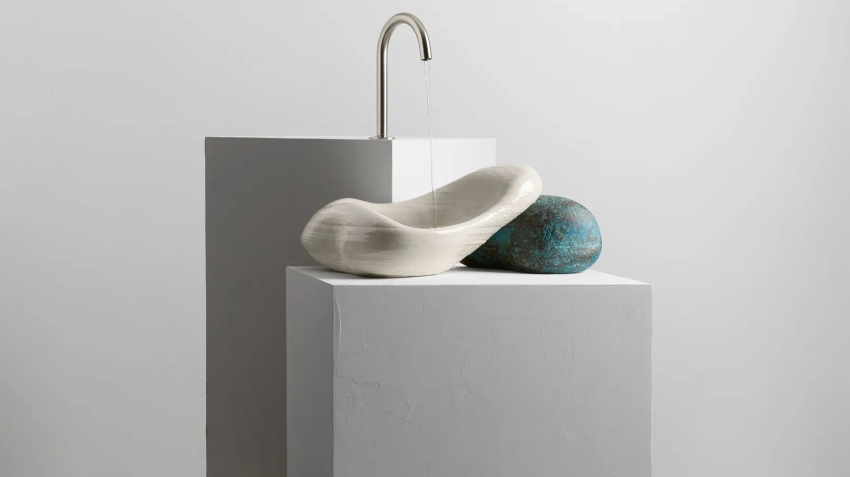
Rock.01, a 3D-printed sink. New York-based artist Daniel Arsham, in collaboration with Kohler, manufactured this 3D-printed rock-shaped ceramic sink. 7.5 hours were enough to print this sink, as affirmed by producers. Initially, 99 limited edition pieces were made to circulate in the market. The texture of the sink resembles a handcrafted piece instead of a 3D-printed object.
Designers and artists are taking advantage of freeform 3D printing techniques by using different materials and techniques. PAACADEMY’s workshop teaches how to design and create architectural elements for 3D concrete printing using Rhinoceros and Grasshopper.
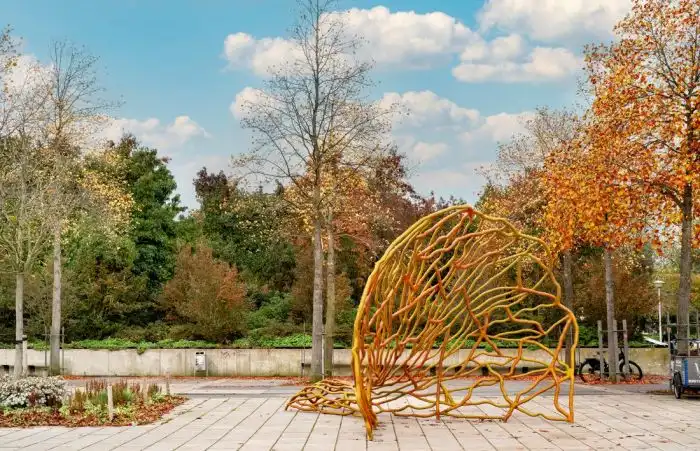
The underground tree is displayed in Wester Park Amsterdam. 3D printed by the company MX3D, designed in honor of a gigantic chestnut tree that was cut down due to disease. The old tree was the visitors' eye-catcher. The place was marked for planting a new tree, and a sculpture was placed there. This artwork, designed by Tanja Smeets, shows a fallen tree with its roots up.

.jpg&w=3840&q=75)