Article
Shelter is one of the bare necessities for the survival of any living being. Providing shelter should not only offer safety but should also offer comfort and a sense of belonging. This is where architecture comes into play, which combines art in the form of aesthetics and science because the spaces are designed to be secure and comfortable for human occupation. Apart from fulfilling the purposes of a shelter, the built structure should last longer than the average age of man and, if possible, for generations together. For structures to last longer, they need to be sustainable – to be comfortable, adaptable, efficient, and timeless without harming the surrounding environment.
Any architectural practice should enable spatial solutions for human needs, and sustainability should be integrated into the solutions, not only to cater to the needs of the current generation but also to provide for future generations. It becomes the responsibility of the architects to design the built fabric sustainably. And it becomes the responsibility of the architectural education system to make their students think of the environmental, social, and economic impacts of their designs. The system needs to make sustainability a way of thinking, not an afterthought.
Sustainability in architecture

In 1987, the United Nations Brundtland Commission defined sustainability as ‘meeting the needs of the present without compromising the ability of future generations to meet their own needs.’ With the launch of the 17 Sustainable Development Goals in 2015, many countries have adopted the 2030 Agenda for Sustainable Development and are already working towards it. The stage has been set with many countries having laid down sustainable goals to achieve within the next 5, 15, and 25 years, and the aims of these goals need to be matched to the kind of experts being introduced into the architecture world every year so that the goals are not only met but also sustained.
With the architecture industry contributing about 40% of the world’s greenhouse gas emissions, it becomes imperative that architects should be cautious about how they do their work. Some of the SDGs are associated with the values that sustainable architecture is defined by – such as sustainable cities and communities, good health and well-being, industry, innovation, and infrastructure, affordable and clean energy, and responsible consumption and production. Adhering to these goals and working towards achieving them in every project will truly show the commitment of the country in its efforts to follow sustainability goals. And introducing sustainability into the educational sphere will define their dedication.
Scope of sustainability in architectural education
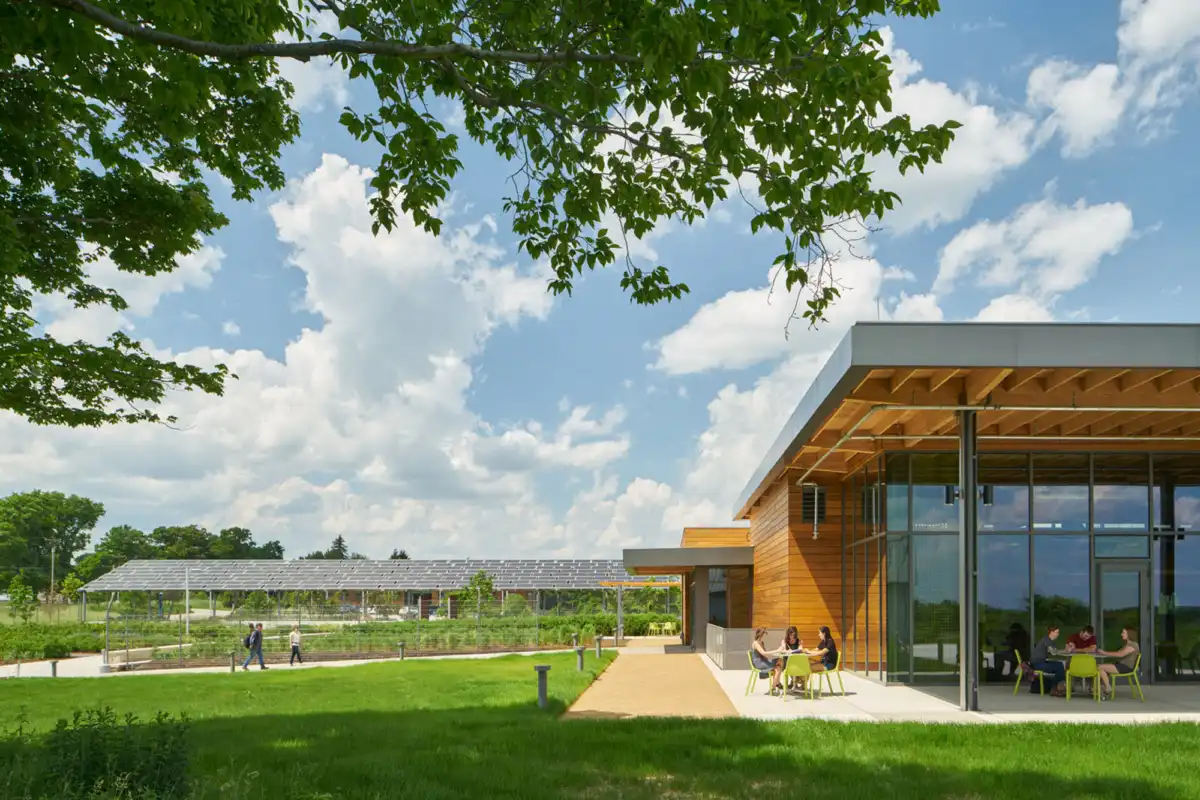
Chatham University’s Eden Hall Campus, USA by Mithun aims to educate its students on sustainability with examples from in and around the campus. © Bruce Damonte
Today, climate change is one of the biggest challenges and every industry needs to pitch in to tackle it from their end. Architecture is no exception, in fact, the situation necessitates that sustainable design is no longer an option but an essential demand. Sustainability is an evolving paradigm characterized by the variety of new technologies being invented and coming to the market regularly. Constant updates and adopting the right techniques are becoming the need of the hour. And the responsibility starts at the primary level of architectural pedagogy.
Architecture is also a growing industry, and the architectural education system should change its mindset to incorporate the updated technologies to achieve holistic design, among them, the top priority should be given to sustainable approaches towards the project. Not just architects but educators, students, and institutions of the field must adopt the practice of staying updated on technologies, embracing appropriate techniques, collaborating to optimize the design, and embracing continual learning so that sustainability becomes a way of thinking that is present.
With regard to sustainability, the scope of architectural education extends to building timeless structures using innovation underlying the principles of efficiency and green energy. The materials and techniques used are also carbon efficient and have less or zero impact on the surrounding environment while creating quality interior environments. This ensures lesser consumption of energy and high marketability of the built fabric. Professionals, both present and future, can easily be trained with tools that facilitate to optimization of sustainable features from the time of conception of the project and compute data even after occupation.
PAACADEMY offers a variety of easily accessible online courses on sustanability for architecture students and professionals of today to equip themselves to explore, study, and design beautiful, user-friendly, and eco-friendly buildings. This is a step in the right direction for education on the latest trends and developments in the sustainability and digital realms.
Challenges facing the current Education System
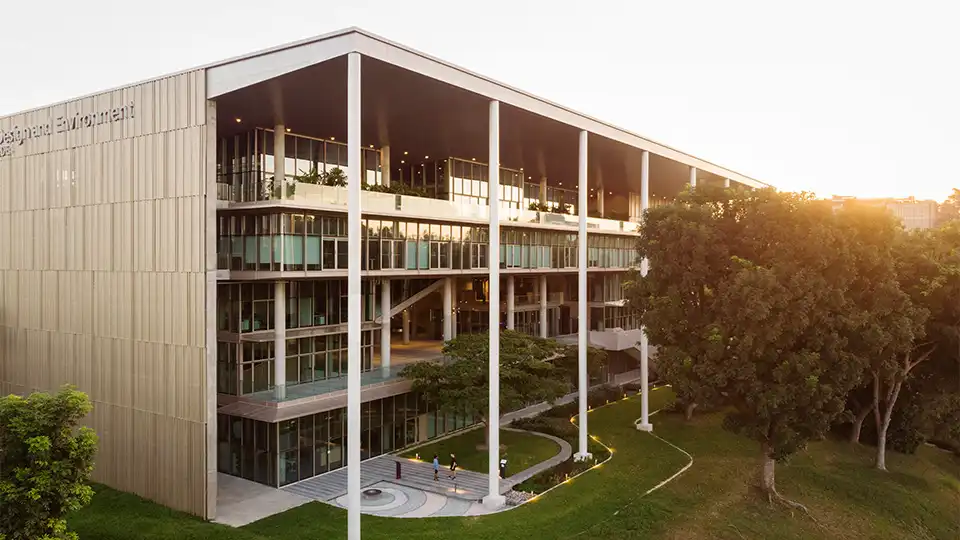
NUS School of Design and Environment 4, Singapore by Serie Architects is described as ‘a prototype of sustainable design’ and integrated the topography into the building. © Rory Gardiner
Having established the significance of sustainability courses in the architectural education system, it is also necessary to be aware of the challenges that it presents today:
-
Outdated curriculum – Updating the curriculum of the architectural education system is not an easy task. It requires knowledge and attention to include the latest sustainable and energy-efficient practices.
-
Lack of skilled tutors – Sustainable techniques need to be imparted by experts with specialized and relevant knowledge in the subject, and this is found to be lacking in many architecture schools.
-
Resource constraints – The architectural education system always includes practical, hands-on learning, and with sustainability education gaining momentum only recently, resources are limited and need to be expedited to optimize opportunities for learning experiences.
-
Disconnect from industry – Sustainable designs incorporate a variety of other industry experts and institutions should facilitate collaborations amongst the various professionals. Simultaneously, the gap should be bridged between academia and industry, so students are equipped to face the challenges upon graduation.
-
Balancing aesthetics and efficiency – Good designs need to balance beauty and functionality, and students need to be taught to do that effectively, without compromising on their creativity. The challenge would be to design aesthetically appealing buildings that fulfill all the project requirements and are also sustainable.
-
Contextual and cultural factors – Every site and project is different based on its surroundings and the built fabric is designed accordingly. Students should pay attention to these factors and be taught to use the right sustainability technique.
-
Changing regulations and metrics – How sustainability factors are measured, building codes, and regulations keep changing. Keeping up with and updating them at an educational system level is challenging.
Role of educators and institutions

The current scenario as described by Donald Watson in the chapter ‘Environment and architecture’ in The Discipline of Architecture emphasizes the architects, educators, and institutions’ responsibilities towards sustainability and circular economy: ‘Environmental issues are too frequently seen as ‘merely’ pragmatic or technical issues left for other specialists to worry about. When this is done, the profession misses a great opportunity, if not a responsibility, for renewal of its knowledge base and reflection on the ethical consequences and values of architectural education and practice.’
Architecture is a combination of art, science, and technology without compromising on the environmental and social domains while designing and constructing the building. It is the responsibility of architects to have the foundational knowledge to guide decisions on sustainability matters. This can help to avoid the development of a knowledge gap between creativity and honoring the site and environmental conditions. This is where the education system and institutions play a major role – in defining the thought process an architect adopts when designing.
Educators should facilitate a pluralist approach to design that acknowledges environmental factors, traditional and tried and tested techniques, and sustainable technologies and systems to help create a holistic design. As future professionals, students should develop the notion of sustainability in design by exposing them to an in-depth understanding of the concepts of energy-efficient systems and their relation to architecture. The curriculum should integrate pedagogies that combine technical knowledge and creative solutions to address sustainability.
What does this mean for architectural education?

We are in a race against time where climate change is concerned and starting to incorporate sustainability thinking from the beginning has become crucial. Architectural pedagogy that embraces creative design but also considers environmental, social, cultural, and economic contexts helps to address the efficiency of the built fabric. And that is the investment institutions need to make to reap the benefits in the future professionals. For wasn’t it Abraham Lincoln who said, “The philosophy of the school room in one generation will be the philosophy of the government in the next”?
-
Author: Nandini Subramanian


.jpg&w=3840&q=75)