Article
For most of my career, parametric design has meant code. At the Architectural Association Design Research Lab, where I did my MSc and MArch, and later in the Computation and Design Research Group at Zaha Hadid Architects, where I led computational workflows and façade studies on international cultural and commercial projects, the way into a parametric system was always through a scripting environment. You learned the syntax, you learned the components, and only then did you get to think about architecture.
That order of operations has always bothered me. The interesting part of parametric design was never the code. It was the thinking that comes before it: looking at a building, a pattern or a surface and understanding it as a set of rules. What is fixed? What varies? What are the constraints, and what are the ranges? Code was simply the tax you paid to test those ideas.
Over the last couple of years, that tax has started to disappear. Large language models can now write working geometry scripts from a clear description. This workshop is my attempt to show architects and designers how to use that shift well, without giving up the rigour that makes computational design worth doing
The skill that does not change
There is a common assumption that AI makes parametric thinking unnecessary. In my experience the opposite is true. When you work with a model like ChatGPT-6 Astra, the quality of what you get back is entirely dependent on the quality of the logic you put in. Ask it to "make a parametric façade" and you will get something generic. Describe a system of rules, with named parameters, sensible ranges and a clear idea of what stays constant, and you get a script you can actually work with.
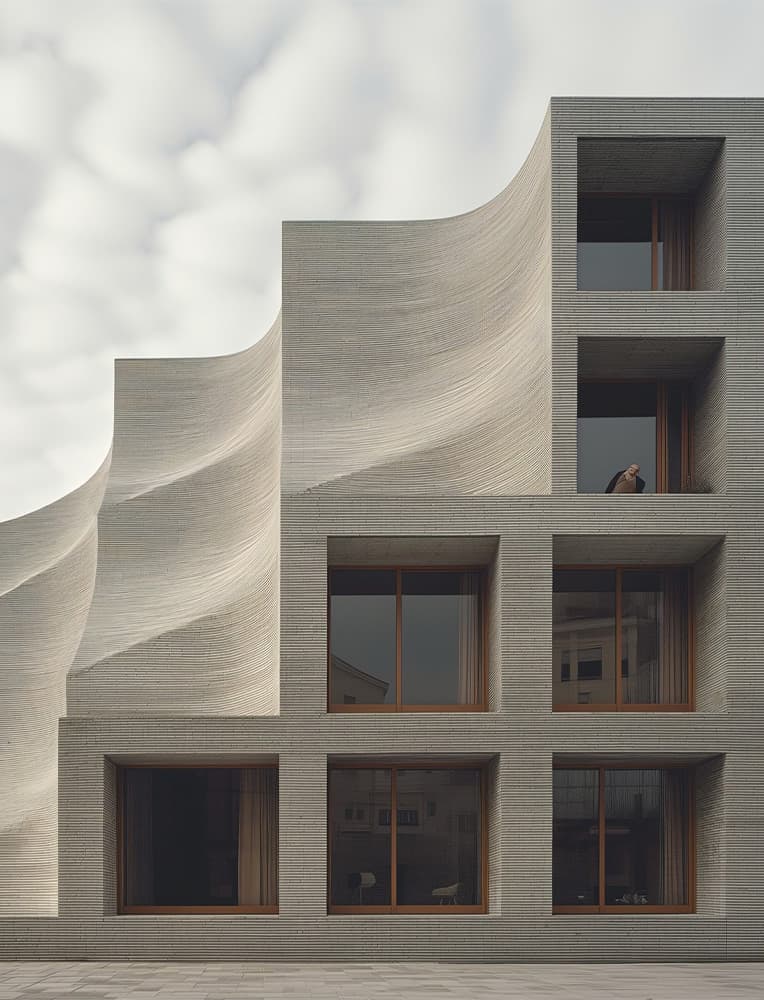
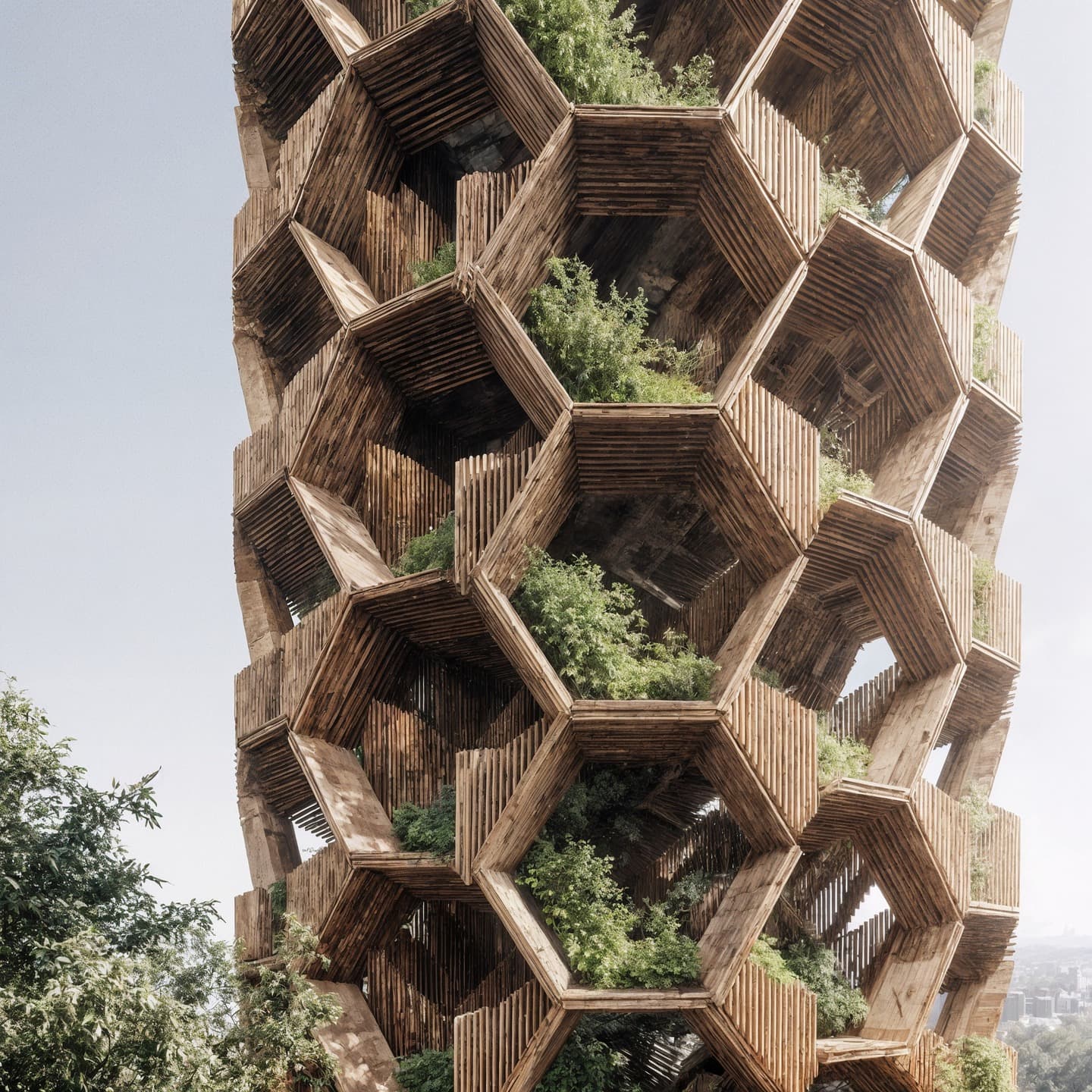
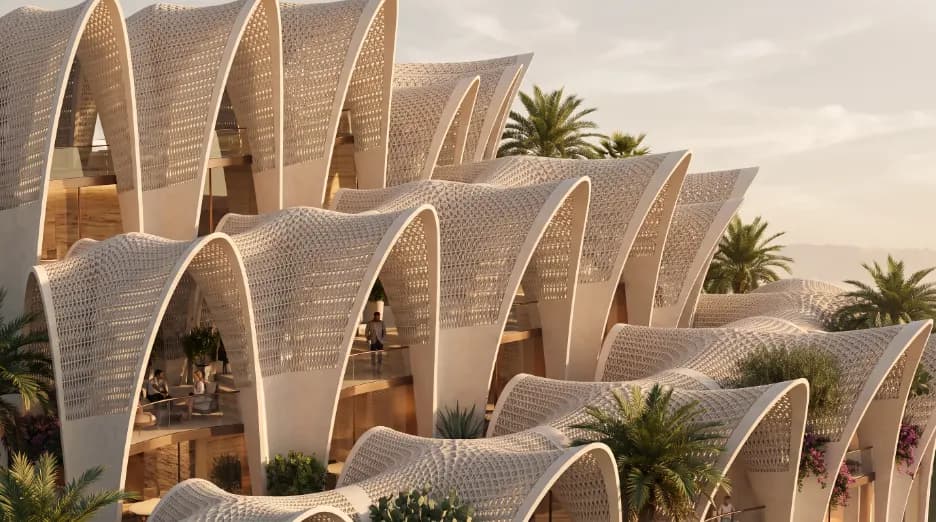
So the workshop does not start with AI at all. It starts with looking. On Day 1 we take an architectural precedent and take it apart. Participants can bring their own reference or work from curated studio precedents. The first exercise is learning to tell the difference between a reference that has real parametric potential and one that only looks complex. Plenty of buildings photograph as intricate but turn out to be a single repeated move. Others look calm and conceal a surprisingly rich set of relationships. Learning to read that difference is the foundation for everything else.
From image to pseudo-code
Once we understand a precedent, we bring ChatGPT-6 Astra into the conversation. The goal here is specific: to interrogate an image so that the model returns usable geometric logic, not a description of what it sees. That requires a particular way of asking, and a lot of the workshop is about developing that instinct.
From there we write pseudo-code. This is the step I consider the heart of the method. Pseudo-code is design intent written in plain language: the parameters that matter, their ranges, and the rules that connect them. It is readable by a human and by a machine, and it forces you to make design decisions explicitly instead of hiding them in a tangle of components. It is also the part of the process that will outlast any particular software or model.
No code, no Grasshopper
A question I get often is whether this is a Grasshopper workshop. It is not. The whole point is that you do not need Grasshopper, or any scripting background, to build parametric design in Rhino. Working from the pseudo-code, we direct ChatGPT-6 Astra to write scripts that run directly inside Rhino 8 and expose the key parameters as a live slider interface. Within the first day, participants move from an image to geometry they can push, pull and explore in real time.
This is also where things go wrong, and that is deliberate. Scripts break. Geometry misbehaves. Outputs come back slightly off. The instinct with AI tools is to throw the result away and start again. Instead, we learn to diagnose what has happened and fix it through targeted conversation: describing the problem precisely, isolating the cause and steering the model towards a correction. Debugging through dialogue is, in my view, the most valuable practical skill in the whole workflow, and it is the one most people never develop.
From making to presenting
Day 2 takes the same approach into more ambitious precedents, where several rules and parameters interact and the forms become richer. Once the geometry is working, we shift from making to presenting. We set up camera views in Rhino and take viewport captures into Runway to produce styled renders and short animated sequences from participants' own geometry.
I think this matters. Computational work often stays trapped in the viewport, grey and diagrammatic, because the presentation step is its own specialist discipline. Being able to take a parametric study all the way to a compelling image or a short film in the same afternoon changes how you can use it, whether that is for a competition, a client conversation or a portfolio.
The workshop closes by bringing everything together into a reusable library of prompts, pseudo-code and working scripts that participants can carry straight into their next project.
Why now, and why this approach
Alongside running blng studio in London, I have spent many years teaching, at the AA DRL, the Bartlett, ETH Zurich, Tsinghua University, CEDIM and PAACADEMY. Across all of those settings I have watched talented designers bounce off computational design because the entry cost was too high. They had the spatial intelligence. What they lacked was the time to learn to code. I developed this curriculum because I think conversational tools finally remove that barrier, as long as people are taught to use them with discipline rather than as a shortcut.
I have also been careful to make the method independent of any single model. We use ChatGPT-6 Astra throughout, and the workflows are tuned for it, but AI models will keep evolving. What transfers is the ability to read geometry, structure design intent and direct a model to build something reliable. Those skills will work just as well with whatever comes next.
Who it is for
The workshop is designed for architects, spatial designers and students who want to explore computational design without the steep learning curve of traditional coding or complex Grasshopper workflows. No scripting, Grasshopper or advanced AI experience is needed; basic confidence in Rhino is enough. Experienced computational designers are very welcome too. For them, it is a chance to test a conversational way of developing and checking design logic that can sit alongside the tools they already know.
If you have ever looked at a building and thought, "I understand how that works, I just could not build it," this workshop is for you. I look forward to seeing what you bring on 12 and 13 December.
ChatGPT-6 Astra for Parametric Design: LLM to Rhino runs live online on PAACADEMY on 12 and 13 December 2026, 14:00 to 18:00 GMT.