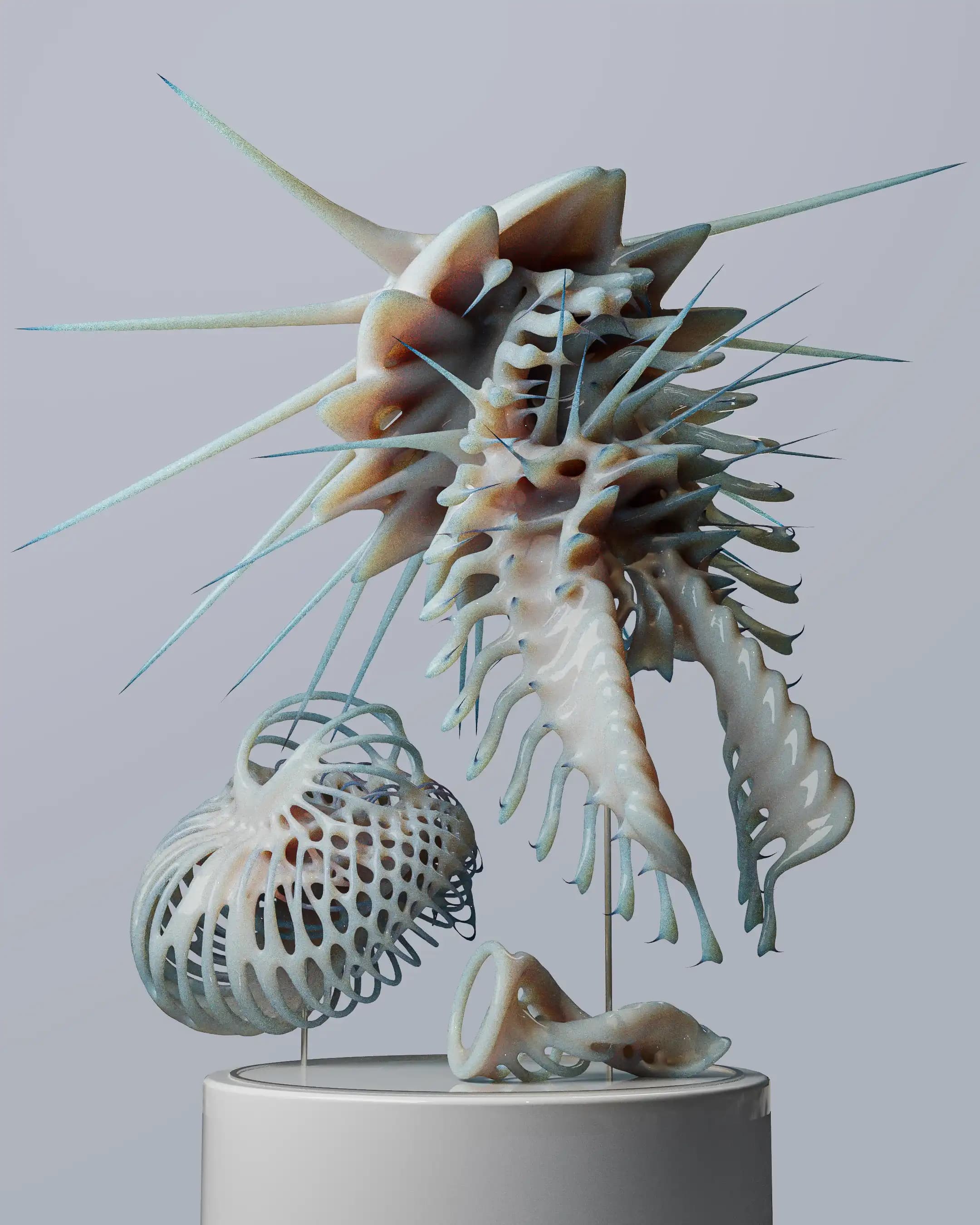
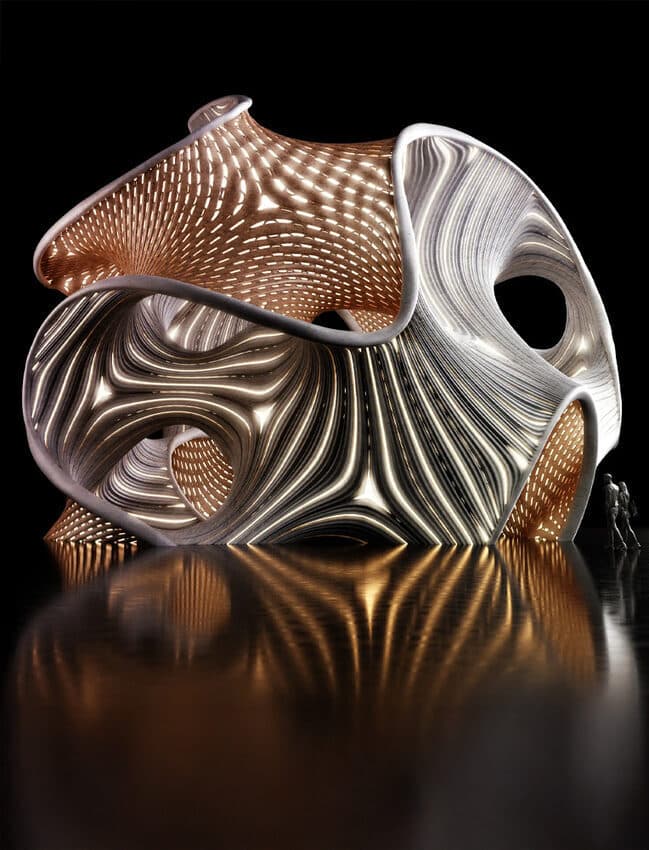
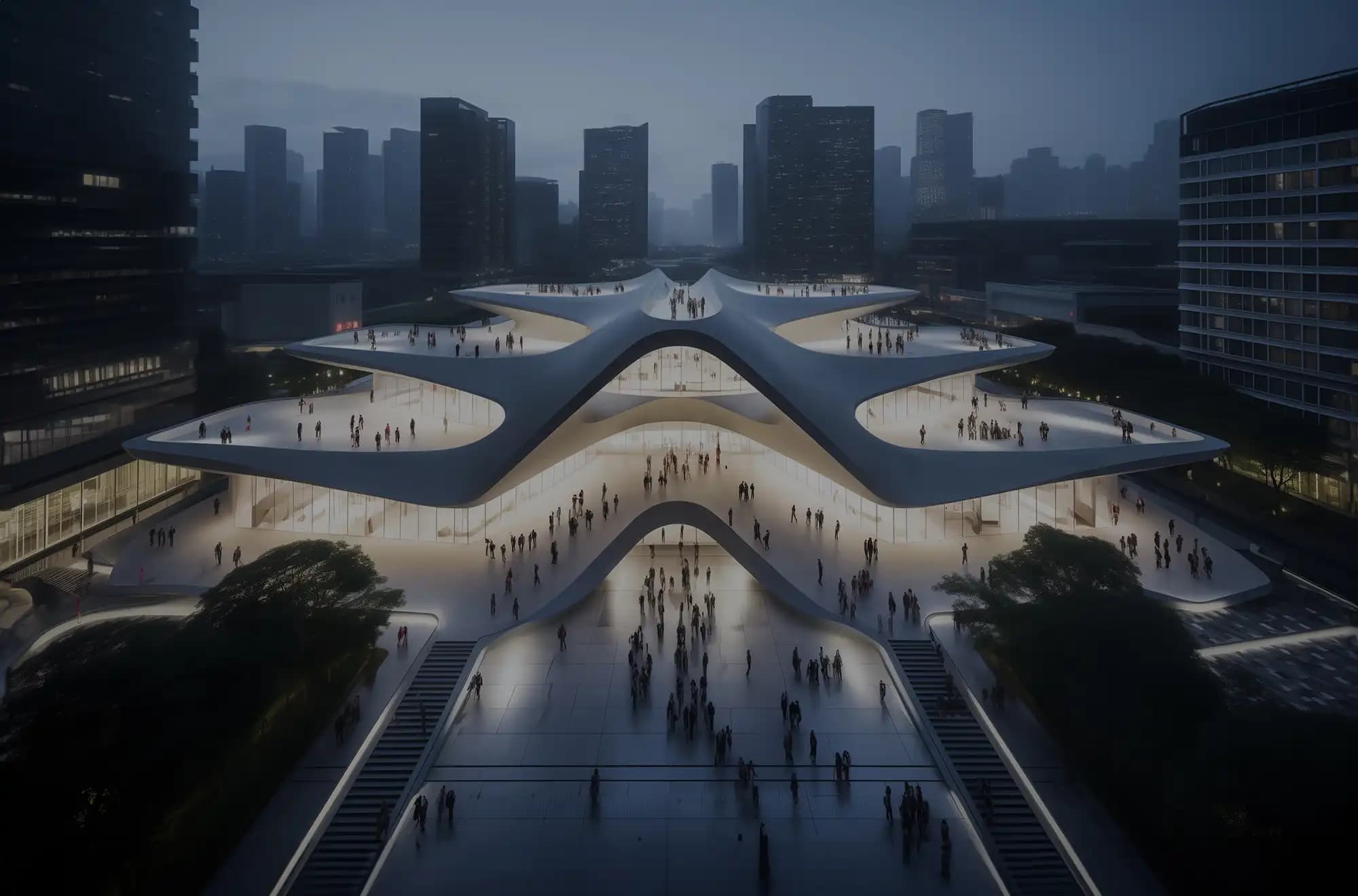
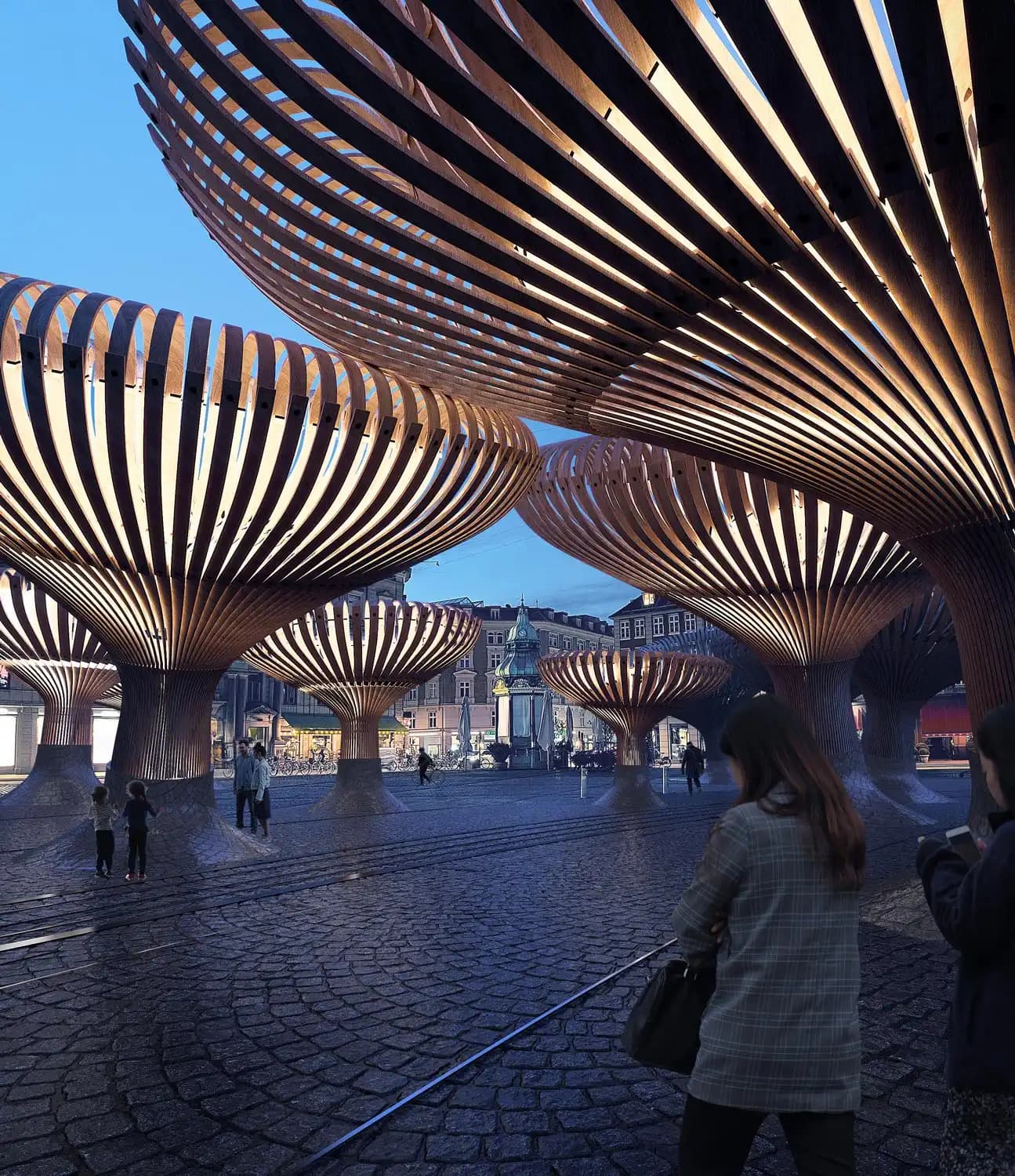
This course combines step-by-step tutorials, practical exercises, and a final ending project to help students not only understand the tools but also apply them on a sample project.
- Foundation Building: Start with the basics to establish a strong understanding of Cinema 4D’s interface, tools, and essentials.
- Hands-On Modeling: Explore techniques, from primitives to advanced parametric modeling, focusing on architectural and engineering 3D models.
- Useful examples: Engage in practical exercises after each module to apply the concepts in realistic scenarios.
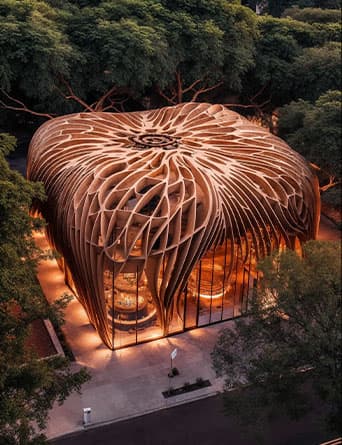
- Final Project: Create a fully modeled parametric pavilion as an understandable process that will help you use all the knowledge that you’ve attained during the course.
Program of the Course:
Introduction to Cinema 4D
- Overview of the interface and navigation.
- Understanding object creation and manipulation.
- Modeling with Primitives.
Using parametric objects to create basic forms
- Combining and modifying primitives for complex structures.
- Working with Splines and Generators.
Introduction to splines: creating and editing
- Generators: Extrude, Sweep, and Loft techniques.
- Deformers and Parametric Modeling.
Exploring deformers to manipulate geometry dynamically
- Combining deformers with primitives and splines.
- Polygonal Modeling and Subdivision Surfaces.
Editing objects with polygonal tools
- Smoothing designs using subdivision surfaces.
- Mograph Module for Modular Design.
Using the Cloner object and Effectors for repeating patterns
- Creating architectural arrays and dynamic facades.
- Symmetry and Precision Modeling.
Symmetry tools for balanced designs
- Techniques for improved modeling in architectural projects.
Final Project: Parametric Pavilion Design
- Applying all learned techniques to create a dynamic pavilion model