.webp&w=3840&q=75)
Article
Blueprints in Motion: From Maya to Unreal Engine was a two-day online workshop led by architect and computational designer Guillermo Rage. This immersive session provided participants with a comprehensive overview of the design-to-interaction pipeline, demonstrating how data-rich parametric models can be brought to life in Unreal Engine with real-time behaviors, animation, and logic.
.webp)
Designing with a Computational Mindset
The workshop began by grounding participants in the fundamentals of computational thinking and parametric workflows using Grasshopper. Emphasizing the importance of clean data structures and automation: crafting logic-based systems that enable dynamic transformations without manual rework.
.webp)
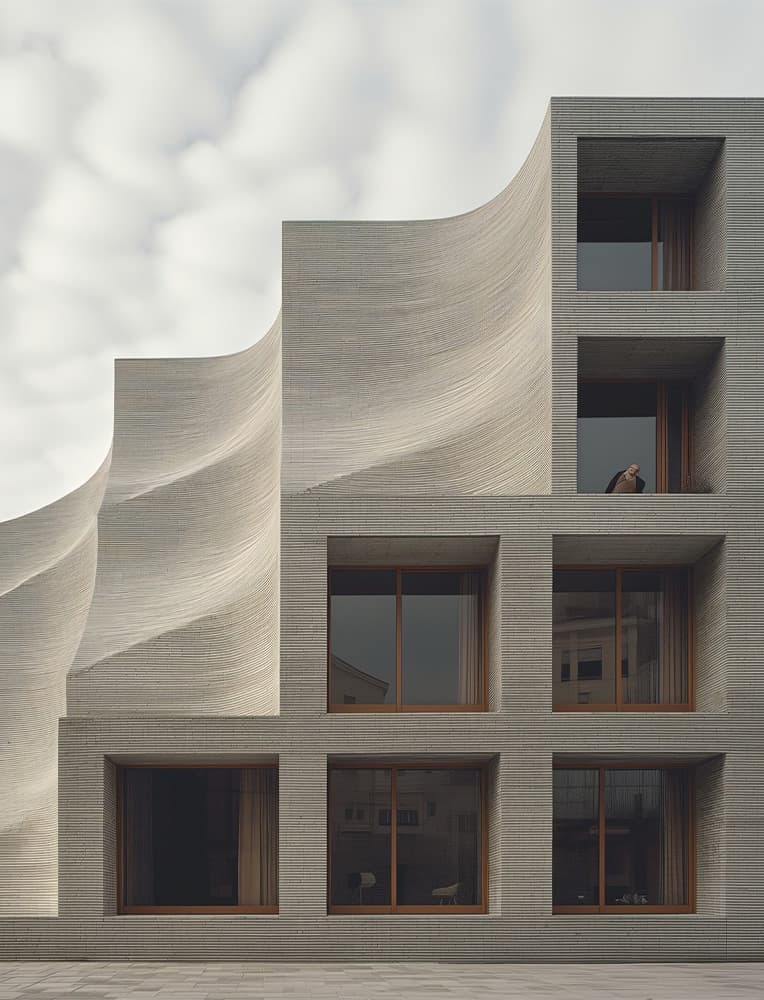
Participants constructed panelized geometries embedded with rotation axes, surface normals, and color data, all essential for enabling future interactivity. Tools like Weaverbird (for mesh thickening), Elefront (for baking attributes), and custom CSV export pipelines played a central role. Every panel wasn’t just geometry; it was a data object, complete with metadata defining position, orientation, and material logic.
.webp)
Blueprints in Motion: From Static Models to Interactive Systems
On day 2, the main focus was on Unreal Engine, where participants discovered how to reassemble and animate their panel systems using Blueprints. Guillermo demonstrated the proper way to export Grasshopper files into Unreal to drive placement, rotation, and even color, allowing the entire wall system to rebuild itself based on logic rather than manual positioning.
.webp)
Participants learned how to align coordinate systems between Rhino and Unreal, how to assign local pivots for accurate rotation, and how to correct vertex colors using gamma adjustment. With this setup, the panels can respond to avatars, simulate kinetic facades, or display transformable room layouts blending architecture and interaction in real-time.
A New Language for Architects
Blueprints in Motion offered more than just technical training. It introduced a mindset where geometry, data, and behavior converge. Participants left with a powerful new toolkit, one where design isn’t fixed in space, but alive, reactive, and intelligent. As architecture increasingly moves toward interactive experiences and immersive design, this workshop showed exactly how to bridge that gap, transforming design intent into dynamic, playable environments.
.webp)
Join the experience! Discover PAACADEMY’s upcoming workshops and stay at the forefront of design and technology.

.jpg&w=3840&q=75)